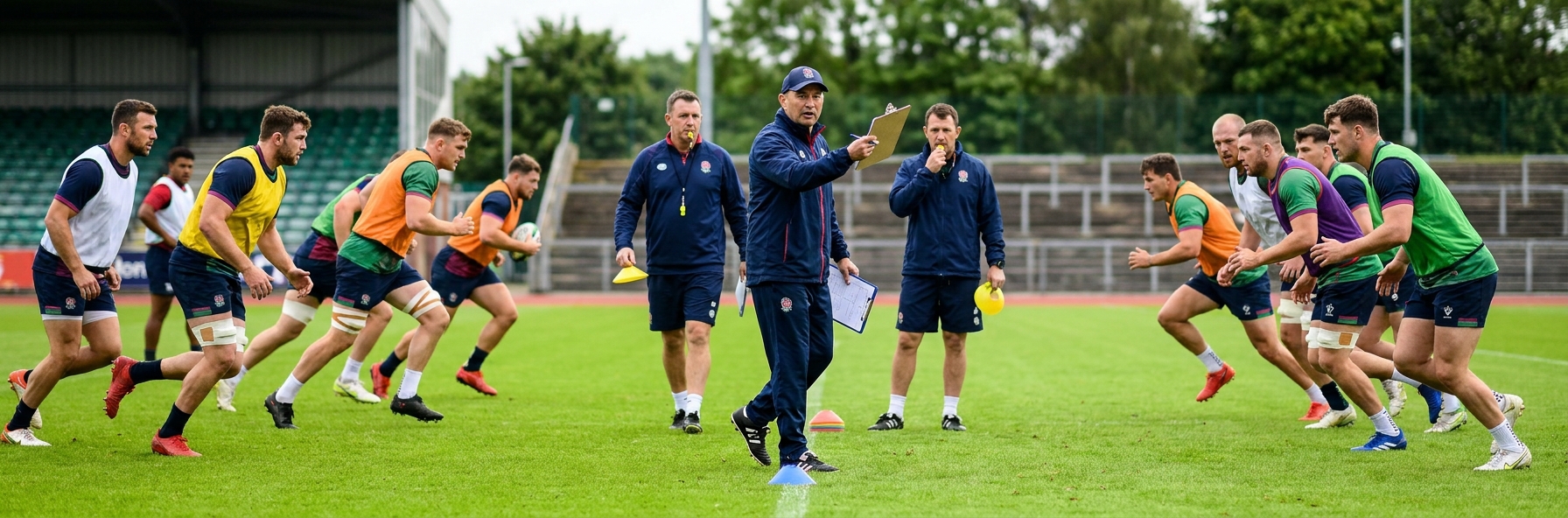
If you watch any professional rugby match in 2026 - Six Nations, Champions Cup, Super Rugby or the women's game - you will see the same underlying structure: one forward wide on each touchline, two pods of three in the middle, and the backs operating off the 10 channel. This is the 1-3-3-1 attacking shape, and it has become the default organising principle for modern attack.
The system is so widely adopted because it solves a fundamental problem in rugby. Forwards naturally bunch around the ball. When they do, the defence collapses on them, every contact becomes a slow ruck, and the backs receive ball that is already drifted. The 1-3-3-1 spreads forwards across the pitch in pre-planned positions, so that wherever the ruck forms there is always a pod ready to carry, a pod ready to play next, and a wide threat outside.
What the Numbers Mean
The shape is read across the field, from one touchline to the other. The first "1" is a forward in the 15-metre channel on one side. The first "3" is a pod of three forwards in the next inside channel. The second "3" is a pod of three forwards on the far side of the ruck. The final "1" is another forward wide on the opposite touchline. That accounts for eight forwards - the front row and locks split into two pods, with two flankers or a back-rower on the edges.
The principle: No matter where the ball is, there is always a pod within two passes of the ruck and a wide forward stretching the defensive line.
Why Modern Coaches Use It
The 1-3-3-1 is popular because it does several things at once. It forces the defence to commit numbers to the wide channels, which thins out the middle. It guarantees a carrier near every ruck, so the attack can play quickly without waiting for forwards to arrive. And it gives the backs clean platforms to launch from because the forwards are pre-positioned rather than chasing the ball.
Compared to the older 2-4-2 shape, the 1-3-3-1 is more flexible. Pods can shift, the wide forwards can tuck in if the defence overcommits to the edge, and the structure can transmogrify into 1-3-2-2 or 3-3-2 mid-phase depending on what the defence shows.
How to Coach It - A Practical Framework
Most amateur and youth teams fail with the 1-3-3-1 not because the system is wrong but because they introduce it as a set of positions instead of a set of habits. Build it in three layers.
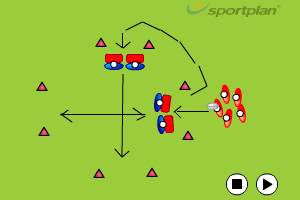
Layer 1 - Standing positions: Walk through the shape without a ball. Eight forwards take up their positions either side of an imaginary ruck. Every player must know which pod they are in and who their two partners are. Repeat this from rucks in the middle, on the 15-metre line and near the touchline.
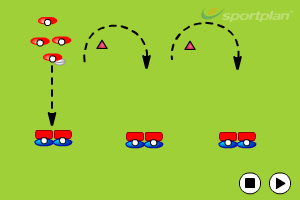
Layer 2 - Re-loading after contact: The hardest part of the system is what happens after a carry. The pod that just carried must "fold" to the other side of the next ruck so they are available again two phases later. Drill this with three pods rotating around a series of touch pads.
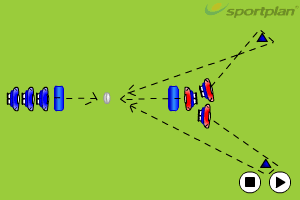
Layer 3 - Decision-making in the pod: Each pod needs a leader who calls the option. The three runners learn three plays: tip-on inside, hit straight, pull-back to the 10. Once the pod can execute those three options on a single call, the shape is functional.
The Wide Forward - The Most Important Role
The wide "1" on each side is often misunderstood. New coaches treat it as a finishing position, but its real job is to occupy a defender. A wide forward who simply jogs onto the touchline gives the opposition winger nothing to think about. A wide forward who runs hard lines, calls for the ball and threatens the edge forces the defence to commit a body wide - which is exactly what creates the space the inside pods exploit.
Choose your most mobile back-rowers for these roles. They need pace, hands and the discipline to stay wide even when the action is happening 40 metres away.
Key Coaching Points
- The 1-3-3-1 is a habit, not a formation - drill the folding and re-loading more than the static positions
- Every pod needs a clear caller and three simple options
- Wide forwards must occupy defenders, not just stand on the touchline
- Allow the shape to flex into 1-3-2-2 or 3-3-2 when the defence overcommits
- Train it at walking pace first - speed comes when the patterns are automatic

 sportplan_rugby