







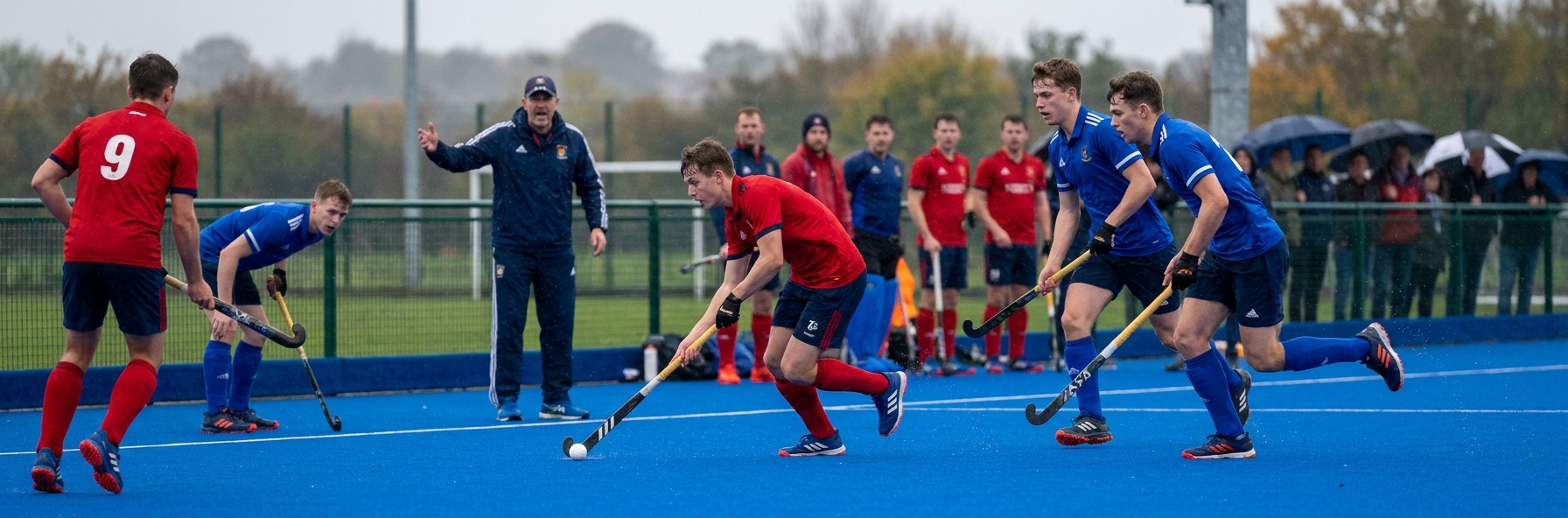
Watch any club game and count where the goals come from. A large share start with a team losing the ball inside their own 23, often within seconds of winning it. The press is fashionable at every level now, which means every side will spend part of Saturday trying to escape one.
Outletting is the skill of getting the ball from your defensive quarter into midfield with control and shape intact. It is not the same as clearing your lines. Clearing gives the ball back; outletting keeps it, and a team that can outlet under pressure changes the whole rhythm of a match.
Why Teams Panic in Their Own 23
The most common failure is not technical. It is that the receiving options appear too late. A defender takes possession, looks up, sees two opponents arriving and nobody available, and hits it long into a contest they will probably lose.
The second failure is shape. Players bunch towards the ball out of a desire to help, which is exactly the wrong instinct. Crowding the ball carrier gives the press what it wants: several opponents in one small area, all coverable by a couple of defenders.
The third is a lack of a plan for the second pass. Teams rehearse the first outlet ball endlessly and then have no idea what happens next, so the ball comes straight back.
Building the Structure
A working outlet needs three things available at once: a short option square or slightly behind the ball, a wide option down the line, and a longer option through or over the top. If all three exist, no press can cover everything, and the ball carrier has a genuine choice rather than a guess.
The wide option is the one most club teams neglect. Getting the ball to the sideline, into the space a pressing team has usually vacated, is often the simplest escape available, and it turns the press around so it has to run back towards its own goal.
Coaching the Escape
Step One: Show before you receive. Every supporting player should be moving into an angle before the ball carrier looks up, not after. Late movement is the same as no movement.
Step Two: Widen the pitch immediately. On winning possession, the first instruction is to get wide and long, stretching the press across the full width before it can compress.
Step Three: Use the transfer. Moving the ball across the back line changes the point of attack and drags the press sideways. Two quick transfers will usually open a lane that did not exist a moment earlier.
Step Four: Decide the second pass before the first. The receiver of the outlet should know where the ball is going next before it reaches them, which means their body position and first touch have to be set early.
Step Five: Give players a safe exit. Every outlet plan needs an agreed release option, whether that is a ball into a wide channel or a controlled aerial. Players commit to a structure far more readily when they know there is a way out that will not be criticised.
Training It Realistically
Practise outletting with a live press, not cones. Set up a defensive quarter with your back line plus a midfielder against three or four pressing forwards, and give the defending side a target to reach rather than just possession to keep.
Manipulate the numbers to build confidence and then remove it. Start at a comfortable overload, then reduce it until the outlet is genuinely difficult. The point where players start to make mistakes is the point where the learning happens.
Key Coaching Points
- Outletting keeps the ball; clearing your lines gives it away. Coach the difference explicitly.
- Always offer three options at once: short and square, wide down the line, and long.
- Support angles must be established before the ball carrier looks up, not after.
- Get wide and long the instant you win possession, before the press can compress.
- Use transfers across the back line to drag the press sideways and open a lane.
- Agree a safe release option so players commit to the structure without fear of blame.
Recommended Drills
Frequently Asked Questions
Is it ever right to just hit it long and out?
Yes, and pretending otherwise gets teams into trouble. If the press has genuinely covered all three options and you are inside your own circle, giving away a sideline ball in their half is a good outcome. The mistake is making that the first choice rather than the last.
How do I stop my players bunching around the ball?
Give them jobs by area rather than by ball position. If a player's instruction is to hold the wide channel until the ball is transferred, they have a reason to stay there. Vague instructions like 'get available' always pull players towards the ball.
Should the goalkeeper be part of the outlet?
At club level, cautiously. A keeper who is comfortable with the ball adds a spare player and makes the press's job much harder, but only if the whole back line knows when that option is on. Rehearse it in training before you rely on it in a match.

 sportplan_hockey









