







WHAT'S INCLUDED?
-
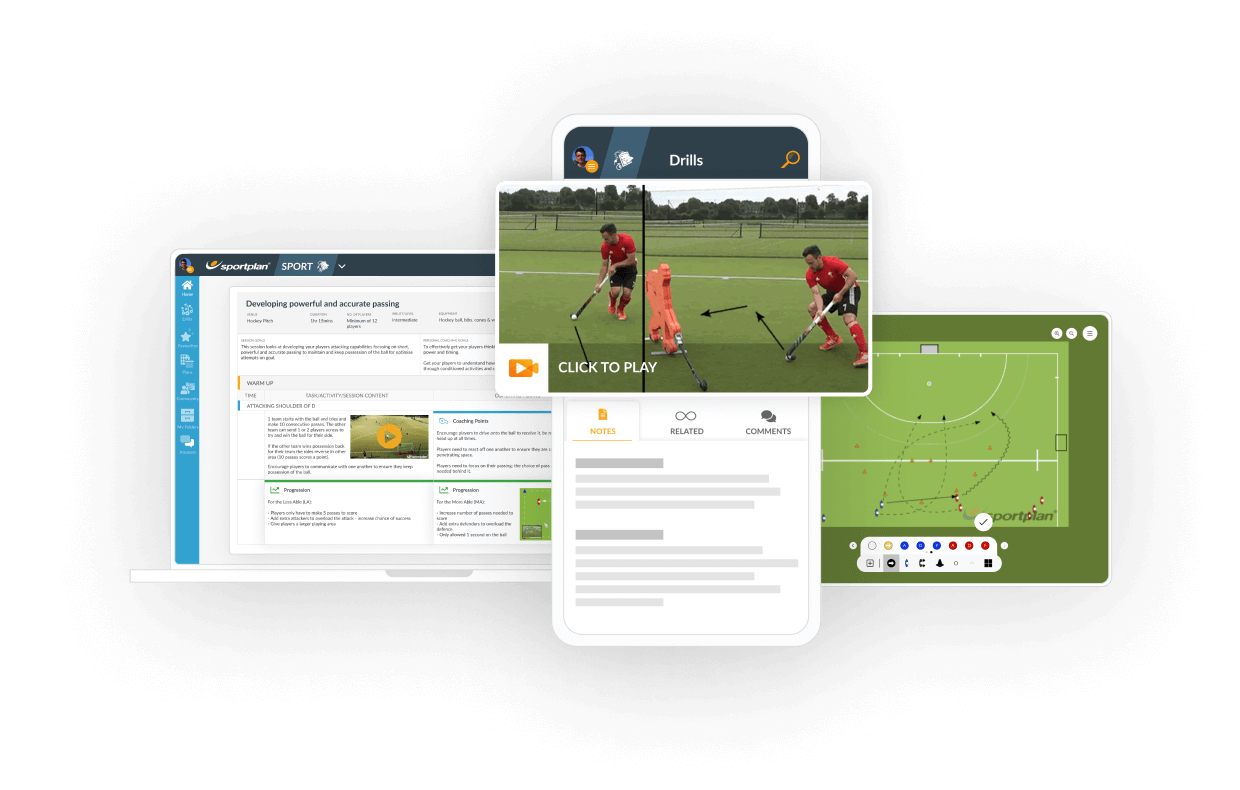
Hockey drills
-
Sketching tools
-
Session Planning tool
-
Saved session plans
-
Expert Coaching Advice
-
Save your favourite drills
-
500+ Community Drills
-
Mobile App - Coach on the go
WHY SPORTPLAN?

Join our thriving community; share, rate and follow other users for exposure to the latest drills and ideas.

Be Inspired - search drills by keyword or category. Never be short of ideas again.

Make more time for coaching with tried and tested professional plans or create your own with top coaching tools.

Expert coaching advice from around the world, our active community are ready and waiting to answer your coaching questions.

Connect with coaches, teachers and athletes worldwide and access your coaching resources wherever you are.



