

2 attackers stay within zones at either end of the paying area. In the centre 1 defender and 1 attacker.
Attacking team try to complete as many passes as possible from one zone to the other. Can either use the central player or pass direct.
Replicates playing out from left/right back down the wing to a forward.
We want the the players to create the shape in the diagram to make the biggest angle and the most space. In a match this means that the midfield player should stay inside NOT get drawn wide.
4 setup shapes from back to front:
R-L-R (diagram)
R-R-R
R-R-L
R-L-L
-
R-L-R (diagram) offers the biggest challenge for the defender.
May consider R-R-L but only to draw the defender with a view to it coming back to the first player. Same idea with playing the short side from a 16.

in more ways than one
 sportplan_netball



in more ways than one
sportplan_hockey

Video analysis is no longer a luxury reserved for international squads. With a phone, a tripod and a free editing tool, any club coach can build a weekly review habit that transforms how their team learns.
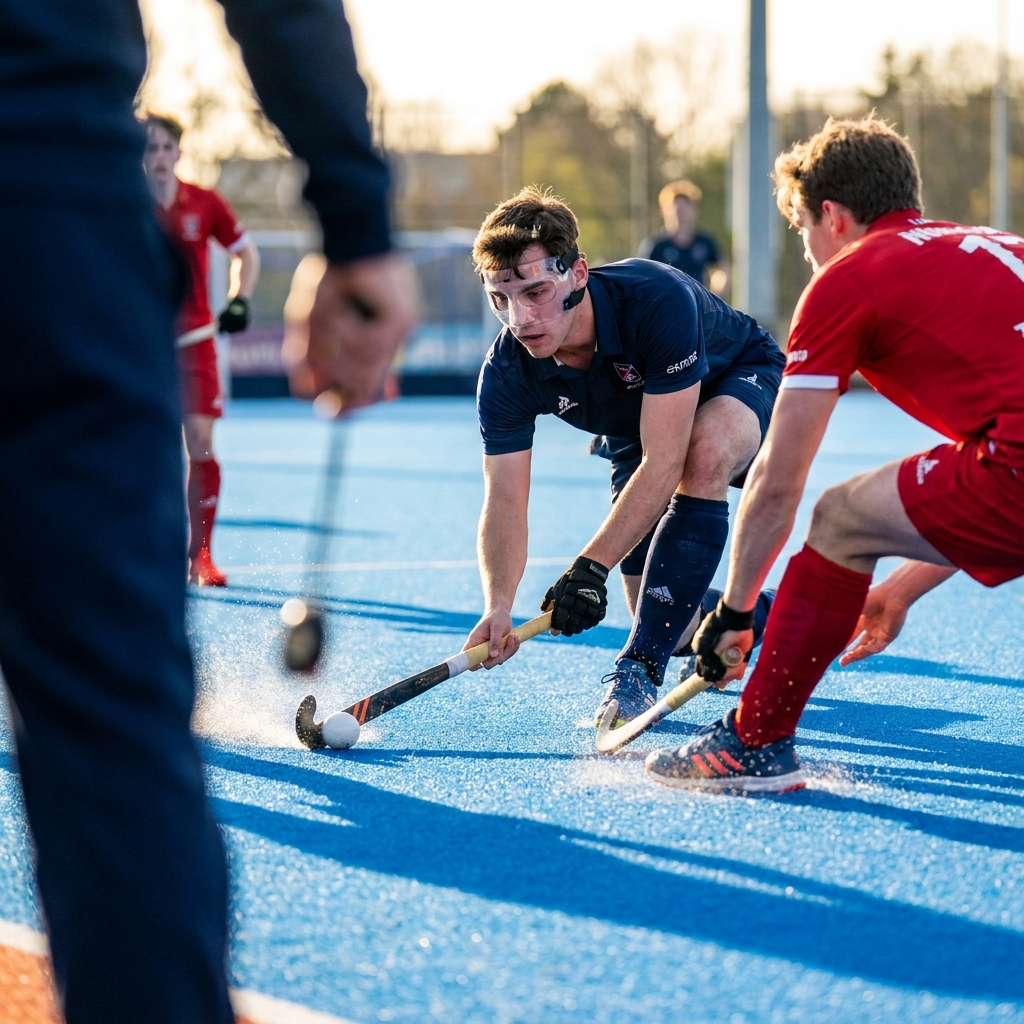
With mandatory masks now in place, the defensive corner has changed. Outrunners are committing harder, postmen are positioning differently, and the goalkeeper has new sightlines. Here's how to rebuild your PC defence for 2026.
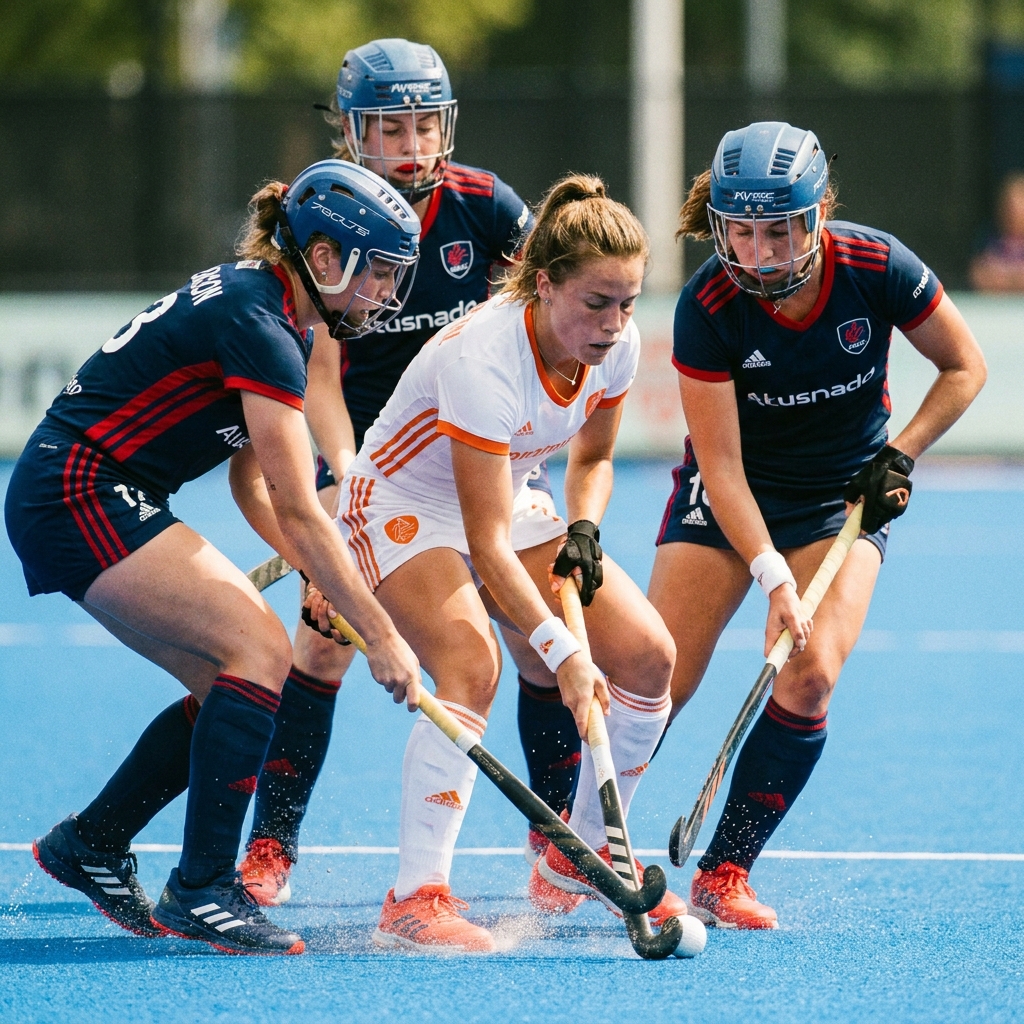
The Pro League's most dangerous teams now win the ball back within five seconds of losing it. Here's how to teach counter-pressing at any level, with triggers, drills and a session plan.









