

Procedure:
3 defenders + 1-2 keepers try to stop attackers from scoring. Attackers each have a ball and attack in threes.
Rules: 1) Defenders aren't allowed in the 6m circle. 2) If the ball hits a defender's foot, s/he must move out of the attacker's way.
Round 1: Defenders have no sticks. No body checks or pushing allowed.
Question/Feedback:
Round 2: Defenders have no sticks. 10 sec countdown (coach count out loud). Defenders get 1pt for stopping each attacker reaching goal within 10 secs.
Variation: defenders win if they stop any attacker reaching goal
Question: Can you work together to slow down the attackers? (Tip: pick on 1-2 attackers only).
Round 3: Defenders have sticks. [20] sec countdown. Defenders get 1 pt for stopping each attacker reaching goal.
Question/feedback:
Variations:
Focus:
1) How to stop attackers going (carrying) forward with the ball.
2) How to use/hold your stick when defending.
This practice is aimed at U10s.
Inexperienced defenders forget to use their sticks when defending, i.e. by carrying it high instead of 1) protecting their feet, 2) blocking the way forward, or 3) pressuring the attacker (such as by jabbing).
This activity makes them aware of:
Feedback:
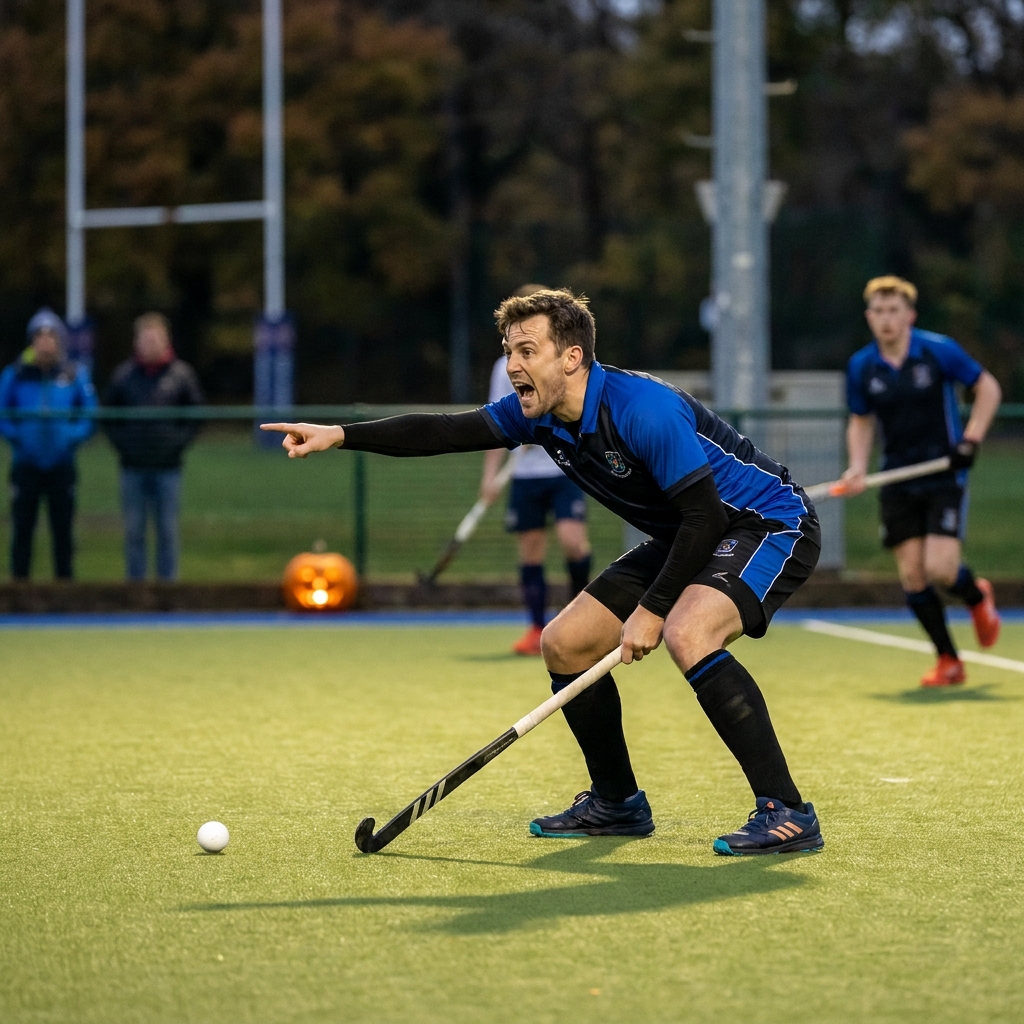
Two defenders chase the ball, nobody covers the runner, and a soft goal goes in. Here is the five-step treat for the mix-up haunting hockey defences this October.

A few weeks into the league season, poor first touches are costing teams the ball. Coach body shape, scanning and receiving on the move to keep possession.

Pre-season fitness fades fast once the league starts. Build conditioning into ball work and use rolling subs well to keep your squad sharp all season.


Register for FREE and get coaching tips, top drills, session and more every week!








