







TRANSFORM YOUR TEAM'S SEASON WITH PROFESSIONALLY PLANNED SESSIONS
Use our expert plans or build your own using our library of over 700+ drills, and easy-to-use tools.
JOIN NOW
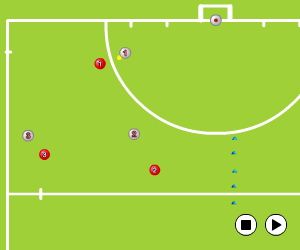


Yes it could be but you would have to put some rules n the practce to make it realistic to your press. a good way to adapt this practice would by extending the grid to the 1/2 way line. and the defenders to start with the ball ever time on a restart. The aim for the defence should be to carry the ball over he 1/2 way line in control and the defending forwards to try and win the ball, break and score. you may want to give the forwards one more player making it 3 v 4. the starting position of the pactice would look something like the attachment I hope this helps Bram

yes could be good, I need to gALL the players beside and in front moving ! it is as if when the whistle goes you stand still untill the ball is pushed/ hit back in play again

in more ways than one
 sportplan_hockey




A few weeks into the league season, poor first touches are costing teams the ball. Coach body shape, scanning and receiving on the move to keep possession.

Pre-season fitness fades fast once the league starts. Build conditioning into ball work and use rolling subs well to keep your squad sharp all season.

The first weeks of the season decide whether a junior or new player sticks with adult hockey. Here is how to keep them safe, give them a clear job and build their confidence from the very first bully.
Use our expert plans or build your own using our library of over 700+ drills, and easy-to-use tools.
JOIN NOW



