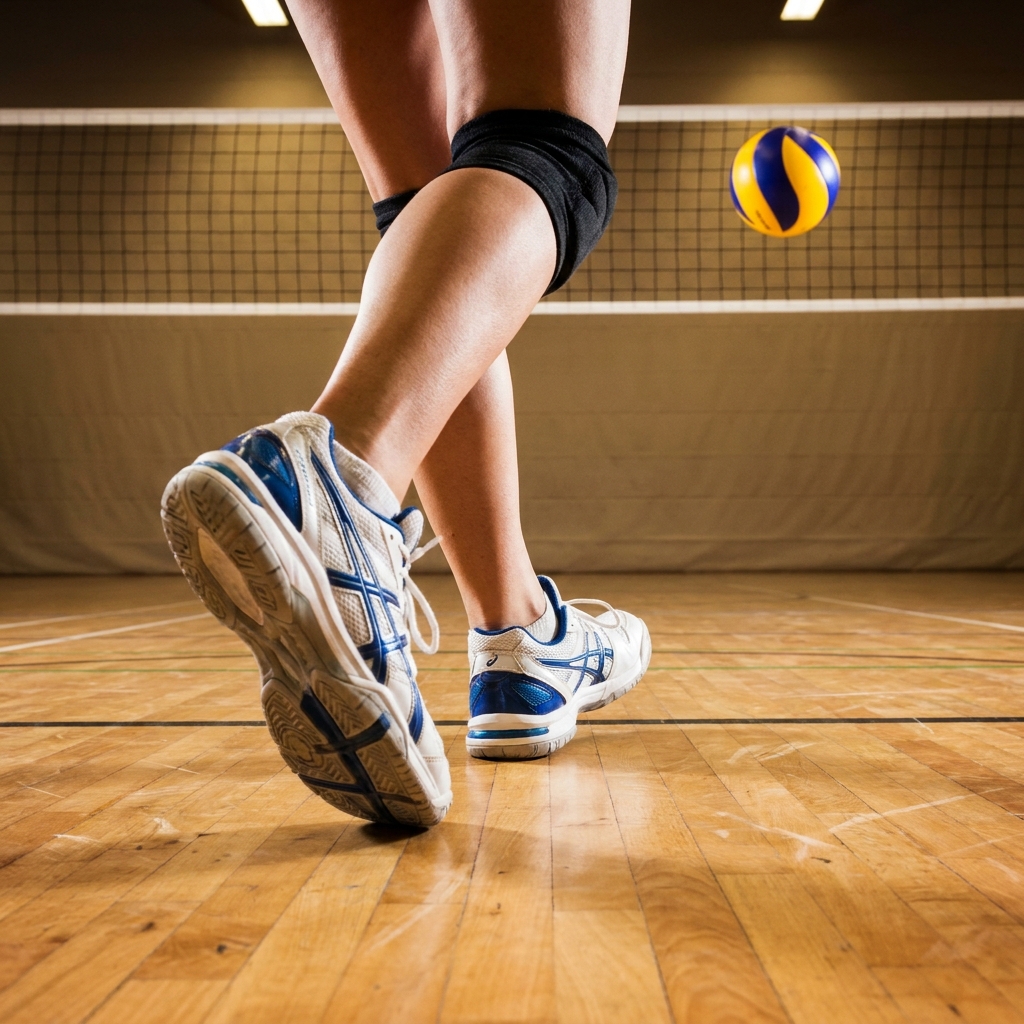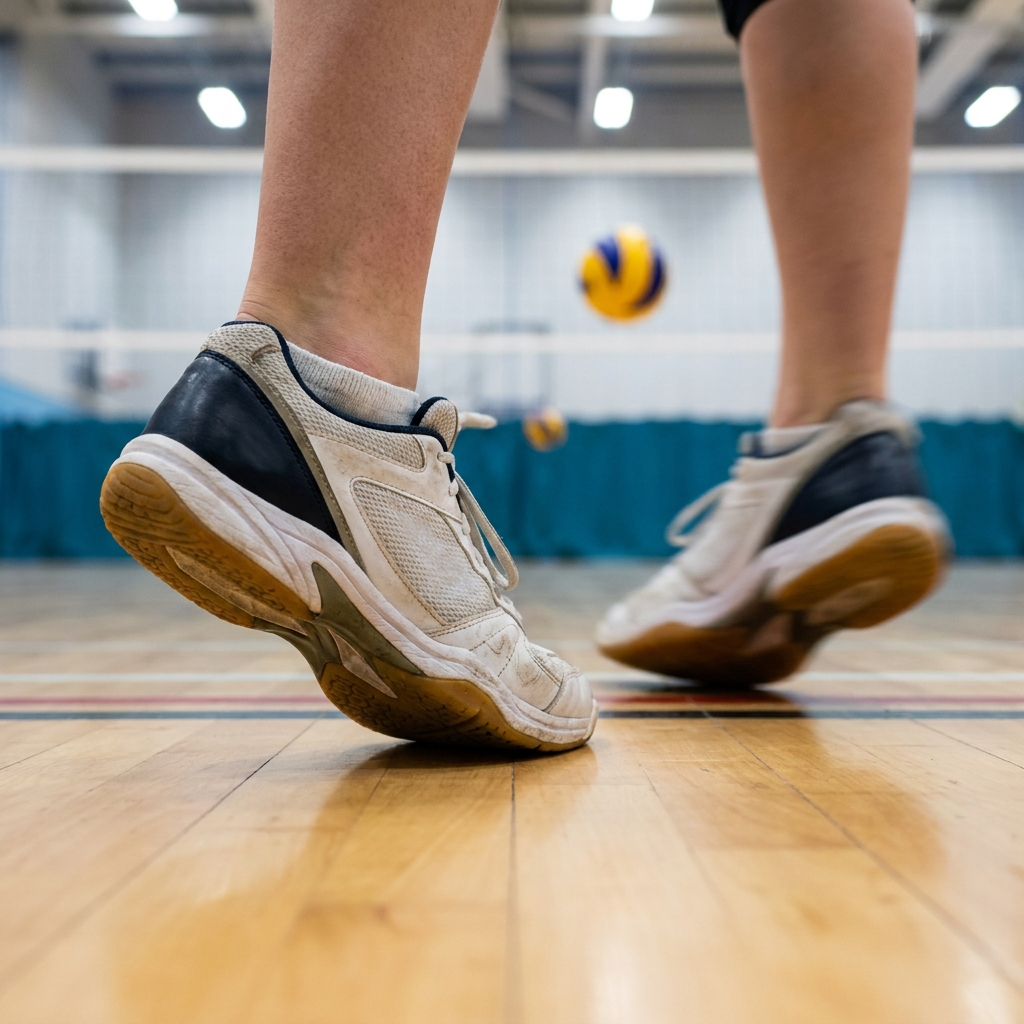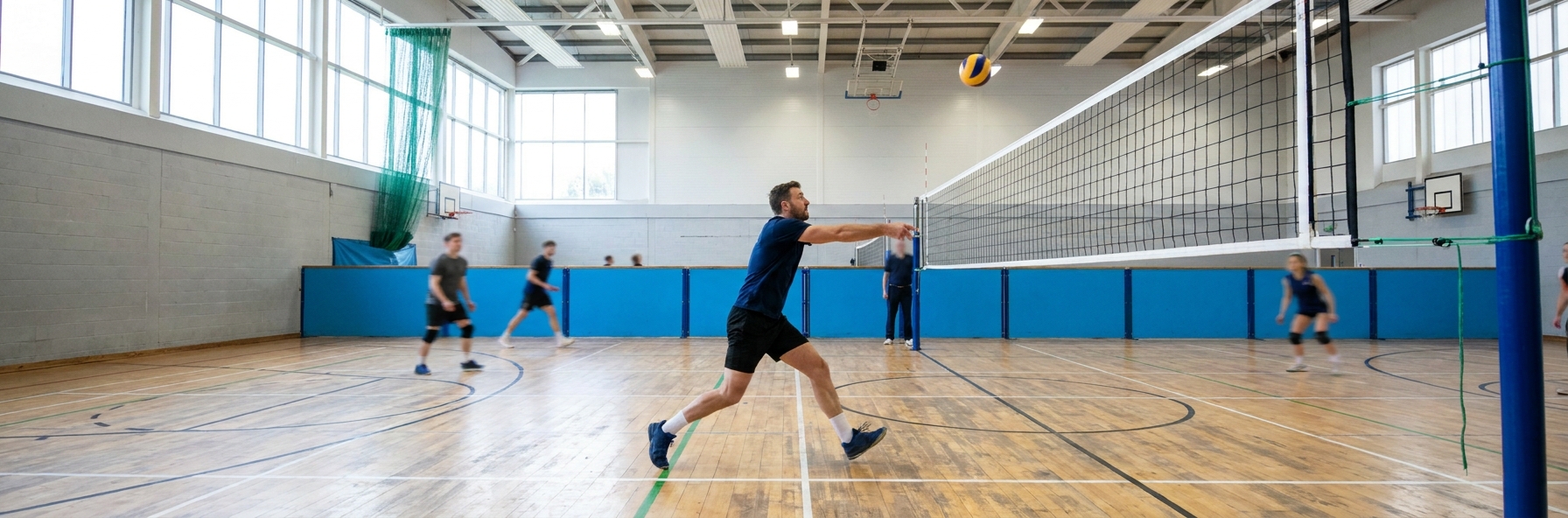
With indoor leagues now well into the season, most middles have their arm swing and timing from the middle set sorted. What is still letting teams down is what happens before the jump: the footwork that gets a blocker from the middle of the net out to a quick hitter on the antenna in time to actually block the ball, not just wave at it.
A blocker who arrives late is worse than one who does not go at all, because a mistimed, off-balance block gives the hitter an easy wipe off the hands or a free shot down the seam. Good footwork is the difference between a blocker who closes the net and one who is always a half-step behind the set.
Why Middles Get Beaten to the Spot
The usual culprit is not speed, it is the first step. Players who turn their hips and run flat-footed towards the ball lose time squaring up again before they can jump. Others watch the setter's hands for too long and start moving late, so even good footwork cannot make up the distance.
The fix is a repeatable footwork pattern that keeps the shoulders facing the net the whole way across, so the blocker arrives square, balanced and ready to jump rather than drifting sideways into the ball.
The Footwork That Actually Works
Step One: Read early. Start the read on the pass, not the set. A poor pass narrows the setter's options, so a middle who tracks the ball off the serve or attack gets a head start on where the set is likely to go.
Step Two: The short shuffle for a quick set close. For a one-set or a quick tempo ball kept tight to the setter, a short shuffle or crossover of one or two steps is enough. Keep the shoulders square to the net and the hands up, ready to jump off two feet.
Step Three: The cross-step for distance. For a set that travels further, such as a shoot set to the antenna, use the cross-step: step with the outside foot first, cross the inside foot behind or in front, then plant both feet to jump. This covers ground fast without turning the back to the net for long.
Step Four: Square up and penetrate. Whichever footwork gets the blocker there, the last two steps must land the feet shoulder-width apart, facing the net, so the jump goes up and the hands can reach over rather than across.
Step Five: Commit or bail early. If the set is clearly going somewhere else, peel off early and reset for the next action rather than completing a block that was never going to arrive in time.
How to Train It
Begin without a ball. Have the middle start at the centre of the net and call a direction; they perform the short shuffle or the cross-step to the target zone and jump, focusing purely on clean footwork and a square landing.
Add a setter and a tossed or hit ball once the pattern is clean, so the blocker has to read a real set rather than a call. Finish with a conditioned small-sided game where the middle only earns the point for a correctly-timed, two-footed block, not just for arriving.
Key Coaching Points
- Start the read on the pass, not on the setter's release.
- Use a short shuffle for quick, tight sets and the cross-step for sets that travel further.
- Keep the shoulders facing the net throughout the movement rather than turning the back to the court.
- Land the last two steps shoulder-width apart so the jump is off two feet, not one.
- Bail out early on a set that is clearly going elsewhere rather than forcing a late block.
- Train footwork without a ball first, then add a real set once the pattern is clean.
Recommended Drills
 Cross-Step to Block
 Cross-Step to an Outside Blocker
 Crossover and Block
 Left-to-Right Blocking Marathon
Frequently Asked Questions
Should a middle always use the cross-step?
No. For a tight, quick set close to the setter a short shuffle is faster and keeps the shoulders squarer to the net. Save the cross-step for sets that travel further, such as a shoot set out to an outside hitter, where the extra ground covered is worth the brief turn of the hips.
Why does my middle keep arriving a step late?
Almost always it is a late read. If a player waits to see the ball leave the setter's hands before moving, the footwork itself can be perfect and still arrive late. Get them reading the pass quality and the setter's body position earlier, so the first step happens sooner.
How much footwork training does a young middle actually need?
Little and often works better than long isolated sessions. A few minutes of footwork patterns in the warm-up, done to a high standard, build the habit faster than an occasional long block session. Keep it ball-free to begin with so players can focus entirely on their feet.