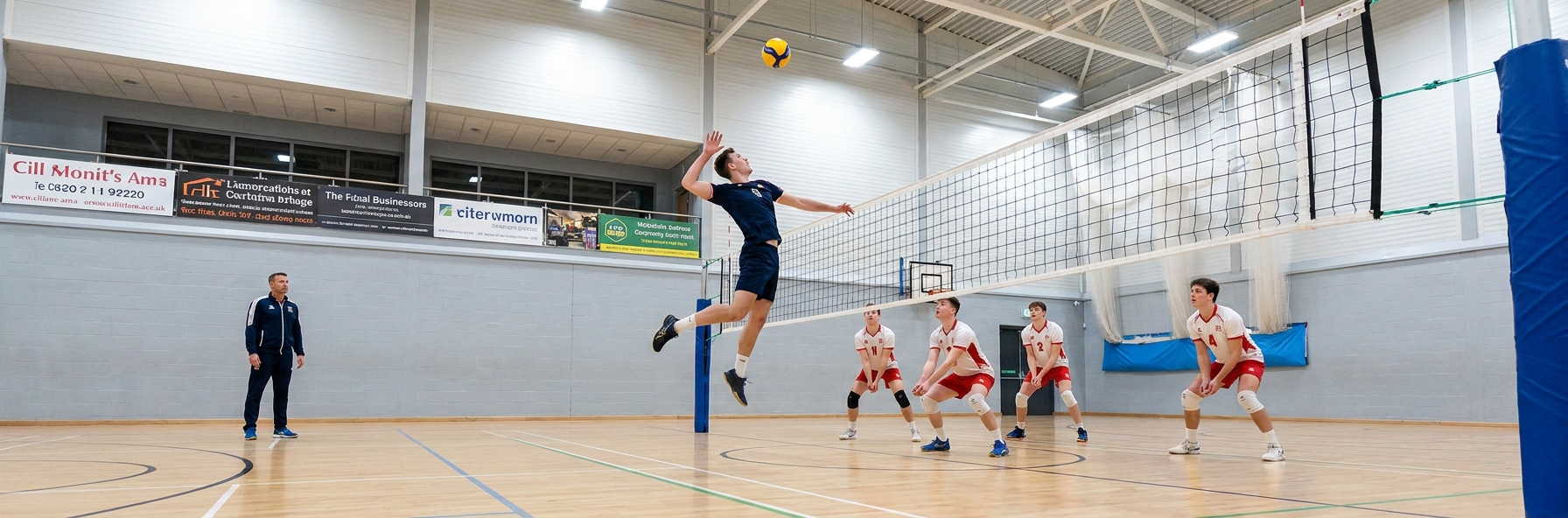
Watch any club match and you will see the same moment again and again. The outside hitter swings, the ball comes straight back off the block, and it drops onto the floor between four teammates who were all watching the attack. Nobody did anything wrong with the ball. The point was lost by people who did not have it.
Attack coverage is the habit of every player moving in behind the hitter as they attack, so that a blocked ball can be kept alive. It costs nothing, needs no extra height or power, and it is one of the quickest ways for a club side to win more long rallies.
Why Blocked Balls Kill Rallies
A ball rebounding off the block travels fast and short. It usually lands within a couple of metres of the net, often right at the hitter's feet while they are still in the air. By the time anyone reacts to it, it is on the floor.
The other problem is attention. The moment the setter releases the ball, everyone's eyes go to the hitter. Players stand tall, admire the swing, and start celebrating before the ball has crossed the net. Coverage is really about replacing that watching habit with a moving one.
A Four-Step Coverage Framework
Step One: Move as the set goes up. Coverage starts when the setter releases, not when the hitter jumps. Every player who is not attacking follows the ball towards the hitter so they arrive before the contact.
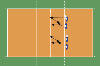
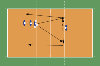
Step Two: Build the cup. The common shape is a 3-2 cover: three players close in a tight semicircle around the hitter, roughly an arm's length or two away, and two players deeper filling the gaps behind them. Some teams prefer a 2-3, with two close and three deep, which suits a strong block that sends balls further back. Pick one shape, name it, and use it every time.
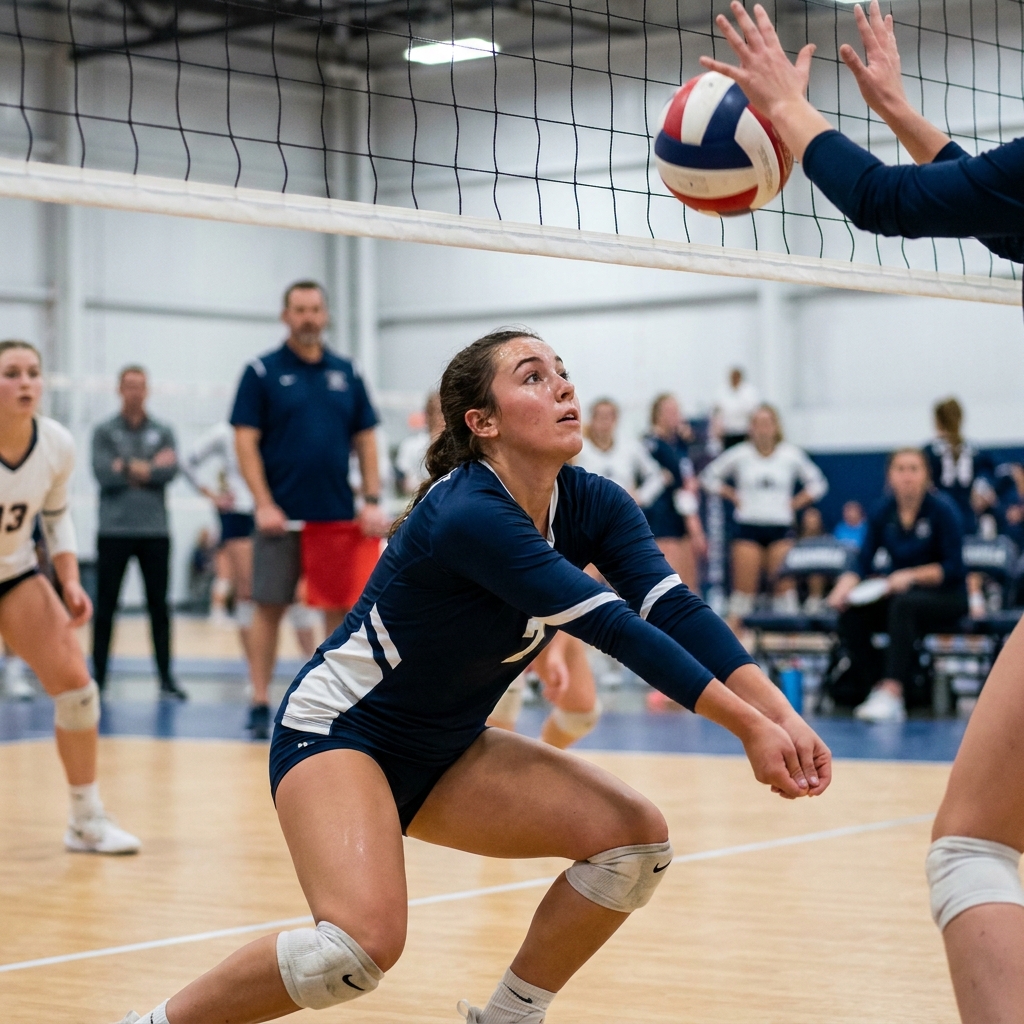
Step Three: Get low and stay low. Covering players should be balanced, knees bent, weight forward, hands out in front and ready before the hitter contacts the ball. A blocked ball comes down fast, and there is no time to crouch after you see it.
Step Four: Play it high and give it back. The aim is not a perfect pass. Dig the covered ball high towards the middle of the court so the setter, or whoever is nearest, has time to set it again. A high ball buys your hitter time to land, recover and get another swing.
Whose Job Is Which Zone
Coverage falls apart when roles are vague. Keep it simple for club players. The setter and the nearest front-row player usually form part of the close cup, because they are already near the net. The back-row player behind the hitter takes the close middle spot directly behind them.
The deeper players cover the space further back and towards the middle of the court. Work out the positions for attacks from each of your main hitting zones with your own system, write them down, and walk them through slowly before you add a ball. When every player knows their spot, nobody drifts and nobody doubles up.
The hitter has a job too. If they can see a big block, they can deliberately play the ball off the block and back into their own cover, which gives the team a fresh attack instead of a forced error.
How to Train It
Start with walk-throughs. Set up six players, call out a hitting zone, and have the team move into its cover shape. Freeze, check spacing, and repeat for each zone until the movement is automatic.
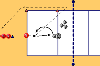
Then add a live block. Put a coach or player on a box or step on the other side of the net holding a pad or a ball up at block height, and feed sets to your hitters. Every ball that comes back off the block has to be dug up and attacked again. Count how many covered balls turn into a second attack, not just how many are touched.
Finally, reward coverage in games. In your usual six a side or small-sided scrimmages, award a bonus point for any rally won after a blocked ball has been covered and re-attacked. Players will start chasing the habit on their own.
Key Coaching Points
- Coverage starts on the set, not the swing; move towards the hitter as soon as the setter releases.
- Choose one cover shape, 3-2 or 2-3, name it, and use it consistently.
- Be low and still before the hitter contacts the ball; you will not have time to get down afterwards.
- Give every player a clear zone for each hitting position so nobody drifts or doubles up.
- Dig covered balls high towards the middle, not back over the net, so you can attack again.
- Stop watching the hitter; watch the block, because that is where the danger comes from.
Recommended Drills
Frequently Asked Questions
Should we use a 3-2 or a 2-3 cover?
For most club teams, a 3-2 is the better starting point, because blocked balls tend to drop close to the hitter. If you regularly face tall blocks that send the ball deeper into your court, a 2-3 can suit you better. The shape matters less than everyone using the same one.
My players say they cannot get there in time. What should I change?
Almost always they are starting too late. If they wait to see the hitter jump, they will never arrive. Coach them to move on the setter's release, and ask your setter to give a slightly higher ball while the habit beds in.
Is coverage worth coaching with junior or beginner teams?
Yes, and it is easier to build early than to fix later. Juniors can learn the idea of following the ball and getting low long before they face a strong block. Start with the walk-through and a simple rule: when a teammate attacks, nobody stands still.