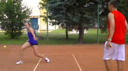
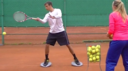
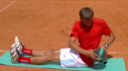
Player takes ready position. Coach throws ball to the forehand side. Player doesn't move legs and hits forehand. Player has to use only upper body to hit the ball.
A good tennis stroke requires all body parts to be involved, however many players use only their hitting arm to generate power. Unfortunately that's the first step to a lower quality of shot and will more than likely cause an injury sooner or later. To be able to develop a powerful and consistent forehand, Player has to learn how to use individual body parts and then learn to combine them into one fluid motion.
In this drill, the player works on their upper body. An open stance creates opportunities to deal with fast balls only when angular actions are in place. If the Player doesn't use their lower and upper body correctly, open stance will never be as effective as possible. Coach should explain to Player to focus on a good upper body turn and to generate the power using their strong core muscles. If Player has weaknesses in physical preparation, Coach should immediately point them out to make athlete aware how poor physical performance can stop tennis progress.
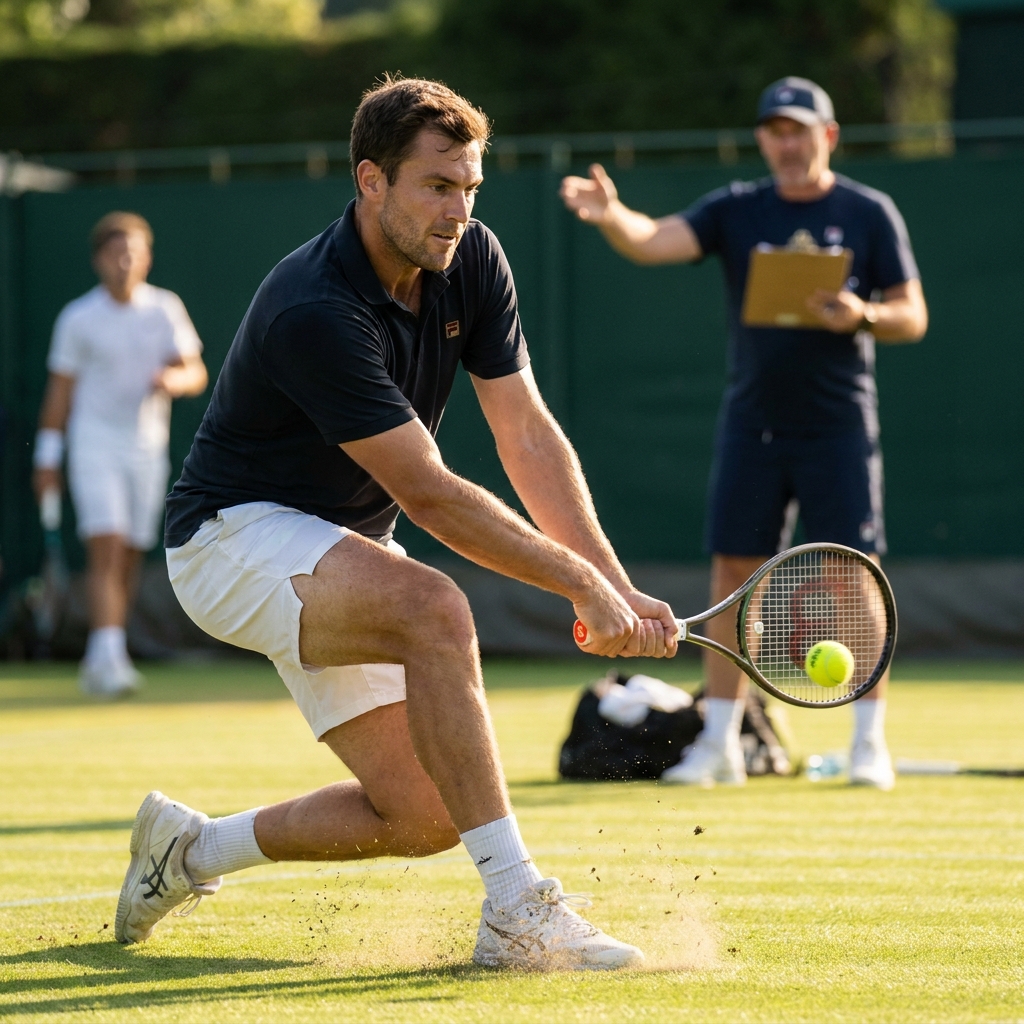
Wimbledon arrives at the end of June and the grass court swing transforms how the game is played. Low bounces, slippery footing, and rewards for forward play demand a different tactical mindset. Here is how to coach it.
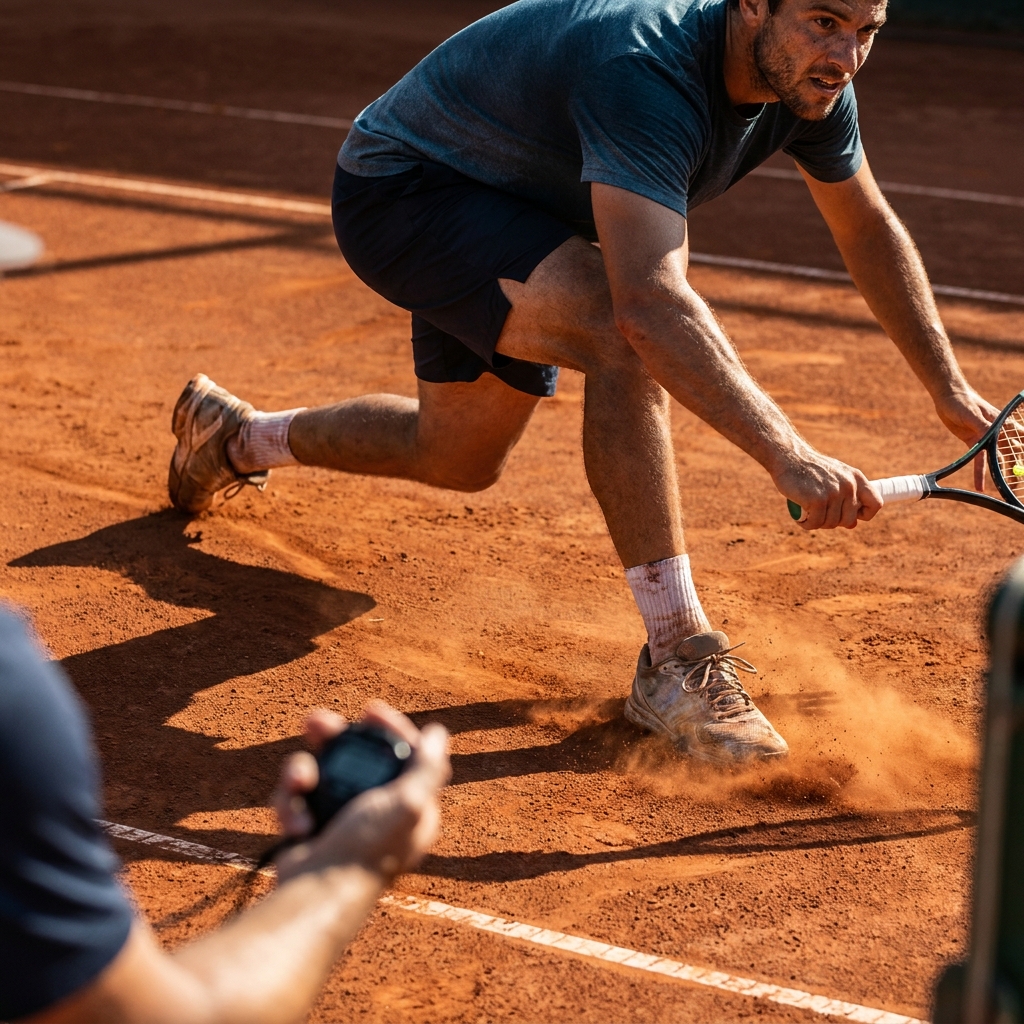
With Roland Garros centre stage in May, clay court tennis demands a different toolkit: controlled sliding, longer rallies, and patient point construction. Here is how to coach the surface that humbles power players and rewards craft.
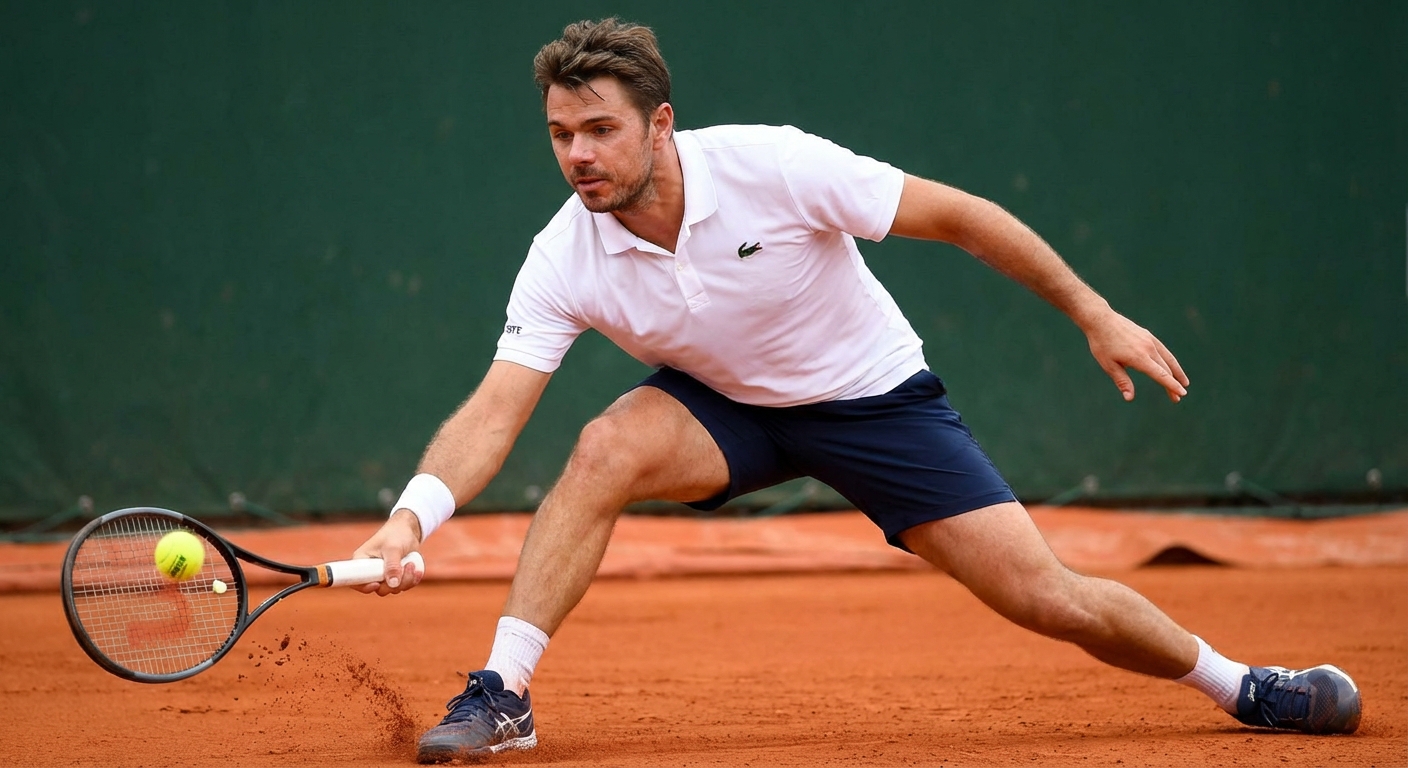
The slice backhand is experiencing a renaissance in modern tennis, valued for its ability to change pace, create approach opportunities, and neutralise powerful opponents. This guide breaks down the technique, tactical applications, and training progressions coaches need to develop this essential shot at every level.


Register for FREE and get coaching tips, top drills, session and more every week!