Why the Slice Backhand Is Making a Comeback
For years, the slice backhand was dismissed as a defensive shot, something players resorted to when they could not hit a full topspin drive. That perception has changed dramatically. Watch any professional tournament in 2025-26 and you will see the slice backhand used aggressively, creatively, and with surgical precision by players at every level of the game.
The reason is tactical evolution. As baseline rallies have become faster and more physically demanding, the slice backhand offers something invaluable: variation. It changes the rhythm of a rally, stays low through the court, and forces opponents to generate their own power from below the net tape. For coaches working with junior and club players, the slice backhand is one of the highest-return shots you can add to a player's repertoire.
When to Use the Slice Backhand
Understanding when to slice is just as important as understanding how. Coaches should teach players to recognise four key tactical situations where the slice backhand is the optimal choice.
1. The Approach Shot
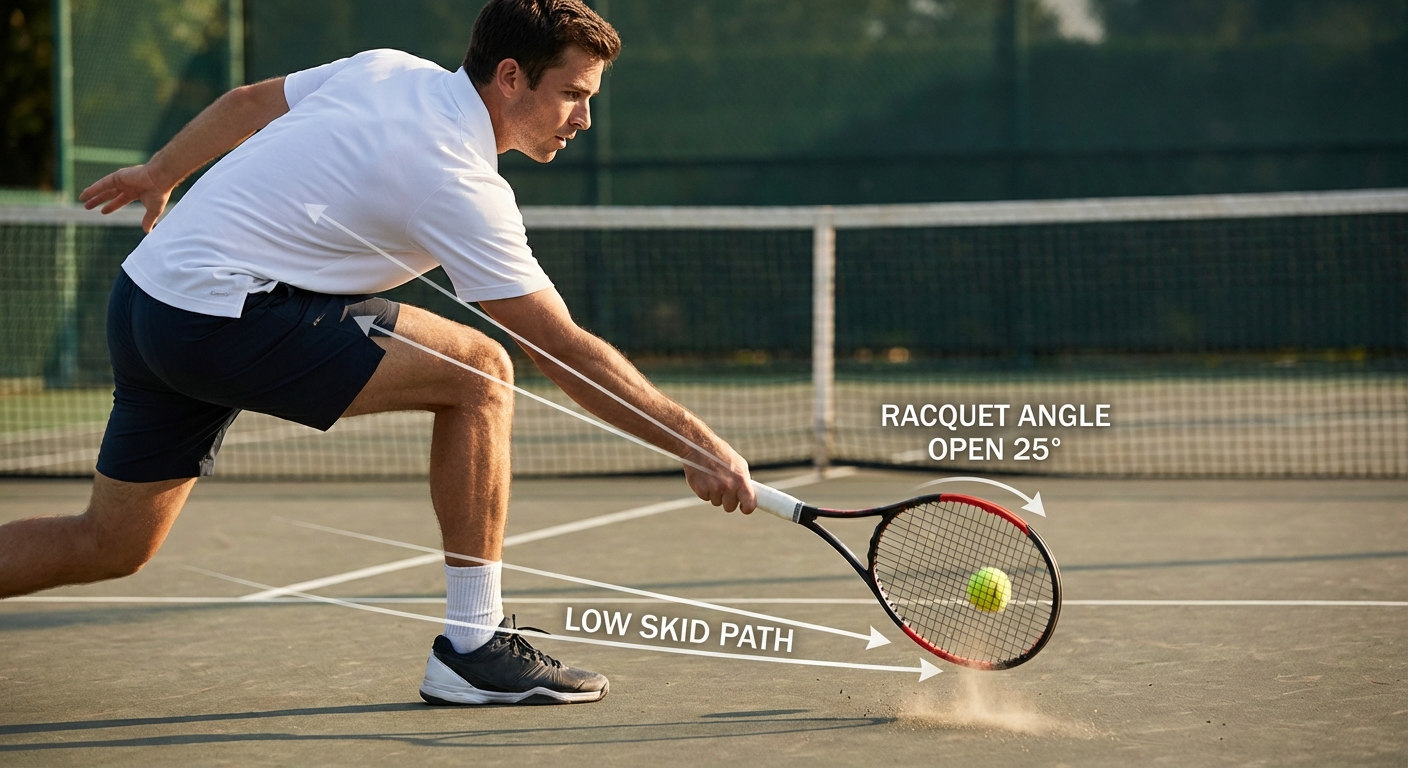
A deep, low slice backhand is one of the most effective approach shots in tennis. The backspin keeps the ball low after the bounce, forcing your opponent to hit up on the ball. This makes it significantly harder for them to pass you with a clean winner. Teach players to follow the flight path of their slice into the net, closing off the angles as they move forward.
2. Defensive Recovery
When pushed wide or stretched on the backhand side, a well-executed slice buys time. The ball travels slower through the air than a driven backhand, giving the player precious fractions of a second to recover to the centre of the court. The low trajectory also limits the opponent's attacking options.
3. Pace Disruption
Against hard-hitting opponents who thrive on pace, the slice removes their energy source. By taking speed off the ball and changing the spin direction, you force the opponent to create their own power rather than redirecting yours. This is particularly effective against players with semi-western or western grips who struggle with low balls.
4. Drop Shot Setup
The slice backhand and the drop shot share almost identical preparation. Once a player has established the slice as a regular pattern, the drop shot becomes far more deceptive because the opponent cannot read the difference until after contact.


Technique Breakdown: The Continental Grip and Swing Path
The foundation of a reliable slice backhand is the continental grip. This is the same grip used for the serve and volley, with the base knuckle of the index finger sitting on bevel two. Many club players attempt to slice with an eastern backhand grip, which produces a flat, floating ball rather than the penetrating, biting slice they are looking for.
The Swing Path
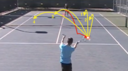
The slice backhand swing moves from high to low on a roughly 45-degree angle. The racket face should be slightly open at contact - approximately 10-15 degrees. A common coaching cue is to imagine you are slicing underneath the ball as though carving a thin layer off its bottom surface. The follow-through should finish forward and slightly downward, with the racket face still marginally open.
Contact Point
Contact should occur slightly in front of the leading hip, with the arm almost fully extended. The key coaching point here is that the non-hitting hand plays a crucial role in balance and rotation. As the hitting arm moves forward, the non-hitting arm should extend backward as a counterbalance, creating the appearance of opening the chest sideways through the shot.
Footwork
The slice backhand can be hit effectively from both open and closed stances, but for teaching purposes, the closed stance is preferred. A step across with the front foot creates natural body rotation and ensures the player's weight transfers into the shot rather than falling away from it.

Common Errors and How to Fix Them
Error 1: The Floating Slice
The most common problem coaches encounter is a slice that floats high over the net and lands short, sitting up as an easy ball for the opponent. This is usually caused by an excessively open racket face combined with a swing path that goes too much from high to low without enough forward extension. The fix is to emphasise the forward component of the swing. Cue the player to push the racket toward the target after contact, not just chop down on the ball.
Error 2: No Backspin
Some players produce a flat backhand when attempting to slice. This happens when the racket face is perpendicular to the ground at contact rather than slightly open. Use a simple drill: place a ball on the player's racket strings and ask them to tilt the racket until the ball just begins to roll off. That angle is approximately the correct racket face position for a slice.
Error 3: Wrist Flick at Contact
Players who snap the wrist at contact produce an unpredictable shot that is difficult to control. The slice requires a firm wrist and a controlled, sweeping motion. A useful correction is to have the player practice shadow swings while holding the throat of the racket with the non-hitting hand until just before the forward swing begins. This reinforces the one-unit turn and prevents wrist manipulation.
How the Pros Use Slice Tactically
Professional players have elevated the slice backhand from a utility shot to a central tactical weapon. The key patterns coaches can teach from observing the pro game include the slice-to-topspin combination, where a player hits two or three low slices to draw the opponent inside the baseline, then rips a topspin drive past them as they move forward. This pattern is devastatingly effective because the opponent's momentum is moving in the wrong direction.
Another professional pattern is the cross-court slice exchange. When both players are slicing cross-court, the player who can change direction with a down-the-line drive or drop shot first gains the advantage. Teaching players to recognise this moment of opportunity is a high-value tactical skill.
Session Structure: Teaching the Slice Backhand
Sample Session Plan (60 minutes)
Warm-Up (10 min)
Mini-tennis rallies using only slice backhands. Players start on the service line and rally cooperatively, focusing on keeping the ball below net height after the bounce. Progress to full-court slice rallies after 5 minutes.
Technique Focus (15 min)
Shadow swings in pairs, checking grip, racket face angle, and follow-through. Progress to hand-fed balls from the coach, emphasising contact point and forward extension. Players aim for a target zone deep in the court.
Tactical Application (20 min)
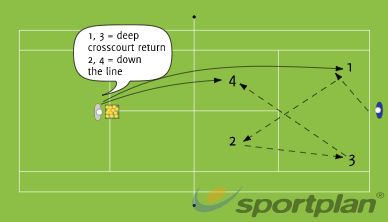
Rally drill: Player A hits three slice backhands cross-court, then attempts to drive down the line on the fourth ball. Player B must read the pattern and adjust positioning. Rotate roles every 3 minutes.
Match Play (15 min)
Points played from the baseline where the first shot must be a slice backhand. This forces players to integrate the slice into real point construction rather than treating it as an isolated technique.
Training Progressions: From Shadow to Rally
Stage 1: Shadow and Self-Feed
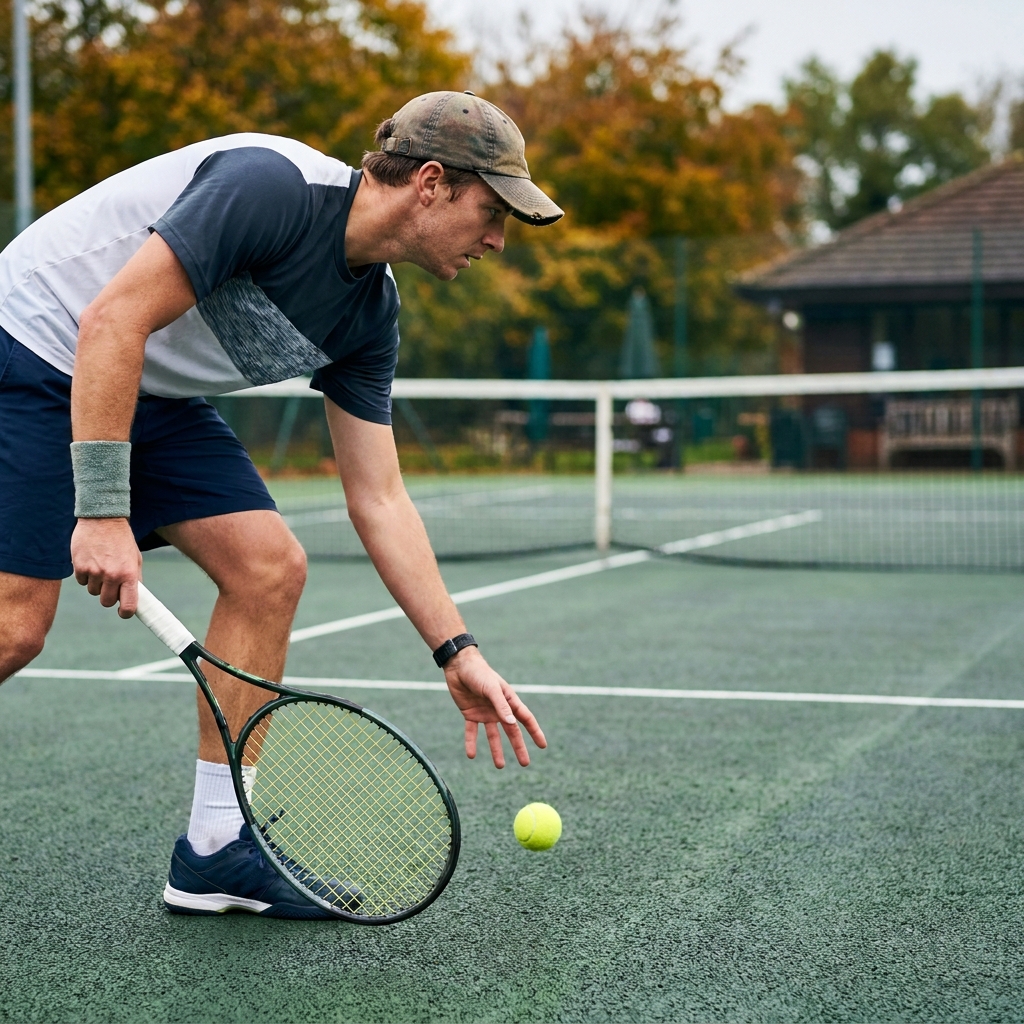
Begin with shadow swings focusing on the grip, takeback, and follow-through. Once the movement pattern feels natural, progress to self-fed bounces where the player drops the ball, lets it bounce, and slices it into the opposite service box. The target should be low net clearance and backspin visible on the ball.
Stage 2: Coach or Partner Feed
The coach feeds balls to the backhand side at moderate pace. The player focuses on timing, contact point, and directing the ball to specific targets. Introduce depth targets first, then width targets. Players should aim for 70% success rate before progressing.
Stage 3: Rally Integration
Both players rally cross-court, mixing topspin and slice backhands. The player practising the slice should aim to use it on every second or third ball, developing the ability to switch between spin types without telegraphing their intention.
Stage 4: Point Play
Structured points where the slice backhand must be used at least once before a winner can be attempted. This ensures players learn to construct points around the slice rather than defaulting to power on every ball.
Frequently Asked Questions
At what age should I start teaching the slice backhand?
Players can begin learning the basic slice motion from around age 10-11, once they have a reliable continental grip from serving. Start with simple hand-fed drills before progressing to rally situations. The slice is actually easier to learn than a topspin backhand for many young players because the swing path is more natural and requires less wrist strength.
My player's slice keeps floating high - what is the quickest fix?
The most common cause of a floating slice is insufficient forward extension through the ball. Have the player imagine pushing the racket toward the far fence after contact rather than chopping down. A useful drill is to place a cone two metres in front of the player's contact point and ask them to swing through toward the cone. This promotes the forward element of the swing that produces penetration.
Should the slice backhand replace the topspin backhand?
Absolutely not. The slice is an addition to the player's toolkit, not a replacement. The goal is a player who can choose between topspin and slice based on the tactical situation. Players who rely exclusively on the slice become predictable and lose the ability to drive through the court when opportunities arise. Aim for both shots to be reliable and deployable under pressure.
How do I use the slice backhand in doubles?
The slice backhand is extremely valuable in doubles, particularly on the return of serve. A low, cross-court slice return dips below the net player's reach and forces the serving team to hit up on their next shot. It is also effective as an approach shot when moving to the net, keeping the ball low and giving the opposing team less time to set up a passing shot.