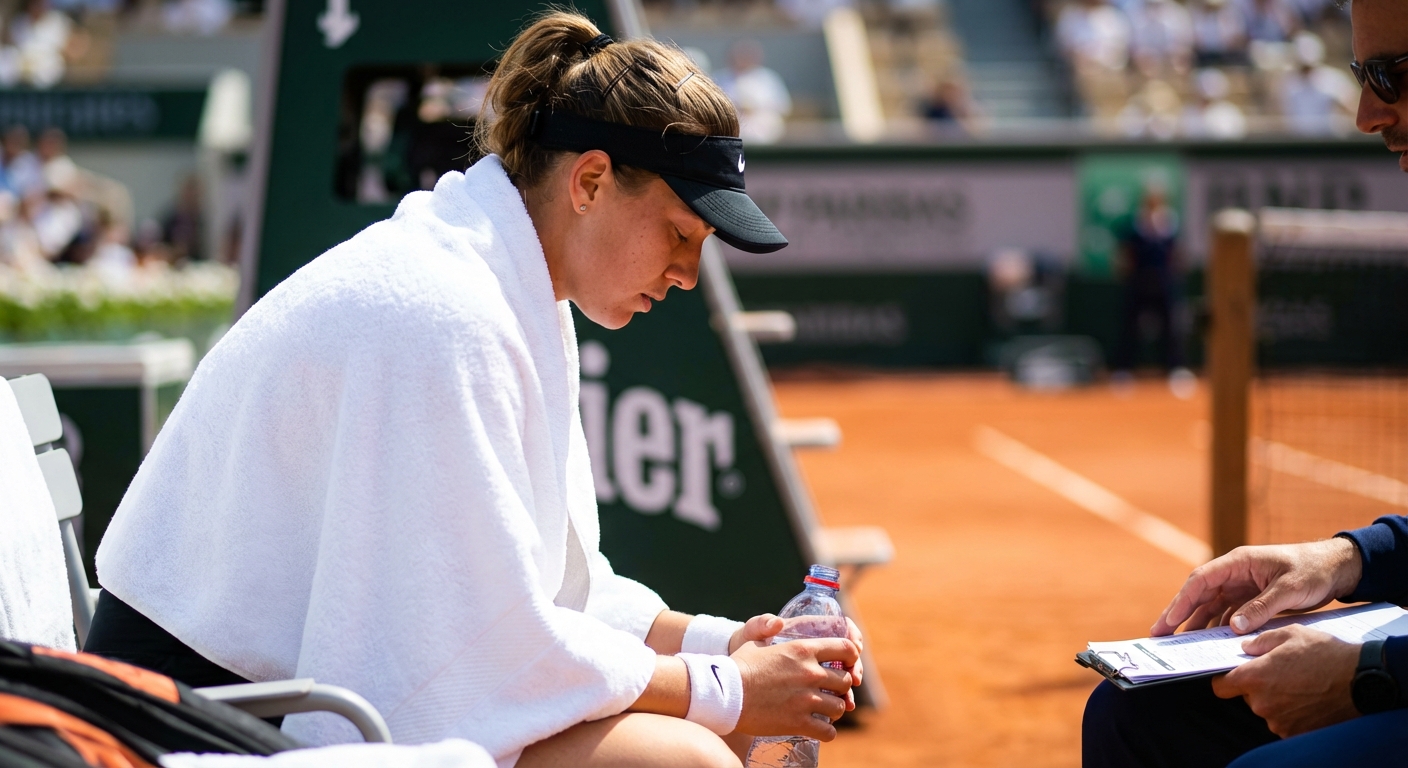
The Most Undercoached 90 Seconds in Tennis
Every tennis coach spends hours refining forehands, developing serve technique, and building tactical awareness. Yet the 90 seconds between odd games - the changeover - is almost universally neglected in coaching programmes. This is a significant missed opportunity, because how a player uses changeover time directly impacts their emotional regulation, tactical decision-making, and physical recovery throughout a match.
Consider what happens during a typical junior match. A player loses a close game, sits down, and spirals into negative self-talk. They replay the missed volley, the double fault, the questionable line call. By the time 90 seconds are up, they are emotionally charged, physically tense, and tactically unfocused. The next game begins and the negative momentum continues. This pattern is entirely preventable with a structured changeover routine.
The 90-Second Reset Framework
The most effective changeover routines follow a structured three-phase approach that coaches can teach, rehearse, and refine with players of all ages. This framework divides the 90 seconds into three distinct 30-second blocks, each with a specific mental purpose.
Phase 1: Release (0-30 seconds)
The first 30 seconds are dedicated to physical and emotional release. The player sits down, takes a drink of water, and uses a towel. These physical actions serve as anchors that signal the body to begin calming down. During this phase, the player is permitted one brief acknowledgement of the previous game - a single sentence summary, either positive or corrective. Examples include "I served well that game" or "I need to get my first serve percentage up." After that single acknowledgement, the previous game is closed. It is finished. No further analysis is permitted.
Phase 2: Regulate (30-60 seconds)
The middle 30 seconds focus on physiological regulation. The player performs three to five controlled breaths using the 4-7-8 pattern: inhale for 4 seconds, hold for 7 seconds, exhale for 8 seconds. This breathing technique activates the parasympathetic nervous system, reducing heart rate, lowering cortisol levels, and clearing the mental fog that comes with competitive stress. During this phase, the player should also scan their body for tension - tight shoulders, clenched jaw, gripped racket hand - and consciously release it.
Phase 3: Plan (60-90 seconds)
The final 30 seconds are tactical. The player identifies one specific tactical focus for the next game. Not three things, not a complete game plan - one clear, actionable intention. Examples include "I will serve wide on the deuce side to open the court" or "I will take the ball earlier on their second serve." This single focus point gives the player's mind a clear direction as they walk back onto court, replacing anxiety with purpose.

Processing the Last Game Without Dwelling
One of the hardest skills for any tennis player - junior or adult - is processing what happened without getting trapped in it. The key distinction coaches must teach is the difference between analysis and rumination. Analysis is brief, specific, and forward-looking: "My backhand return was landing short, so I need to aim deeper." Rumination is repetitive, emotional, and backward-looking: "I cannot believe I missed that easy backhand again, I always choke on big points."
A practical technique is the "one sentence rule." Players are permitted exactly one sentence about the previous game during the release phase. That sentence must follow a specific structure: observation plus adjustment. "I noticed X, so I will do Y." This format forces the player to extract a lesson and move forward rather than recycling negative thoughts.
For younger players who struggle with this, coaches can introduce a physical cue. Some coaches use a wristband that the player touches during the release phase as a signal to close the mental file on the previous game. Others use a specific spot on the racket or a particular way of placing the racket bag. The physical action becomes associated with mental closure through repeated practice.

Breathing and Visualisation Techniques
The regulate phase is where sport science meets practical coaching. Controlled breathing is not a soft skill or a nice-to-have - it is a measurable physiological intervention that changes the player's body chemistry. When a player is stressed, their breathing becomes shallow and rapid, keeping the sympathetic nervous system activated. This leads to muscle tension, impaired fine motor control, and narrowed attentional focus - exactly the opposite of what is needed for skilled tennis performance.
The 4-7-8 Breathing Pattern
Inhale through the nose for 4 seconds, filling the diaphragm rather than the chest. Hold the breath for 7 seconds. Exhale slowly through the mouth for 8 seconds. Three to five cycles of this pattern during the changeover measurably reduce heart rate and promote a state of calm alertness. Coaches should practise this with players during training sessions so it becomes automatic during matches.
Quick Visualisation
During the plan phase, a 10-second visualisation of the first point of the next game can be extremely effective. The player closes their eyes briefly and sees themselves executing their tactical intention successfully. They might visualise a wide serve on the deuce side, the opponent stretching, and the open court available for the second shot. This primes the neural pathways for the action they intend to take.
Coaching Juniors to Use Changeovers Productively
Young players often struggle with changeover routines because 90 seconds feels like an eternity when emotions are running high. The key to teaching juniors is simplification and repetition. Do not attempt to introduce the full three-phase framework in one session. Instead, build it progressively over several weeks.
Week 1-2: The Physical Routine
Focus only on the physical actions: sit down, drink water, use the towel, in the same order every time. This creates a predictable sequence that anchors the player and begins building habitual behaviour. Do not worry about the mental content yet - just establish the physical routine.
Week 3-4: The One-Sentence Rule
Add the release phase language. After the physical routine, the player practises their one sentence: "I noticed X, so I will do Y." Practise this during training sets, pausing between games to verbalise the sentence aloud to the coach.
Week 5-6: The Breathing
Introduce the 4-7-8 breathing into the middle section. By this point, the physical routine and one-sentence rule are becoming habitual, so the player has mental bandwidth to add the breathing component.
Week 7-8: The Tactical Focus
Finally, add the plan phase. The player now has a complete changeover routine: physical actions, one sentence, breathing, tactical focus. This progressive approach prevents overwhelm and ensures each element is solid before the next is added.
Body Language and Its Impact on Momentum
How a player carries themselves during the changeover sends powerful signals - to themselves, to their opponent, and to spectators. Research in sport psychology consistently shows that adopting confident body language actually changes internal emotional states, not just external perception. A player who sits upright with shoulders back during a changeover processes the previous game more constructively than one who slumps with their head in their hands.
Coaches should teach players specific body language protocols for changeovers. Walk to the chair with purpose, not dragging feet. Sit upright rather than slouching. Keep the head up rather than burying it in a towel. Look forward or slightly upward rather than at the ground. These postural cues reinforce the internal narrative of competence and control, even when the scoreboard suggests otherwise.
The opponent is also watching. A player who looks composed and purposeful during a changeover - regardless of the score - projects an image of resilience that can be deeply unsettling for an opponent who expected their momentum to continue. This psychological advantage costs nothing but attention to detail.
Session Structure: Practising Changeover Routines
Sample Session Plan (60 minutes)
Warm-Up with Mini Changeovers (10 min)
Players rally for 2 minutes, then take a 60-second seated changeover practising the physical routine (sit, drink, towel). Repeat three times. Coach observes body language and provides feedback.
Pressure Points (15 min)
Play first-to-4 point games with a changeover after every game. During each changeover, the player must verbalise their one-sentence summary and tactical focus to the coach. This makes the internal process external and correctable.
Breathing Under Pressure (15 min)
Players do an intense physical drill (sprints, rapid-fire feeding) for 90 seconds, then immediately sit for a 90-second changeover practising the 4-7-8 breathing. The coach times the breathing and monitors the player's ability to calm down measurably.
Full Match Play with Coached Changeovers (20 min)
A practice set where the coach sits with the player during every changeover, guiding them through the three phases. Over subsequent sessions, the coach's involvement gradually reduces until the player manages the routine independently.

Common Mistakes Coaches Make
Mistake 1: Overloading the Changeover
Some coaches give players five or six things to think about during a changeover. This defeats the purpose entirely. The changeover should simplify, not complicate. One sentence about the past. One focus for the future. Everything else is noise.
Mistake 2: Ignoring It Until Match Day
Changeover routines must be practised in training. A player who has never used a structured changeover will not suddenly deploy one when they are 4-5 down in the third set. Build changeover practice into every training set, every practice match, every competitive drill.
Mistake 3: One Size Fits All
Different players need different emphases within the framework. An anxious player may need more time in the regulate phase. A tactically weak player may benefit from a longer plan phase. Customise the time distribution within the 90 seconds based on each player's needs.
Frequently Asked Questions
What should a player do during the side change (every two games) which is shorter?
The side change is only 25 seconds, so the full three-phase routine does not fit. Teach players a compressed version: one deep breath while walking to the other side, and one tactical focus word or phrase they repeat to themselves as they prepare to receive or serve. The key is maintaining the habit of structured thinking even in the shorter break.
My player gets more anxious when they try to follow a routine - what should I do?
This usually means the routine is too complicated or was introduced too quickly. Strip it back to just the physical actions - sit, drink, towel - and nothing else for several weeks. Once those become automatic and calming, gradually add one mental element at a time. Some players also benefit from a simpler breathing pattern such as box breathing (4-4-4-4) rather than the 4-7-8 pattern.
How do I teach changeover routines to a group rather than an individual?
In group settings, build changeover practice into competitive drills. When players rotate between courts or wait for their turn, have them practise a 60-second seated routine. You can also use video of professional changeovers as discussion starters, asking players to observe what the pros do with their body language, breathing, and preparation during the break.
Do changeover routines work for doubles as well?
Yes, but with an important modification. In doubles, the changeover should include a brief, structured conversation between partners. The format should be: one positive observation about the partnership, one tactical adjustment, and an agreement on the plan for the next game. This keeps communication constructive and forward-focused rather than allowing blame or frustration to creep in.