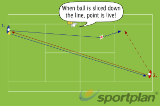
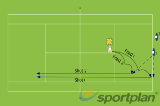
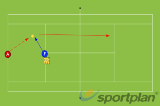
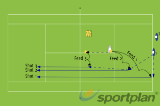
Players are working cross-court from their backhand corners and have to hit a backhand slice off every single ball. They also have to slice the ball deeper than the service line and cannot dropshot or come to the net.
If a player has to hit a forehand or a topspin backhand they lose the point straight away.
Players must take it in turns to feed the ball in and the point is played out in this way in the half-court with the tramlines being out, first to 11 points.
The points should be quite long in this drill, as it should be almost impossible to hit a winner.
Players can think carefully of ways to force the error from their opponent, by moving them around in the half-court side to side, deeper and shorter and by mixing the pace of the slice that they hit.
It is as much for patience as it is for hand skills!
Discussion:
Players can think carefully of ways to force the error from their opponent, by moving them around in the half-court side to side, deeper and shorter and by mixing the pace of the slice that they hit.
It is as much for patience as it is for hand skills!

A tiebreak is a short sprint where every point is worth the same as a break of serve. The players who win them are rarely the ones who hit hardest. Here is how to coach the patterns, habits and scoreboard thinking that win the big points.
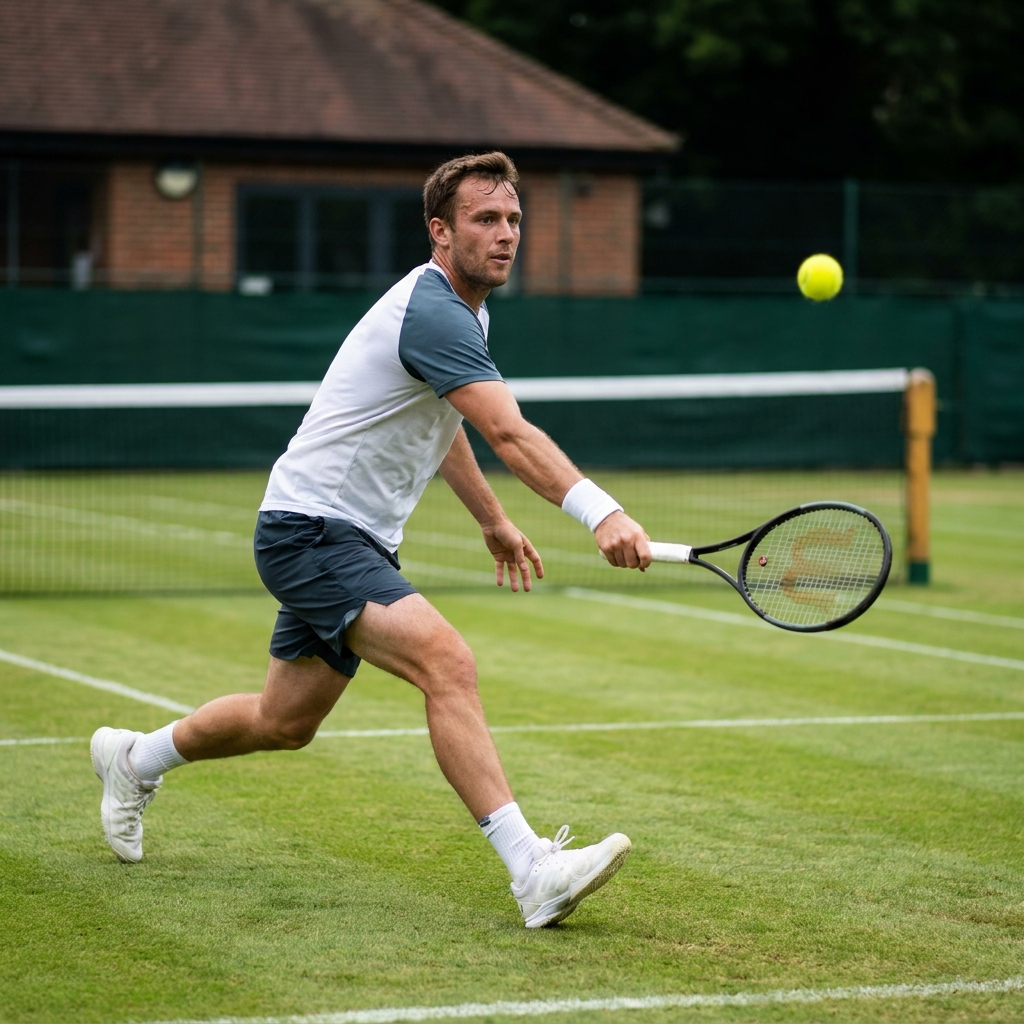
Most club players practise the serve on its own and then have no idea what to do with the ball that comes back. Serve plus one is the pattern that turns a good serve into a won point.
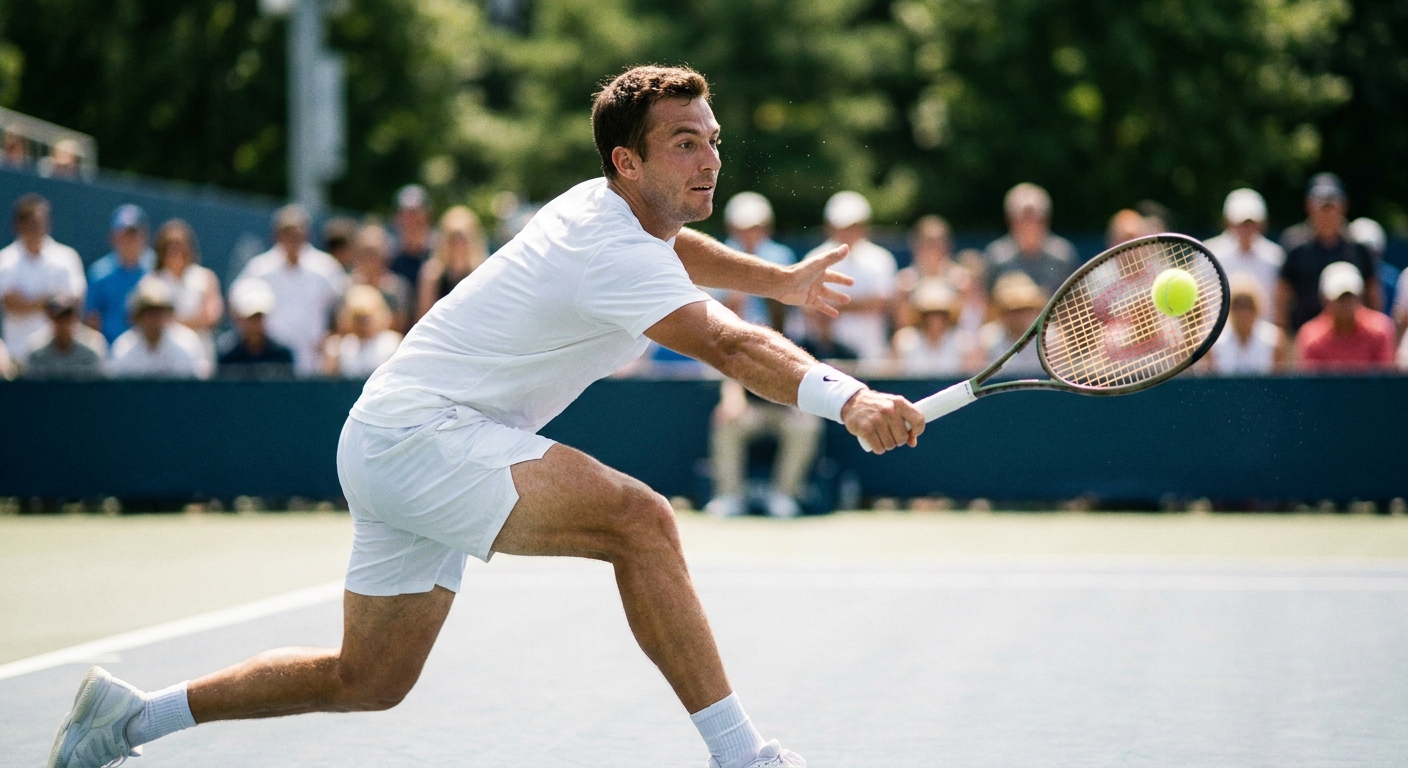
Wimbledon has just crowned another champion, and if you watched closely you saw the same thing every year: the best returners quietly won the tournament. Here is how to coach a return that pressures the server rather than just surviving it.


Register for FREE and get coaching tips, top drills, session and more every week!