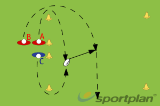
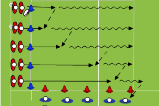
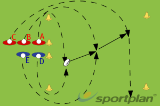
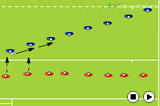
Set a grid to attack. Defenders and attackers begin on the touchline in the centre. Both leave at the same time and run around appointed cones, ball carrier should accelerate up towards defender channeling them however they want realising that they have two other support runners for different options to run in and score.
Get players to run at different areas of the channel to make it more realistic to game time. Ball runner must choose wisely where to run but must always give themselves at least one option to pass the ball otherwise they will fail. Support runners come from depth.

in more ways than one
 sportplan_netball



in more ways than one
sportplan_rugby

Tacklers are aiming lower, so carriers who dip late put heads at risk. Teach footwork, a strong early body height and leg drive to win the collision safely.

The hooker's brake foot moved from trial into full law in July 2026. Here is how to coach it so your front row stays stable, legal and safe.

Your players can pass beautifully in a warm-up grid. Then a defender closes, their lungs are burning, and the ball goes to ground. Here is how to build catch-pass skills that hold up when it matters.