This drill is designed to get your players in good habits when presenting the ball at the breakdown. This will allow your team to hold onto possession better and get quicker ball.
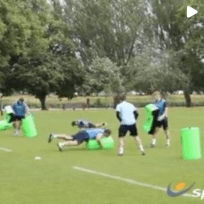
When the coach says "Down" or blows their whistle, whoever has the ball must drop to the ground and present the ball.
The player who has presented the ball then passes to the player behind him and the drill carries on continuously.
0.29 - Demonstration
1.20 - What is the purpous of this drill?
When going to ground players should extend fully as if scoring a try.
Then coach your players to focus on snapping their hips in order to turn their bodies away from the threat.
The safest way to present is the long present. I.e. your players should be lying parallel to the touch line with their feet pointing at the opposition try line. This moves the ball as far away from the danger as possible, allowing for safe and quick ball.
Players should stay square when running the ball, focusing on not drifting and taking the space away from the player outside of them.
You should get your players used to working back to their feet as quickly as possible.
Start off with the opposition on bags putting little pressure on the attack.Then keep getting the opposition to increase the amount of pressure they are putting on.
It is good to finish off a drill with it being similar to what the players will experience in a game. So allow the defenders to compete at the breakdown.

in more ways than one
 sportplan_netball

in more ways than one
sportplan_rugby

Tacklers are aiming lower, so carriers who dip late put heads at risk. Teach footwork, a strong early body height and leg drive to win the collision safely.

The hooker's brake foot moved from trial into full law in July 2026. Here is how to coach it so your front row stays stable, legal and safe.

Your players can pass beautifully in a warm-up grid. Then a defender closes, their lungs are burning, and the ball goes to ground. Here is how to build catch-pass skills that hold up when it matters.