







what space/area
What size space would you use in this exercise?
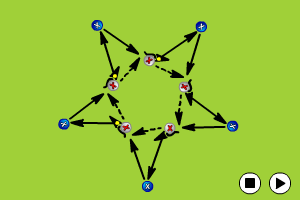
Give and Go Circle - Part 1
DESCRIPTION
The inside player passes the ball to their partner on the outside. The inside player then moves clockwise to receive the ball back via a wall pass from the outside player. The inside player then runs clockwise to pass the ball to the next player on the outside Practice continues.
Give and Go Circle - Part 1
DESCRIPTION
The inside player passes the ball to their partner on the outside. The inside player then moves clockwise to receive the ball back via a wall pass from the outside player. The inside player then runs clockwise to pass the ball to the next player on the outside Practice continues.

Sharon DuguidCoach, Australia
ANSWERS
Cam HughesCoach, England
Hi Sharon,
For the this drill, you should set up a space that allows for smooth passing and movement. Typically, a small grid or circle of about 10-15 yards in diameter should suffice. This space is large enough to practice passing and receiving while ensuring players can move around comfortably and maintain the drill's flow.
I hope this helps,
Cam

 sportplan_hockey









