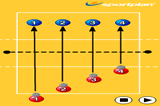
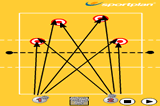
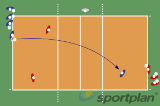
Players have a ball each and stand behind the back line.
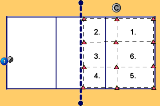
One at a time players must underarm serve the ball over the net and try to get their ball to land inside the target area, which is marked by cones.
After serving the ball players must follow their serve, collect their ball and run around the court to the back of the line.
The coach should be stood by the target area to see if the ball lands inside or outside the area. You could split your group into teams to see which team is the most accurate, awarding a point for every time the serve is good (inside the area).
Progression:
Move the target area and reduce it in size.
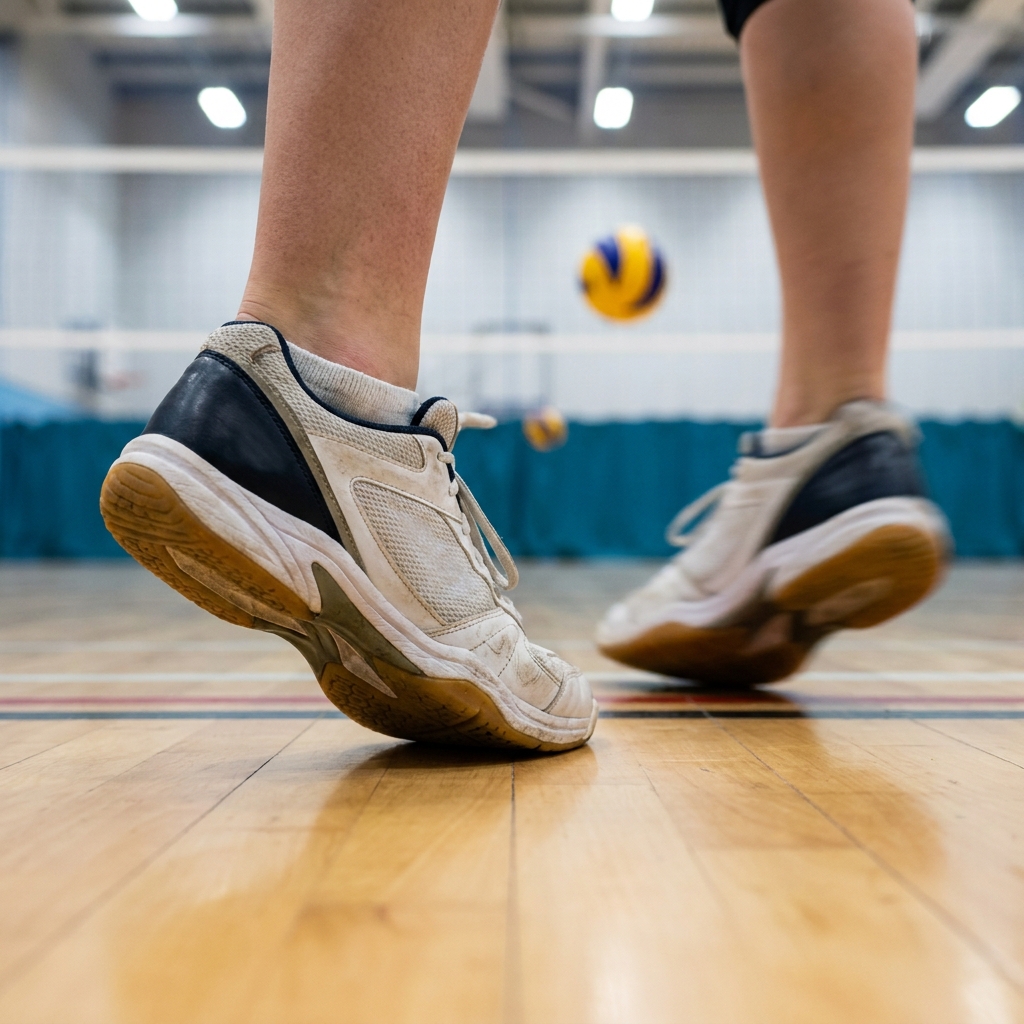
New hitters rarely miss because of their arm. They miss because of their feet. Build a reliable approach, then time it with your setter.
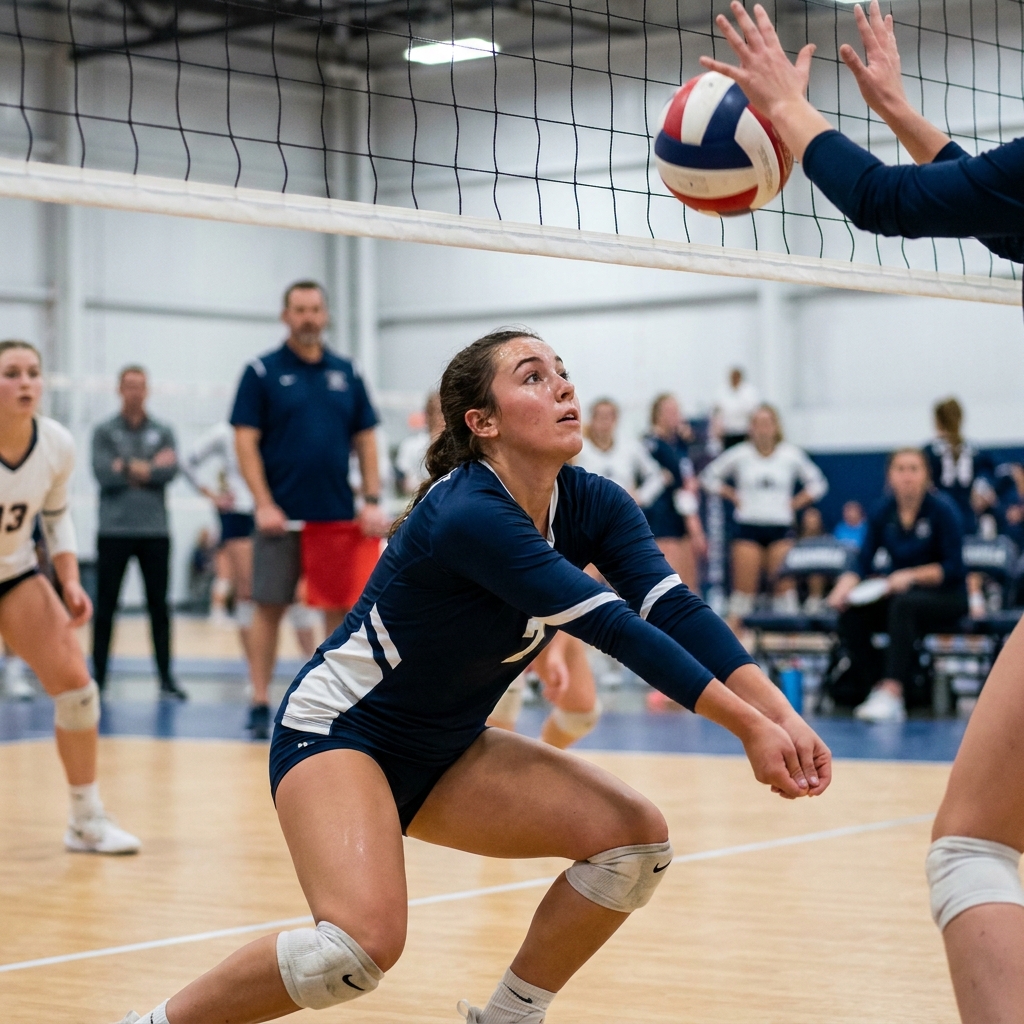
When your hitter gets stuffed, five teammates standing and watching is how you lose the point. Good attack coverage turns a blocked ball into a second swing.

Coaches spend hours correcting arms in serve receive when the real fault is almost always the feet. Fix the movement and the platform fixes itself.


Register for FREE and get coaching tips, top drills, session and more every week!