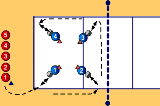
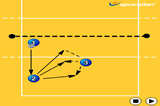
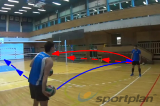
The coach loops the ball into the air, slightly to the left or the right of the blue cone, and the first player runs out and bumps the ball back into the coach's hands.
The player then continues in the direction they were moving and touch the red cone. They then shuffle back towards the middle where they receive their second feed from the coach which they bump pass back.
Finally the player shuffles across the other wide cone, touch it and then return to the middle to play the third and final bump pass.
Players should read the coach's feed quickly and position themselves under the ball to play an accurate bump pass.
Players should always be facing the coach throughout this drill (until they finish and join the back of the line).
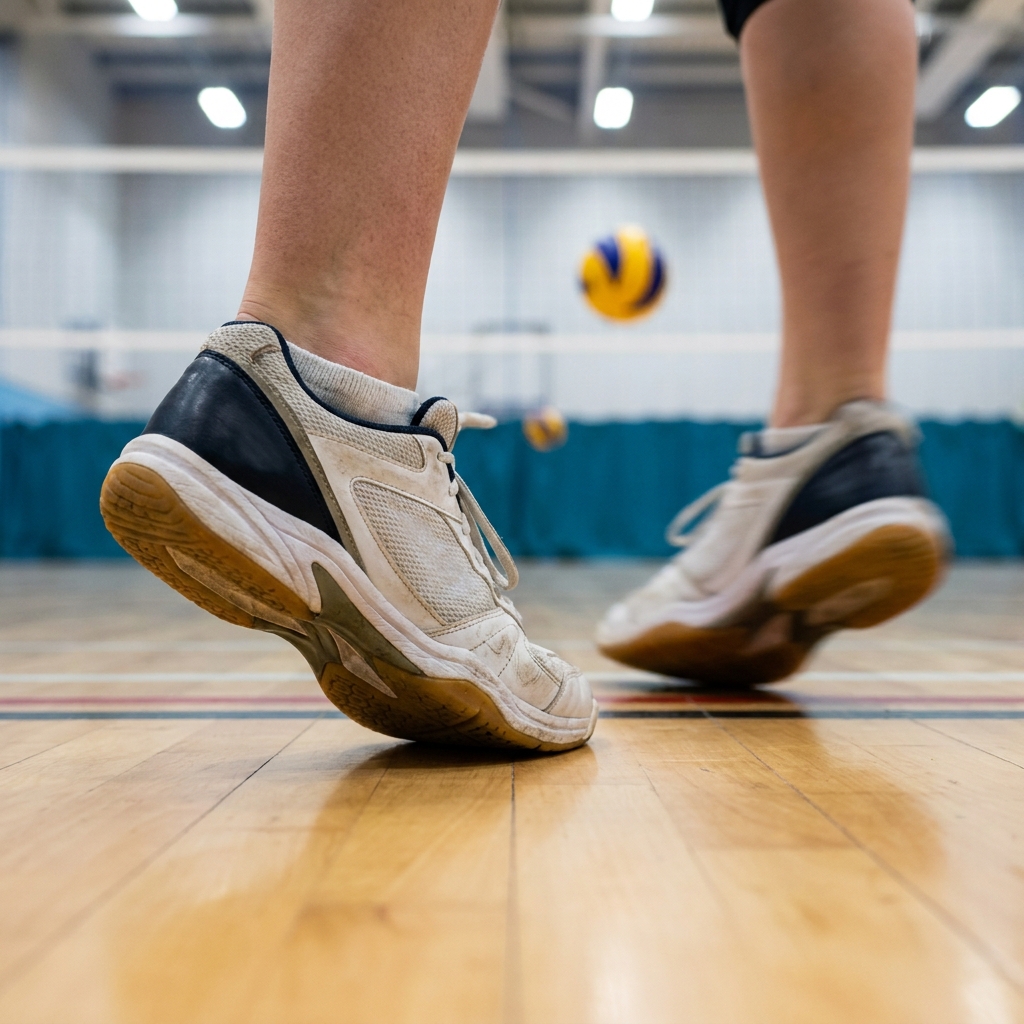
New hitters rarely miss because of their arm. They miss because of their feet. Build a reliable approach, then time it with your setter.
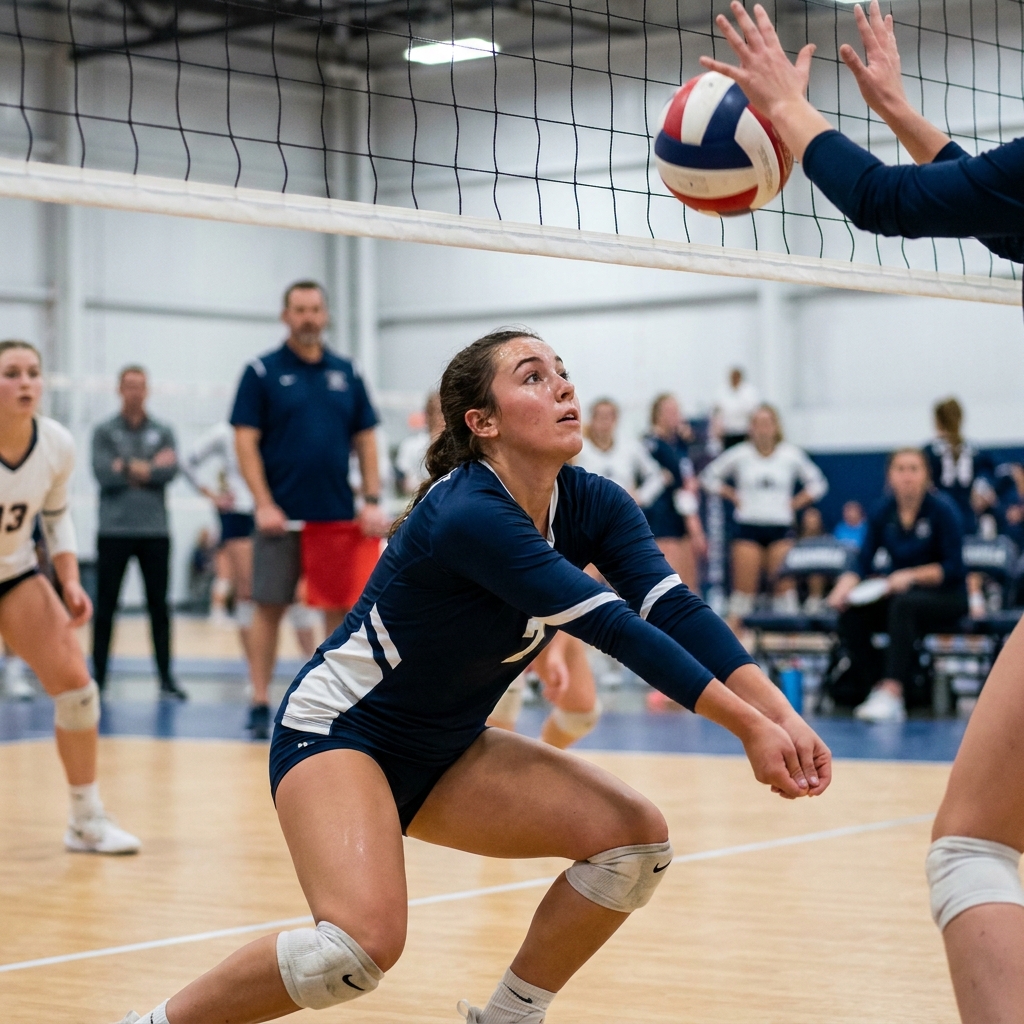
When your hitter gets stuffed, five teammates standing and watching is how you lose the point. Good attack coverage turns a blocked ball into a second swing.
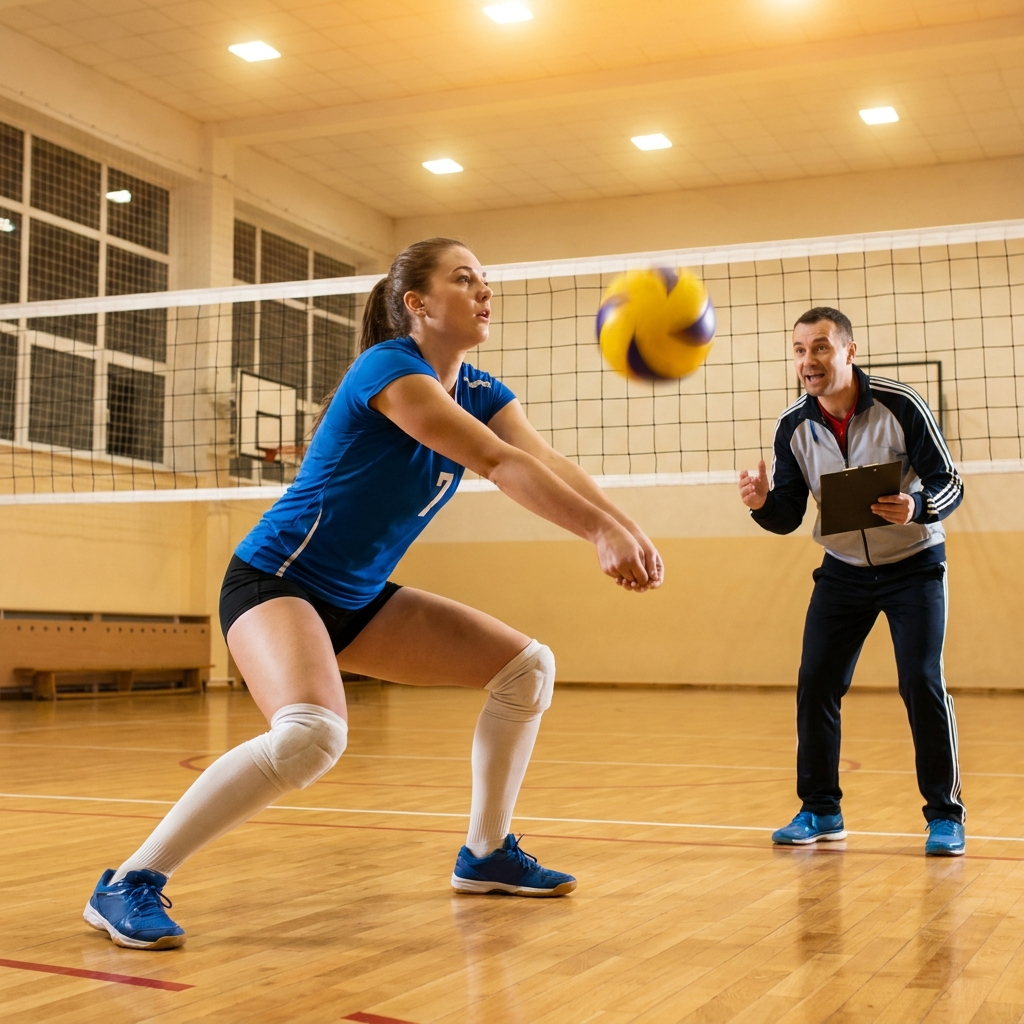
Coaches spend hours correcting arms in serve receive when the real fault is almost always the feet. Fix the movement and the platform fixes itself.


Register for FREE and get coaching tips, top drills, session and more every week!