The player wears resistance band attached to the waist and ankles. The coach feeds the balls to the forehand side, and the player hits only forehand volleys in a low dynamic position.
Maintaining low and dynamic position is even more important at the net than on the baseline. It is because players have less time to react so any weakness in positioning will be quickly exposed by a good opponent. Players should remember that rallies at the net are really quick (max 2-3 shots) so they have to make sure that each stroke is almost excellent.
In this drill, the player works on low and dynamic position. Wearing resistance band is a demanding coaching aid because players have to work really hard with their legs muscles to maintain this position. Another benefit of this tool is that trying to make legs straight is even more demanding for the muscles because of the resistance. The coach should make the sets shorter for less fit players and longer for real athletes to get good benefits of this drill. This exercise is also a good indicator of our players' fitness levels so players will get quick feedback about their physical preparation for tennis.
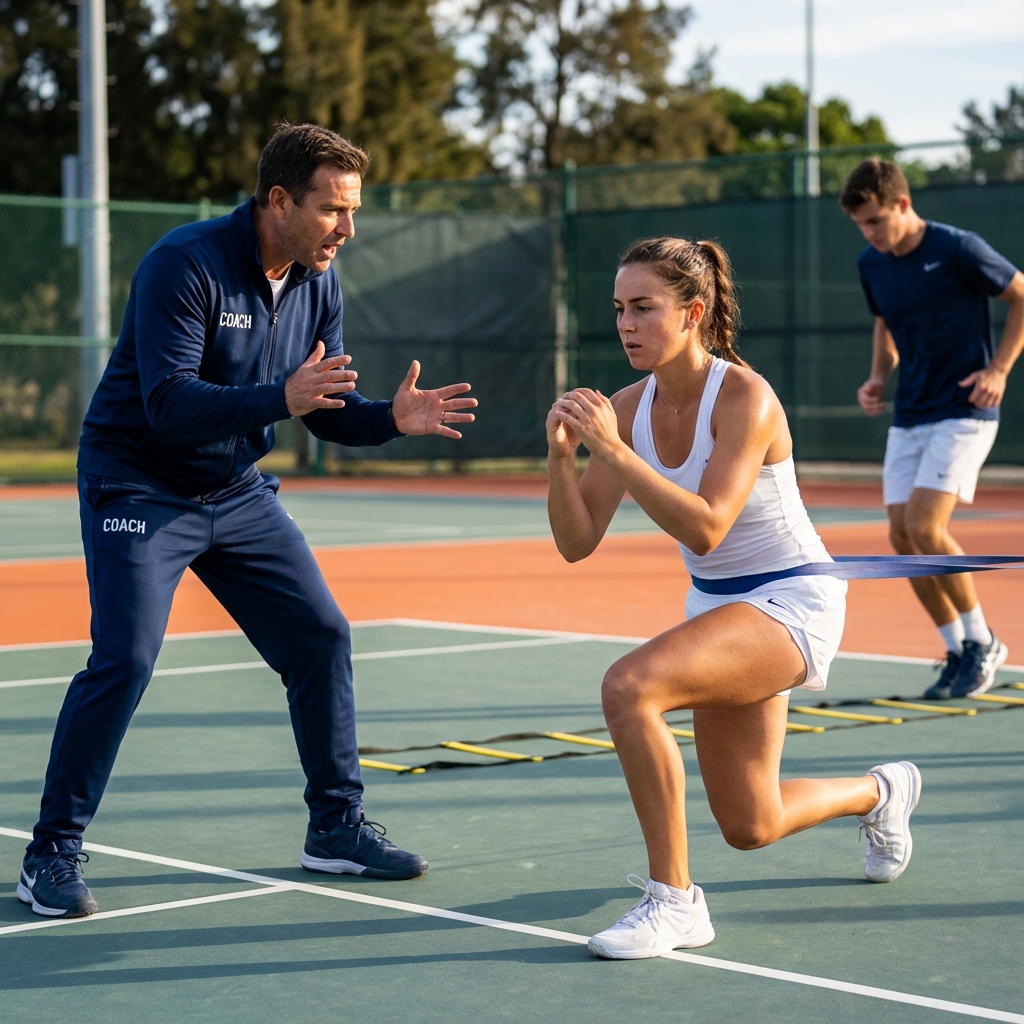
Tennis demands a unique combination of endurance, power, agility, and flexibility. Physical preparation determines how long careers last and how players perform when it matters most.

Ecological dynamics is transforming tennis coaching. This constraints-led approach develops adaptable, creative players who can solve problems in competition, not just execute drilled patterns.

The one-handed backhand is becoming rare, but when executed well, it remains one of tennis's most elegant and effective shots. Is it a dying art or a tactical advantage?


Register for FREE and get coaching tips, top drills, session and more every week!