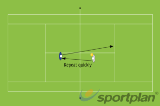
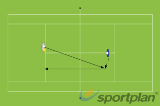
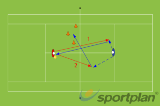
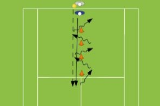
The player begins by standing on the service line, with the coach tossing short balls to the backhand side. The player must move across and backhand volley the ball down the line.
Technique can help or obstruct proper execution of the low volley. Many players miss these balls because they use the racquet instead of the legs.
Looking at the best players in the world, we can learn that bending the knees really low (sometimes touching the ground) is a necessity to control the ball and place it into desired area.
Less experienced players try to lower the racquet's head to get to the ball which results in many errors.
The coach should teach players to go into a lunge position and maintain their balance by keeping their upper body straight to guarantee faster improvements.
Indoor courts give players less time and less room. Help them sharpen their split step, shorten their swing and stay calm, and winter becomes a season of real progress.
A tiebreak is a short sprint where every point is worth the same as a break of serve. The players who win them are rarely the ones who hit hardest. Here is how to coach the patterns, habits and scoreboard thinking that win the big points.
Most club players practise the serve on its own and then have no idea what to do with the ball that comes back. Serve plus one is the pattern that turns a good serve into a won point.


Register for FREE and get coaching tips, top drills, session and more every week!