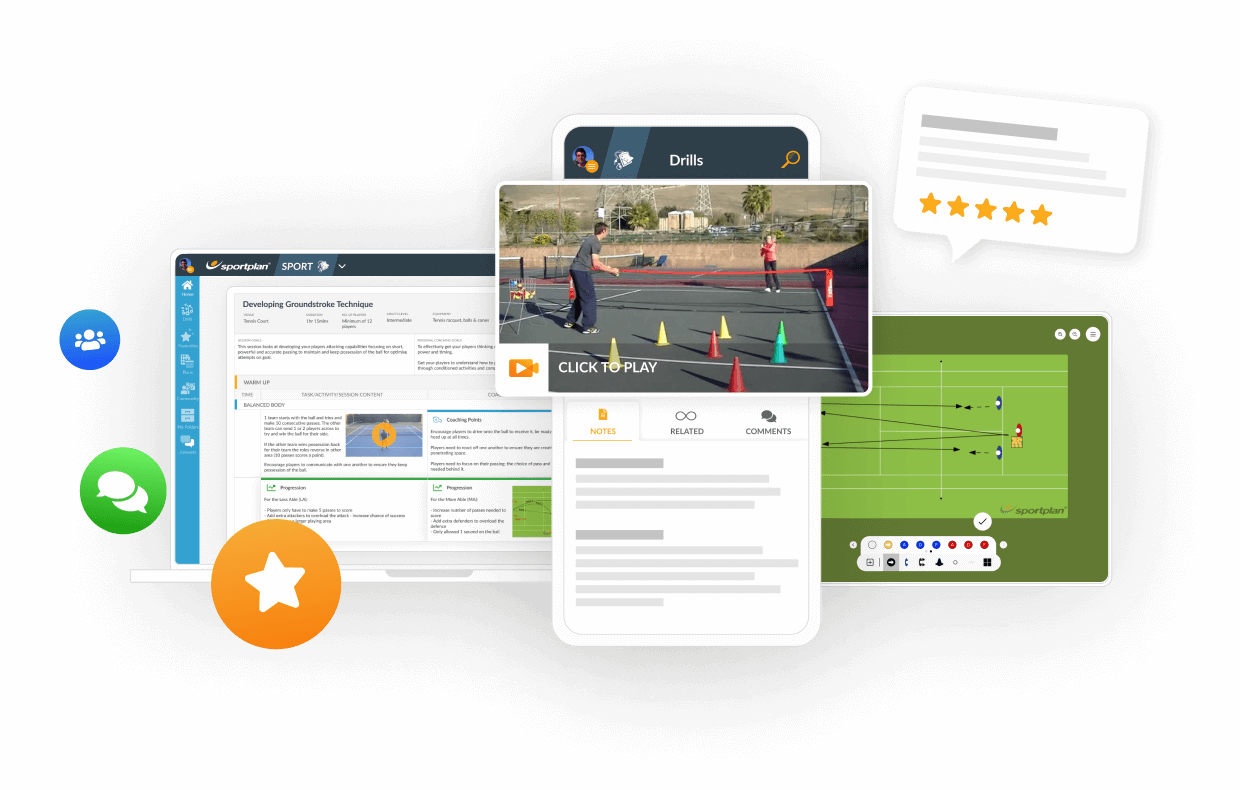
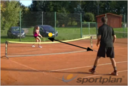
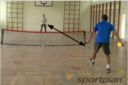
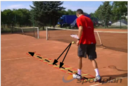
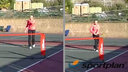
Cones (stations) are set on the player's side, who starts from the first cone. The coach feeds the ball and the player has to hit backhand inside the court. If the shot is good, the player is moving to the next cone (station). If not, the player has to try again until it is done.
Nowadays kids love games because of phones and tablets available for them every minute. That is why if we want them to participate in tennis we have to make this sport as fun as activities that they pick during own free time. Creating games or challenges is a good first step to evolve simple hitting sport into a quest that they want to be part of.
In this drill this player works on different backhand strokes. We have to remember that different spots on the court require technical modifications in strokes to maintain high level of consistency. Each backhand in tennis is a little bit different so giving kids various stations to hit from will help them to develop backhand that they will successfully use in the future. Additionally during this exercise your players are working on character development because if they can't pass one station they have to be patient and motivated to get through it.
Indoor courts give players less time and less room. Help them sharpen their split step, shorten their swing and stay calm, and winter becomes a season of real progress.
A tiebreak is a short sprint where every point is worth the same as a break of serve. The players who win them are rarely the ones who hit hardest. Here is how to coach the patterns, habits and scoreboard thinking that win the big points.
Most club players practise the serve on its own and then have no idea what to do with the ball that comes back. Serve plus one is the pattern that turns a good serve into a won point.


Register for FREE and get coaching tips, top drills, session and more every week!