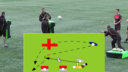
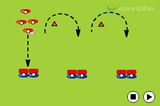
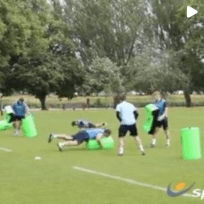
A coach or scrum half feeds a ball carrier who should be running onto the ball.
The ball carrier should run towards the tackle sausage and use footwork and a hand off to move past the tackle sausage towards the first two tackle bags.
The player should aim to hit the gap between the two tackle bags and power beyond the contact.
Those two players then drop the bags and follow the original runner in support.
The ball carrier then hits the bag, goes to ground and looks to lift the ball up to one of his support players.
The next player then hits the last tackle bag, goes to ground and presents the ball.
The next support player clears away the bag to secure the ball.
This drill works on a number of skills (running onto the ball, hand off, footwork and hitting gaps, communication and support, clearing out a ruck) in continuity which means its more game realistic and trains players to not only perform the individual skills, but also to be thinking about how the skills link together and what their next job is.
Your players should never catch the ball standing still.
Players should run an S line using footwork, rather than straight towards the gap, which is easy for defenders to read.
Always remind your team to hold the Ball with two hands.
Support players should be communicating with the ball carrier to tell him where they are and what to do. For example: “Im on your left” or “go to ground”.
Players should have low body height when clearing out the ruck.

in more ways than one
 sportplan_netball
in more ways than one
sportplan_rugby
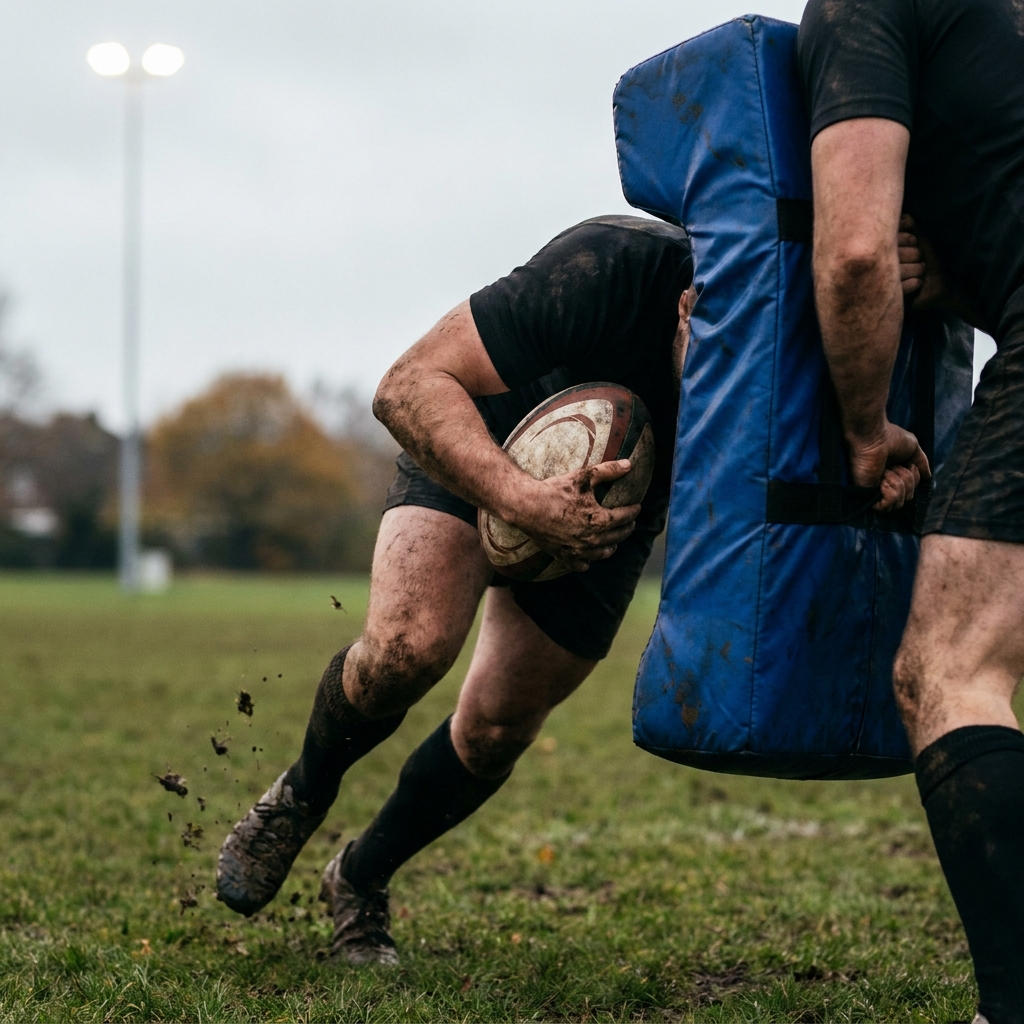
Tacklers are aiming lower, so carriers who dip late put heads at risk. Teach footwork, a strong early body height and leg drive to win the collision safely.
The hooker's brake foot moved from trial into full law in July 2026. Here is how to coach it so your front row stays stable, legal and safe.
Your players can pass beautifully in a warm-up grid. Then a defender closes, their lungs are burning, and the ball goes to ground. Here is how to build catch-pass skills that hold up when it matters.