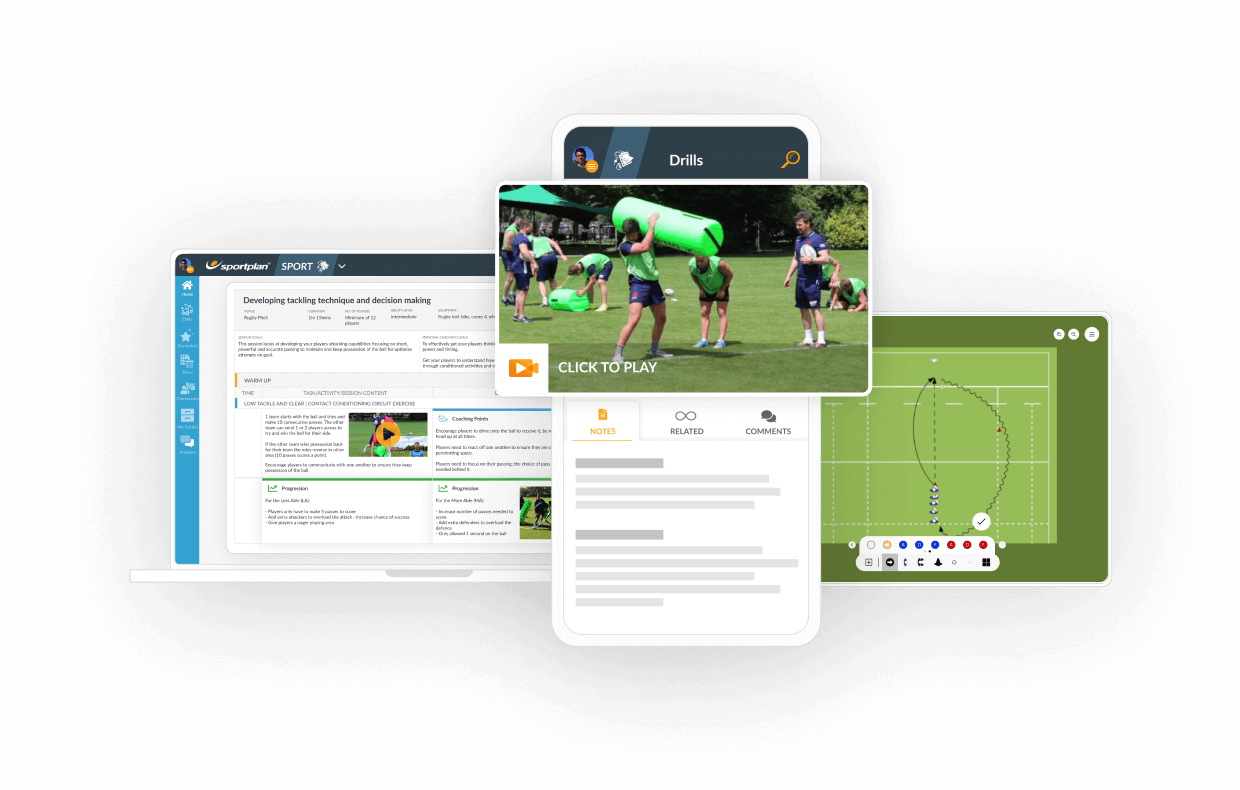
Set up a square of cones, and get the players to form equal lines behind each cone.
The ball starts in the hands of a player behind cone 1, who runs (black running line) towards cone 2, passes the ball to the player behind cone 2 who passes the ball back to the first player. The first player then runs towards cone 3 and passes the ball to the player standing behind cone 3.
The player who passed the ball from behind cone 2 runs (blue running line) following the run of the first player and receives a pass from the player behind cone 3 before running towards cone 4 and passing the ball to the player behind cone 4.
The player who passed the ball from behind cone 3 runs (yellow running line) following the run of the second player and receives a pass from the player behind cone 4 before running towards cone 1 and passing the ball to the player behind cone 1.
The player who passed the ball from behind cone 4 runs (red running line) following the run and receives a pass from the player behind cone 1 before running towards cone 2 and passing the ball to the player behind cone 2. The player who passed the ball from behind cone 1 runs (black running line) following the run and receives a pass from the player behind cone 2 before running towards cone 3 and passing the ball to the player behind cone 3, and the drill continues.
Change the direction which the ball is going.
Progressions:
Get the players to change direction on your command (shout/whistle etc)
Multiple balls
As a group must complete 10 successful passes before the session can move on, every time a ball is dropped the whole group does an exercise (e.g. 10 press ups).
Passing technique: High elbow, hands follow through towards the target
Catching technique: Hands extended from the body to form a target -> call for the pass
The passes are only short so need to be sympathetic (easy to catch)
Communication is key to ensure that the drill doesn't break down
in more ways than one
The offload is one of rugby's most devastating weapons when executed well, turning a defensive collision into a second-phase attacking opportunity. This article breaks down the technique, timing, and training progressions coaches need to develop confident offloaders at every level.
Defensive line speed is the single most important factor in shutting down attacking opportunities before they develop. This guide explores how to coach your defensive line to push up as a connected unit, communicate under pressure, and deny the opposition time and space.
The teams winning in 2026 aren't taking risks - they're grinding out territory with relentless pick-and-go phases. Here's how to coach it.