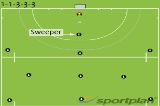
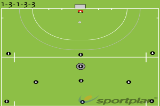
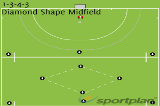
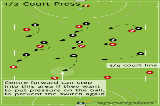
This system gives support to the backline as well as the midfield.
It relies on the 2 forwards to do a lot of running in defence and play further forward when their team is in possession.
When to use:
If your team is very fit and want to force the other team back by creating overloads in your defence and midfield.
Disadvantages:
The disadvantage of this system is that you only have 2 forwards, however they can be assisted by the wide midfielders, who can support the attack (see image).
Limitations:
This formation should only be played with a very fit midfield and is not recommended to any team below a 2nd team level.

in more ways than one
 sportplan_netball



in more ways than one
sportplan_hockey

A few weeks into the league season, poor first touches are costing teams the ball. Coach body shape, scanning and receiving on the move to keep possession.

Pre-season fitness fades fast once the league starts. Build conditioning into ball work and use rolling subs well to keep your squad sharp all season.

The first weeks of the season decide whether a junior or new player sticks with adult hockey. Here is how to keep them safe, give them a clear job and build their confidence from the very first bully.