Five Positions, Two Groups, One Court
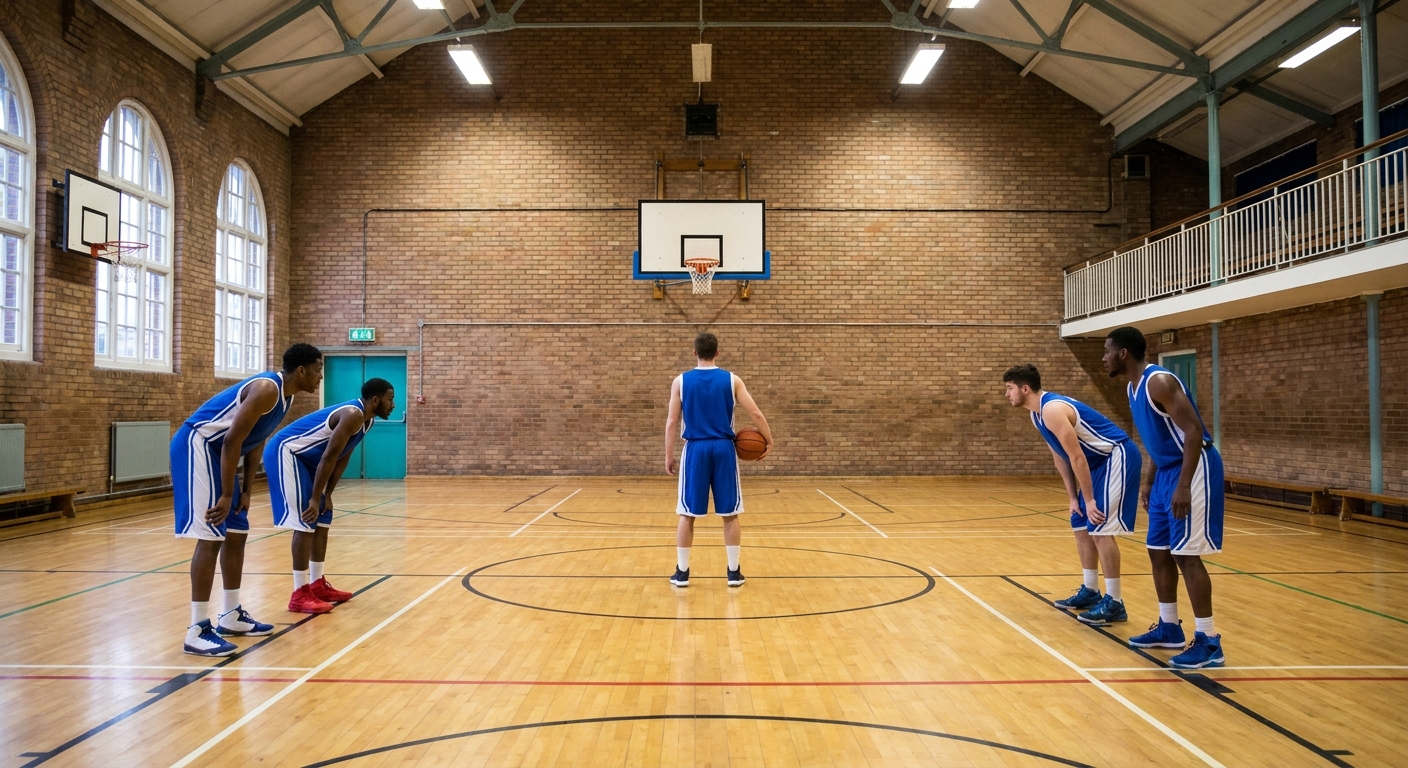
Basketball has five players on the court per team, and each one traditionally fills a numbered position from 1 to 5. The numbers are not random - they map roughly to size and role, running from the smallest, quickest playmaker at 1 up to the tallest player near the basket at 5. Once you know what each number does, calling plays and reading the game becomes far easier, whether you are coaching a junior side or watching from the sideline.
The five positions split naturally into three groups: two guards (the 1 and 2), two forwards (the 3 and 4) and one centre (the 5). Another useful way to picture it is the backcourt versus the frontcourt - the guards live further from the basket on the perimeter, while the forwards and centre do more of their work closer to the rim. Below we explain exactly what each player does, the body type and skills the role suits, then finish with a court diagram and a few drills to practise the skills each one demands.
The Backcourt: The Guards
Point Guard (1) - the floor general
The point guard runs the show. The 1 brings the ball up the court, sets the offence in motion, calls the plays and creates scoring chances for everyone else. Think of the point guard as the quarterback or the playmaker - usually the team's best ball-handler and decision-maker rather than its tallest player. A good point guard handles pressure, sees the whole floor, passes accurately and keeps a cool head when the game speeds up. Quickness, vision and composure matter far more than height here.
Shooting Guard (2) - the scorer
The shooting guard, or the 2, is traditionally the team's main perimeter scorer. The job is to get open, knock down jump shots and three-pointers, and attack the basket off the dribble when the defence closes out. A strong 2 moves well without the ball, comes off screens sharply and can both shoot from distance and finish at the rim. They are often a secondary ball-handler too, able to take some of the playmaking load off the point guard. Shooting accuracy and movement are the hallmarks of the role.
The Frontcourt: The Forwards and Centre
Small Forward (3) - the versatile wing
The small forward is the most all-round position on the court. The 3 sits between the guards and the big men, and is expected to do a bit of everything - score inside and out, defend, rebound and handle the ball. A good small forward is athletic and flexible enough to guard several positions and to attack from the wing. Because the role is so balanced, it is often where coaches start a developing player: get open, catch, then either shoot or drive. Athleticism and adaptability define the wing.
Power Forward (4) - the inside-outside forward
The power forward, or the 4, is a strong, physical player who works mainly around the key but is increasingly expected to step out and shoot too. Traditionally the 4 battled for rebounds, scored close to the basket and set screens. The modern power forward often adds a reliable mid-range or three-point shot, stretching the defence and opening up the floor. Strength, rebounding and a developing outside touch are the markers of a good 4.
Centre (5) - the post and rim protector
The centre is usually the tallest player and operates closest to the basket - in the post, at the heart of the key. On attack the 5 scores from close range, sets screens and grabs offensive rebounds; on defence they protect the rim, contest shots and clean up defensive boards. Strength, size and good footwork in a small space matter most. A dominant centre changes both ends of the floor simply by occupying the area right around the hoop.
Basketball Court Diagram: Where Each Position Lines Up
The diagram below shows a standard offensive set on a half-court: the point guard (1) up top organising the play, the shooting guard (2) and small forward (3) spread on the wings, and the power forward (4) and centre (5) working near the key. Read it alongside the quick-reference list that follows.
A standard offensive set: the 1 (point guard) runs the play up top, the 2 and 3 spread the wings, and the 4 and 5 work around the key.
And here is the same information as a quick-reference list, grouped by backcourt and frontcourt. The backcourt is your two guards; the frontcourt is your two forwards and the centre.
The Five Positions at a Glance
- Backcourt - 1, Point Guard: The floor general. Brings the ball up, runs the offence, creates for others. Needs vision, ball-handling and composure.
- Backcourt - 2, Shooting Guard: The scorer. Knocks down perimeter shots, attacks the basket, a secondary ball-handler. Needs shooting and movement.
- Frontcourt - 3, Small Forward: The versatile wing. Scores inside and out, defends multiple positions, rebounds. Needs all-round athleticism.
- Frontcourt - 4, Power Forward: The inside-outside forward. Rebounds, scores near the basket, increasingly shoots from outside. Needs strength and a developing range.
- Frontcourt - 5, Centre: The post and rim protector. Scores close, sets screens, protects the basket, dominates the boards. Needs size, strength and footwork.
A simple way to remember it: lower numbers play further from the basket and handle the ball more, higher numbers play closer to the rim and do more of the physical work. The 3 in the middle is the bridge - the most adaptable role on the floor.
The Modern "Positionless" Trend
For all the tidiness of numbered roles, the modern game is moving away from rigid positions. At the top level you now see point guards who post up, centres who shoot three-pointers and forwards who bring the ball up the court. Coaches increasingly talk about "positionless" basketball, where every player is expected to handle the ball, shoot, pass and defend across the floor rather than being locked into one job.
This matters most for juniors. The single biggest mistake in youth basketball is putting the tallest twelve-year-old at centre and never letting them dribble, then never giving the smallest a chance near the basket. Bodies change enormously through the teenage years - the early developer who towers at under-12s is often an average-height adult, while a late developer can shoot up by sixteen. If you have already pigeonholed them by height, you have capped their development.
The fix is straightforward: teach every young player every skill, and rotate them through every position. A guard who has spent time in the post understands spacing better; a tall player who has learned to dribble and shoot becomes a far more dangerous adult. Let positions emerge from skills and preferences over time, rather than imposing them on day one.
How to Use Positions in Training
Knowing the five roles is the start. The next step is teaching players to read the game and understand how the positions fit together, rather than treating them as fixed boxes. Rotate juniors through every position early in their development - it builds court awareness, stops players being pigeonholed too soon, and helps you spot where each child's strengths really lie. Our guide to team selection and fair rotation shows how to keep that balance across a season, and the junior drills guide gives you ready-made practices for every skill and role.
When you are ready to build a full session around a position - say, working the point guard's ball-handling or the centre's rebounding - drop the relevant drills into the structure in our free session plan template. Browse the full Basketball drills library for hundreds more practices sorted by skill area.
Frequently Asked Questions
What are the 5 basketball positions?
The five basketball positions are the Point Guard (1), Shooting Guard (2), Small Forward (3), Power Forward (4) and Centre (5). The two guards make up the backcourt, the two forwards and the centre make up the frontcourt. Each position is identified by a number, so coaches and players can call plays quickly: a 1 is the point guard, a 5 is the centre, and so on.
What does a point guard do?
The point guard, or the 1, is the floor general. They bring the ball up the court, run the offence, call the plays and create scoring chances for team-mates. A good point guard handles the ball under pressure, sees the whole floor, passes accurately and makes calm decisions. They are usually the team's best ball-handler and decision-maker rather than its tallest player.
What is the difference between a guard and a forward?
Guards (the 1 and 2) are typically smaller, quicker players who handle the ball, defend the perimeter and operate further from the basket. Forwards (the 3 and 4) are bigger and stronger, playing closer to the basket, rebounding and scoring inside as well as out. In short, guards live on the perimeter and run the offence, while forwards do more of their work nearer the rim - though the modern game blurs these lines.
What is the best basketball position for a beginner?
There is no single best beginner position, and the best approach is not to pigeonhole a young player at all. That said, many coaches start beginners on the wing as a small forward, where the role is simple - get open, catch, shoot or drive - without the constant ball-handling pressure of the point guard. The most important thing for juniors is to learn every skill and try every position before specialising.
Why do basketball positions have numbers?
Numbers give coaches a quick shorthand to call plays and set positions without long descriptions. The point guard is the 1, the shooting guard the 2, the small forward the 3, the power forward the 4 and the centre the 5. A coach can say run a 1-5 pick and roll and everyone instantly knows the point guard and centre are involved. The numbers also map roughly to size, with 1 the smallest and 5 the tallest.