TRANSFORM YOUR TEAM'S SEASON WITH PROFESSIONALLY PLANNED SESSIONS
Use our expert plans or build your own using our library of over 700+ drills, and easy-to-use tools.
JOIN NOWQuick answer
In field hockey, play a weaker player where the ball arrives on their forehand and a stronger teammate is close by: often the left side of your forward line, or beside a confident defender or midfielder. Give them one clear job, keep them out of central defence where mistakes cost goals, and rotate positions in training so everyone improves.
Where the ball comes to their forehand and help is close: usually the left of the forward line, left midfield, or beside a strong defender. Avoid the centre of defence, where a missed tackle often leads to a shot or a penalty corner.
Never call them the weakest. Tell them the specific job you want from them this week and one skill you are working on together, then praise effort on that job. Players who know their role stay keen; players who feel judged drop out.
A team has 11 players: a goalkeeper plus defenders, midfielders and forwards. Common shapes are 1-4-3-3 and 1-4-4-2, where the 1 is the goalkeeper. Our hockey positions guide explains each role.
Most coaches would say centre back or central midfield. Both need you to read play, tackle without body contact and pass on both sides of the stick under pressure, so neither is the right place for a developing player.
No. Under the FIH Rules of Hockey, players must not tackle unless they can play the ball without body contact (Rule 9.13), and must not obstruct or physically interfere with an opponent (Rule 9.12). Accidental contact happens, but deliberate contact is penalised.
Practise receiving and passing on both forehand and reverse every session, play small-sided games for lots of touches, and watch where good players stand off the ball. Ten minutes a day with a ball and a wall builds a first touch quickly.
Running the club too? Teamo, from the makers of Sportplan, pulls your fixtures straight from England Hockey's GMS and keeps availability and subs in one app. Find out more about Teamo.
Below: the original question and answers from coaches in the Sportplan community.
Hi Im new to coaching hockey want to know what position do I play some of my weaker players without them losing interest and there confidence.


Hello Adrian,
Using the search bar (above) we were able to find these past answers which should help, or at least give you some ideas to get you get you started:
If other coaches have suggestions to add please do, using the box below!
How many players per team (age group ?) and in what formation do you play ?
There are many answers and possibilities, from my experiences here are some ideas.
- Weaker defense or midfielders on the right side (forehand techniques).
- Weaker attack player on the left side, more attacks go over the right side and as attacker it is easier to score from the left side. Also the stronger players set-up the actions over the right side, needing the skills to do that, weaker players don't get through.
- Put a strong player behind or next to a weaker player, they feel more secure and the stronger player can solve a "problem" when needed, also the reason to find a good formation with enough secure barriers.
- Maybe you would like to make a social gesture and make a weaker player start the game... don't do it, start with your strongest possible team ! The opponent must be pressured immediately, it's better to bring "weaker" players during the game as this will be less noticed. Starting with weaker players will give mental advantage to the opponent and build their confidence and is a disadvantage to your team - the kids are not stupid, they know who is the weakest player, they feel insecure when starting like this. Also the danger of getting an early goal from the opposition must be avoided.
- Make weaker players better, don't let them train always with other weak players, train them against various levels, and guide them closely, make the see how and what the opponent is doing... this will give them the chance to "study" the better players and become better themselves... let the kids "coach" each other...
It is an op door: but your team is only as strong as your weakest player(s), make them stronger and the team get's stronger...
Good luck !

Very helpful Rob.
Are there more than one kind of weakness in a player?
How to work with it?
It all depends on what level you are coaching, youth or adults, elite or more recreational... but the focus would be the same. In short I believe that teams and therefore each individual player should be prepared to invest in themselves - work hard - during training and games, otherwise go play chess or something. my top 5 is like this:
1) Health (good sleeping, eating, drinking, resting, no injuries...)
2) Mental (willingness to listen, work and "sacrifice")
3) Physical (without 1 & 2 they will not do the physical work)
4) Tactical (without 3 they cannot execute any tactical plan)
5) Technical (with enough training any one can improve technique)
Again, it all depends on the level you work with, but the basics for me is the above and I start from there.
Best regards

Just my two cents:I do not typically put the weakest players back on the defensive line. I try to rotate them through the front (attacking) line on the left side. Putting weaker players on defense leaves you vunerable to (potentially) lots of corners getting called against your team. Hope this helps.
Thank you for highlighting the 5 characteristics Rob.
If players arrive on time each day, then chess is not their 1st choice.
Would you share some more on weakness with your experience working with U16?
For Jackson: why left side?
Thank you.

Thanks Rob you just helped me a lot!!
Thankyou.
@Ejaz: some specific issues or questions/problems you have in mind ?
@Crayton: happy to hear that :-)
"Weaker attack player on the left side, more attacks go over the right side and as attacker it is easier to score from the left side".
Can you kindly expantiate on the above, thanks.
A "weaker" player is more focussing on the forehand techniques. Therefore he/she will position him/herself with the left shoulder or even the back towards the goal recieving a pass from a co-player. In this position the stopping/control of the ball will be in forehand and a shot/push can be taken also in forehand. An attacker comming from the right side must be capable of giving also a backhandshot, which most "weaker" players cannot.
@Rob i tried it out with my first team during prac and i had to shuffle my players around different positions (placing the weaker players on the left and so on..) ....it worked wonders....the team won that game ..and not only was i impressed with the result..but also how the `team` as a whole looked good playing with great shape and structure and mostly ...how it became easy for the team to cover up for their weaker players during the game...thanks!!..will keep at it for the rest of the season!!
Would be better to think of players in groups of three: one weaker player supported by two stronger players. Also don`t entirley agree with having weaker player set up on LHS, can see the advantage around pick-ups and turning out strong, but teams generally attack centre/right so you are placing the weaker player in the thick of action defensively...
in more ways than one
 sportplan_hockey
As clubs start their indoor fixtures, outdoor habits get punished fast. Here is how to retrain the skills that actually change indoors.
Two defenders chase the ball, nobody covers the runner, and a soft goal goes in. Here is the five-step treat for the mix-up haunting hockey defences this October.
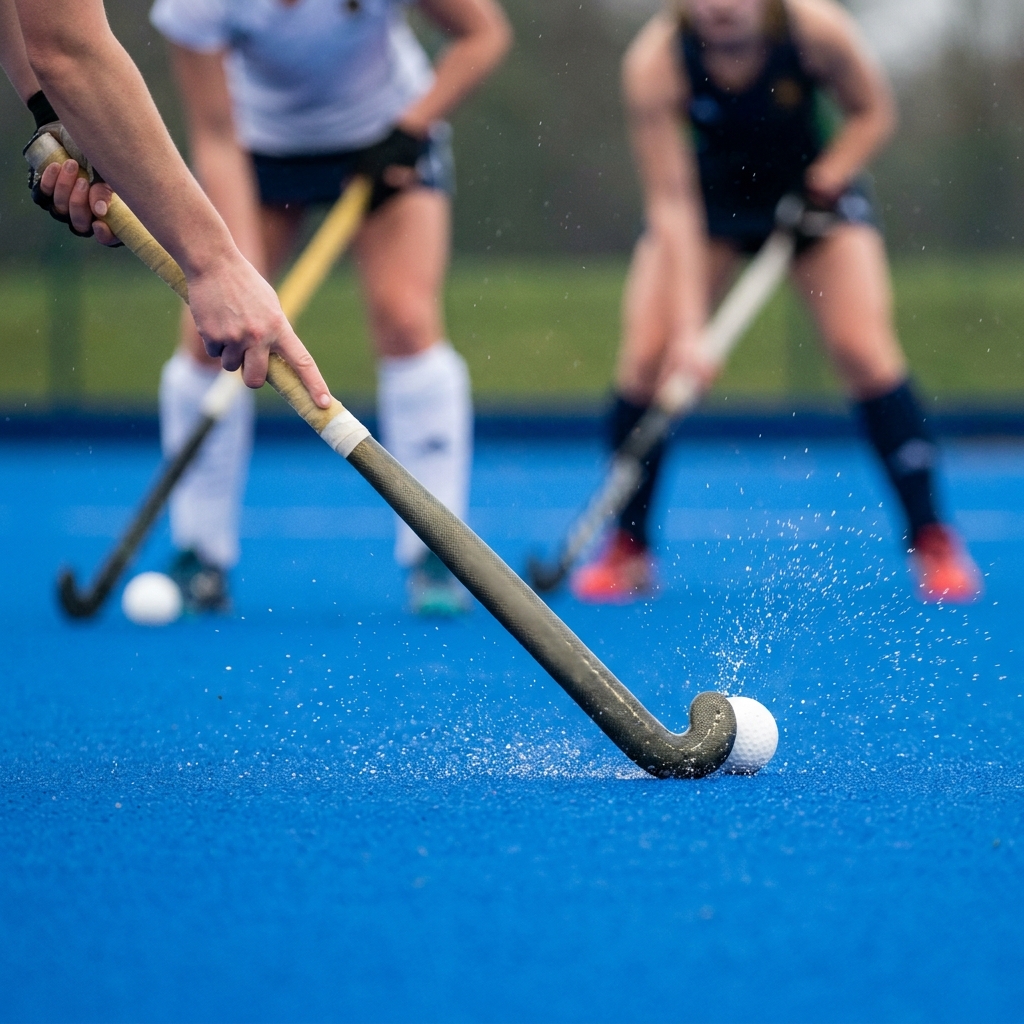
A few weeks into the league season, poor first touches are costing teams the ball. Coach body shape, scanning and receiving on the move to keep possession.
Use our expert plans or build your own using our library of over 700+ drills, and easy-to-use tools.
JOIN NOW