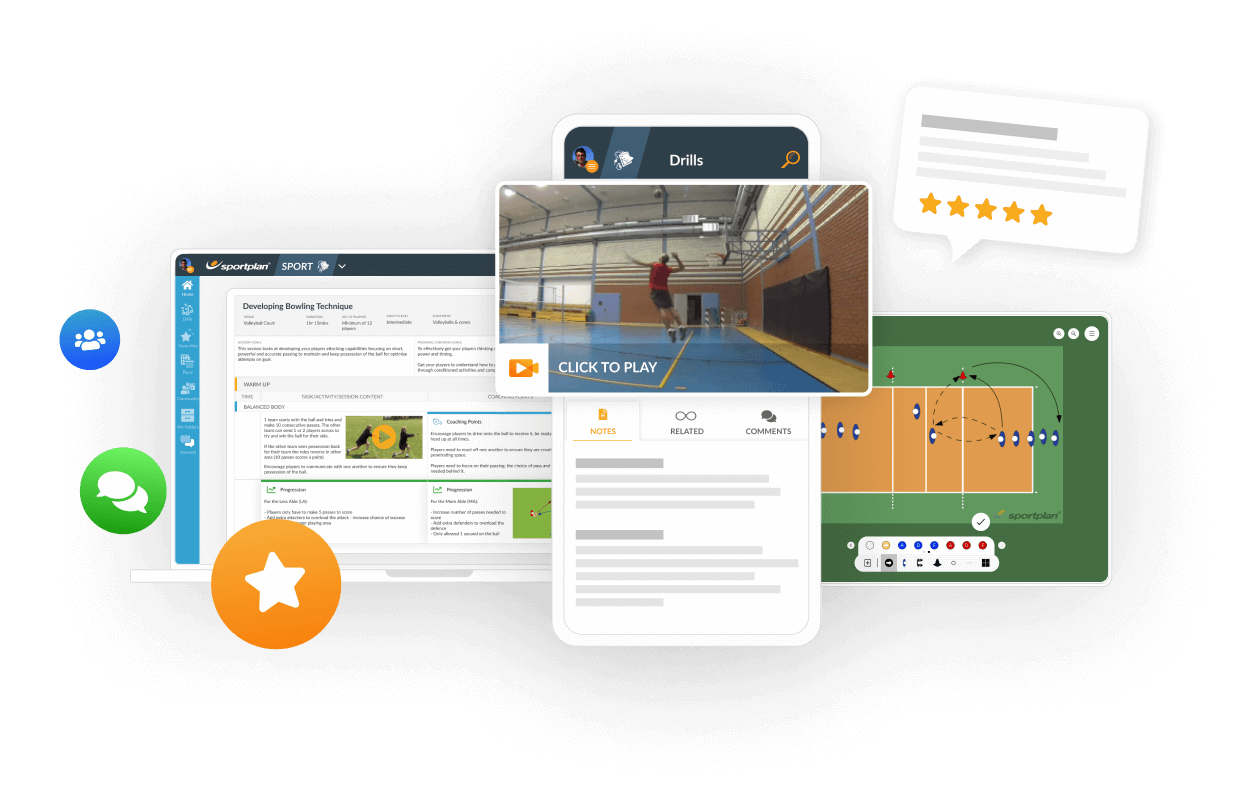
One player stands in Zone 3 and spikes the ball into the court.
The other players, starting from behind the sideline, take it in turns to receive the ball, return it to the player acting as the feeder and runs to Zone 1.
Once all the players are in Zone 1, the player feeding continues to spike the ball into the court but the other players must change positions from side to side in the backcourt.
In this drill players need to dig the ball directly to a setter's zone and change positions after each consecutive spike. This makes them watch the court, assess changeable situation and cover back zones.
To make it harder have the players stand on the baseline so they have to dig the ball from a further distance and receive the spiked the ball which has been hit harder.
In this variation the ball's trajectory will not be as accurate as before so the receivers must stay in a low position ready to return the ball.
The back row attack adds a powerful offensive dimension that stretches the opposing block and creates scoring opportunities from unexpected positions. This guide covers the rules, approach footwork, setter-hitter timing, and progressive training methods for introducing back row attacks to developing teams.
Choosing between a float serve and a jump serve is one of the most important tactical decisions in volleyball. This article examines the mechanics, strengths, and limitations of each serve type, and provides a framework for coaches to help players make the right serving decision in every match situation.
The libero position has never been more important. Here's how to develop elite defensive specialists who transform your team's back-court play.