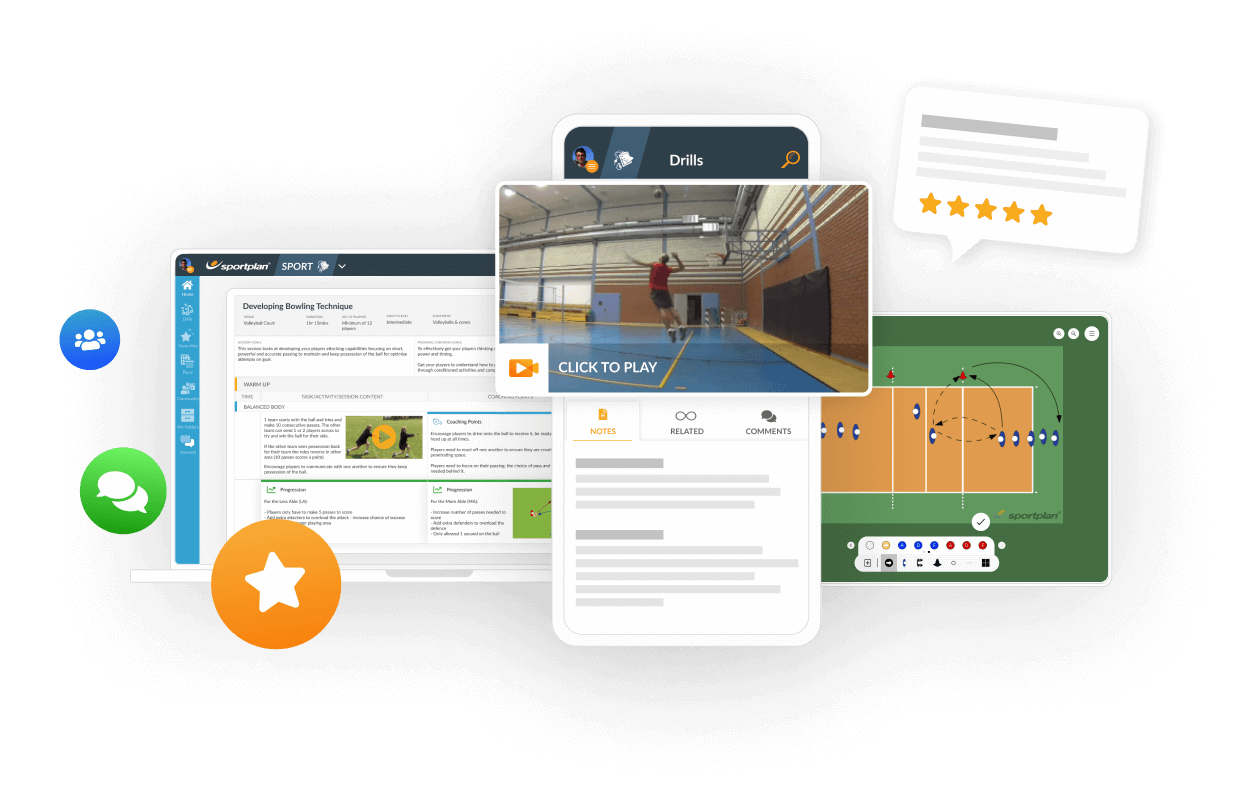
This drill requires one setter and two or more receivers.
The coach or a teammate throws balls from the other side of the net. Player 1 receives the ball by digging it to their teammate who sets the ball, whereby player 1 runs to the net to spike the ball.
When using more than one receiver the person feeding should throw another ball into play the moment player 1 spikes. This way the player covering the backcourt can get into position to dig, move and spike to mimic a game situation.
In this drill players must cover the backcourt all the time and be ready for a spike. The setter should watch the backcourt after he/she has set so they know where the next ball will be coming from.
For advanced players the balls should be thrown flat to make digging harder. In addition the frequency of the balls be thrown into play should be higher, this will force players to perform quicker footwork to get into position.
The back row attack adds a powerful offensive dimension that stretches the opposing block and creates scoring opportunities from unexpected positions. This guide covers the rules, approach footwork, setter-hitter timing, and progressive training methods for introducing back row attacks to developing teams.
Choosing between a float serve and a jump serve is one of the most important tactical decisions in volleyball. This article examines the mechanics, strengths, and limitations of each serve type, and provides a framework for coaches to help players make the right serving decision in every match situation.
The libero position has never been more important. Here's how to develop elite defensive specialists who transform your team's back-court play.