Walk into most club sessions in late November and you'll find players back indoors, match results on hold, and a rare window where nobody minds if a few rallies look a bit rough. That makes it the best time of year to go after a shot that quietly lets a lot of players down: the two-handed backhand.
It's an odd shot to get wrong, because on paper it should be the easier of the two groundstrokes. Two hands give more control, more stability and an easier path to topspin than a one-hander. In practice, a lot of club players hit a two-handed backhand that is tight, armsy and falls apart under any pace or awkward height. The fix isn't a new grip or a swing overhaul; it's a handful of basics that get skipped when players are left to find the stroke on their own.
Why the Two-Hander Breaks Down
Three faults show up again and again. Players let the dominant arm do all the work and the non-dominant hand goes along for the ride, which kills rotation and power. The wrist and front arm collapse on contact instead of staying stable, which sends the ball anywhere but where it was aimed. And the whole stroke gets played from a flat-footed, upper-body-only position, with no legs and no weight transfer underneath it.
Any one of these will make a two-hander look unreliable. Together, they are why so many players avoid the shot under pressure and slice or chip instead, even when a firm topspin backhand would win them the point.
Four Fixes That Make the Shot Repeatable
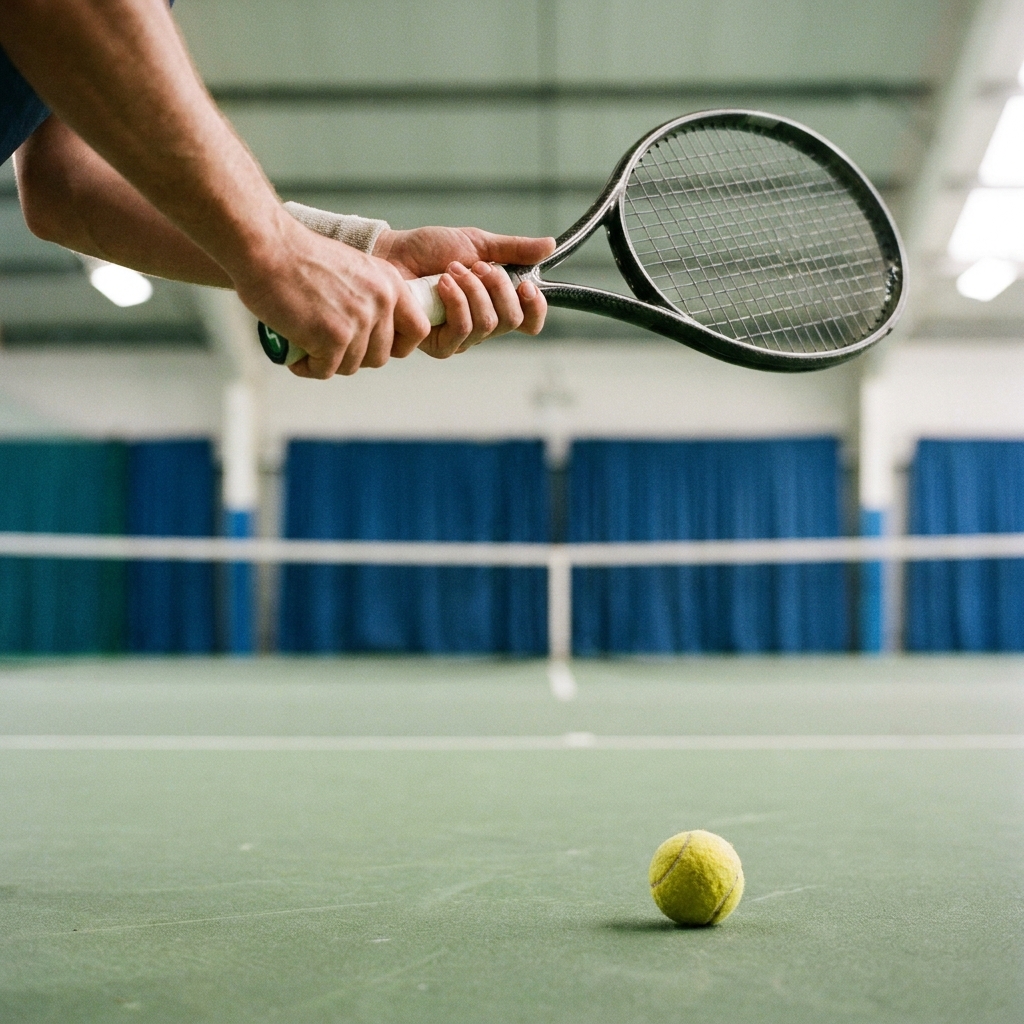
Step One: Get both hands working. The non-dominant hand (top hand for a right-hander) should drive the racket through the shot, not just steady it. Players who feel their top hand "pulling" the racket into contact get far more rotation and racket speed than players relying on the bottom arm alone.
Step Two: Build a stable contact point. The front wrist and arm should stay firm through the ball, with the racket face set early rather than adjusted at the last moment. A backhand that collapses on contact is almost always a wrist problem, not a timing problem.
Step Three: Load the legs. Power and consistency both start from the ground up. A proper unit turn, weight moving onto the front foot and legs bending into the shot take pressure off the arms and let the two hands do their job without having to muscle the ball.
Step Four: Extend through the shot. Many players steer the two-hander by stopping the swing early to control direction. Teach a full extension towards the target, with direction coming from the body and feet rather than a short, guided finish.
Step Five: Repeat it under pressure. A technically sound backhand in a fed drill means little if it disappears under a fast or awkward ball. The last stage is always live, random-height reps where the technique has to hold up without time to think about it.
How to Train It
Warm-up: shadow swings and gentle fed balls focusing purely on the non-dominant hand leading the racket through contact.
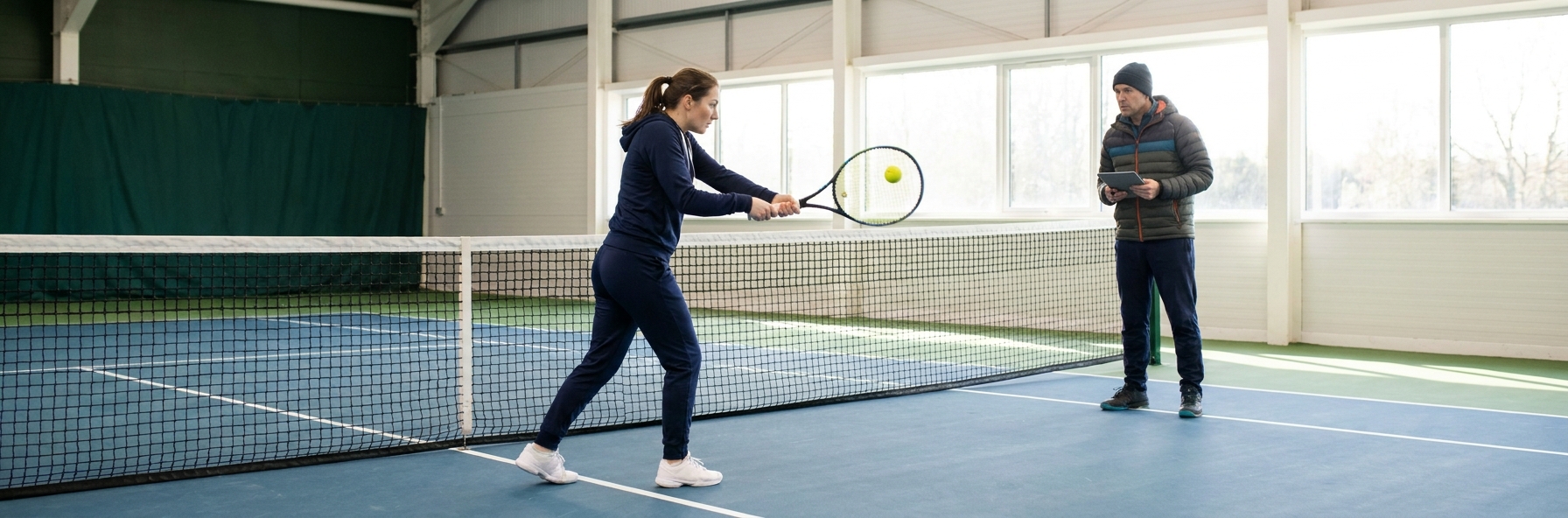
Technical: fed backhands building from a stable base, checking the front wrist stays firm and the legs are loading on each rep.
Decision-making: live cooperative rallies with the coach varying height and pace, so players have to hold the technique rather than just repeat a groove.
Game: points started from a backhand feed, rewarding a committed topspin backhand over a safe slice or chip.
Key Coaching Points
- The non-dominant hand should drive the racket, not just support the dominant arm.
- Keep the front wrist and arm stable through contact; set the racket face early.
- Build the shot from the legs and a proper unit turn, not the arms alone.
- Extend fully towards the target instead of steering with a short finish.
- Test the technique with live, varied-height reps before trusting it in matches.
- Encourage players to commit to the topspin backhand rather than defaulting to slice under pressure.
Recommended Drills



Frequently Asked Questions
Should I switch a struggling player to a one-handed backhand instead?
Rarely, and not as a first response. Most two-handed backhands that look unreliable are missing one of a few basics, usually a passive top hand or a collapsing wrist, rather than being the wrong shot for that player. Fix the fundamentals first; a switch in grip or hands is a last resort, not a quick fix.
Why does my player's backhand fall apart on high or awkward balls?
This is almost always a legs and preparation problem rather than a hands problem. Players who are flat-footed or late on the unit turn end up reaching for the ball with their arms, which is exactly when the wrist and top hand lose control. Better footwork into the ball fixes more awkward-ball backhands than any swing adjustment.
How long does it realistically take to rebuild a backhand over winter?
Expect weeks, not days. The technical changes, especially getting the non-dominant hand to drive the shot, can feel strange at first and will often look worse before it looks better. Indoor winter sessions are ideal for this because there is time to work through that stage before the shot needs to hold up in competitive matches again.