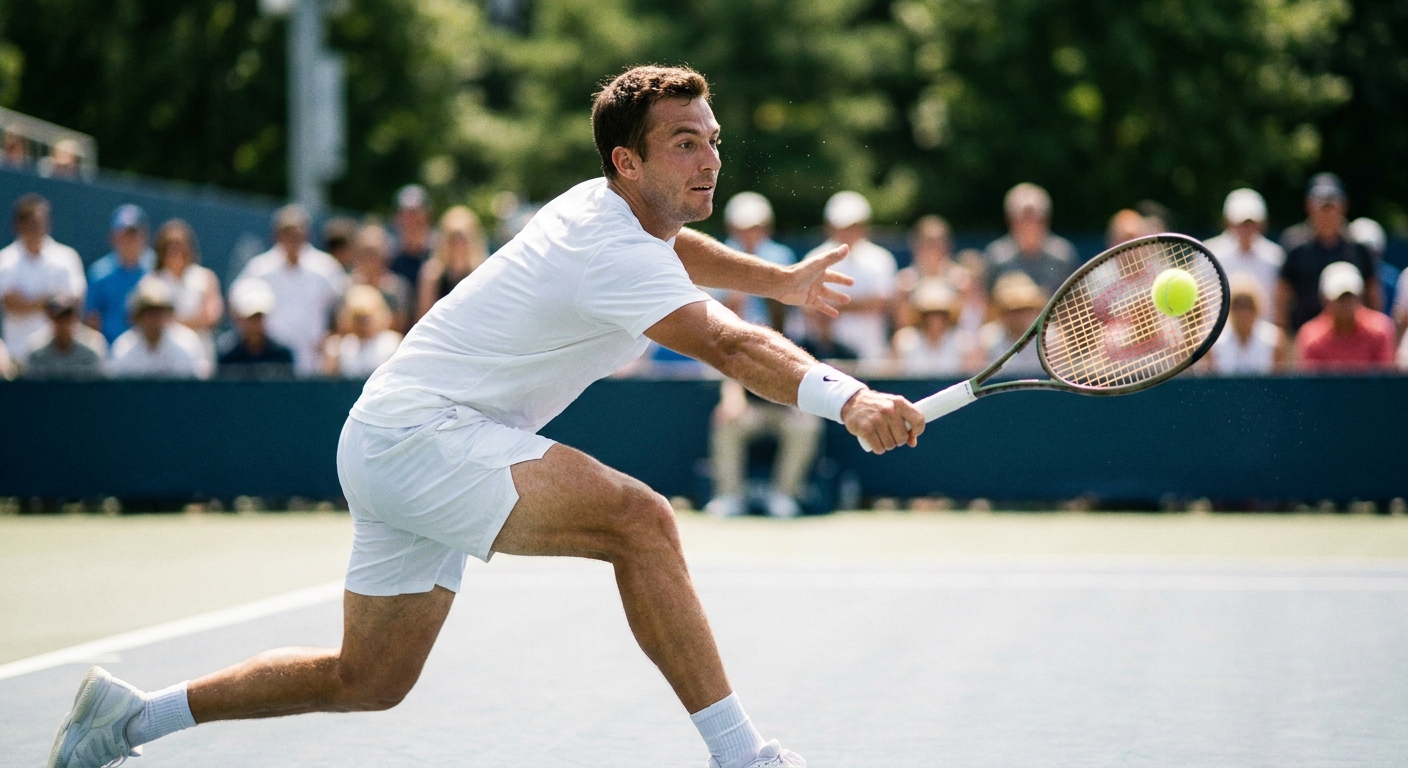
Watch any professional tennis match and the movement is striking. Players cover court with explosive acceleration, change direction on a dime, and recover to neutral before the opponent has even made contact. This isn't just athleticism - it's trained, deliberate movement skill.
Many coaches spend 90% of practice time on strokes and 10% on movement. The proportion should probably be reversed at lower levels.
The Split Step
Everything begins with the split step:
Timing: The split step should land as or slightly after the opponent makes contact. Too early and you're still in the air when you need to move. Too late and you've lost reaction time.
Width: Land with feet slightly wider than shoulder width, creating a stable base for movement in any direction.
Loaded position: The split step is not just a hop - it's loading the legs like springs, ready to explode in any direction.
Frequency: Elite players split step before almost every shot their opponent hits. It should be automatic, not conscious.
Movement Patterns
Different court positions require different movement:
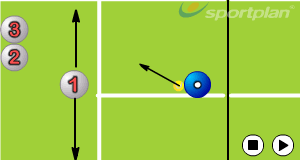
Lateral movement: Side-to-side along the baseline. Combines shuffle steps for short distances with crossover steps for longer runs.
Forward movement: Approaching the net or moving up to short balls. Emphasise staying low and controlled.
Backward movement: Retreating for lobs or deep balls. Keep facing the net when possible, using shuffle steps.
Diagonal movement: Most common in actual play - moving forward and across to attack short balls.
Adjustment Steps
The last few steps before contact are crucial:
Set up early: Arriving at the ball isn't enough - you need to arrive in time to set your feet and prepare properly.
Small adjustments: Fine-tune your position with small steps rather than one large lunge.
Outside leg loading: For groundstrokes, the final step should load the outside leg (right leg for a right-hander's forehand) to enable rotation.
Balance through contact: Movement should stop or stabilise before contact. Hitting while off-balance is emergency only.
Recovery
The shot isn't complete until you've recovered:
Recovery position: Back to the center mark, or slightly adjusted based on where you hit the ball.
Speed vs position: Sometimes recovering faster is better than recovering further. Prioritise being ready for the next shot.
Shuffle vs run: Shuffle when you need to see the opponent's shot; run when covering longer distances.
Anticipation: Great movers start recovering before their shot has even landed, reading the likely response.
Training Movement
Movement improves through deliberate practice:
Shadow drills: Practice movement patterns without a ball. Focus on form and efficiency.
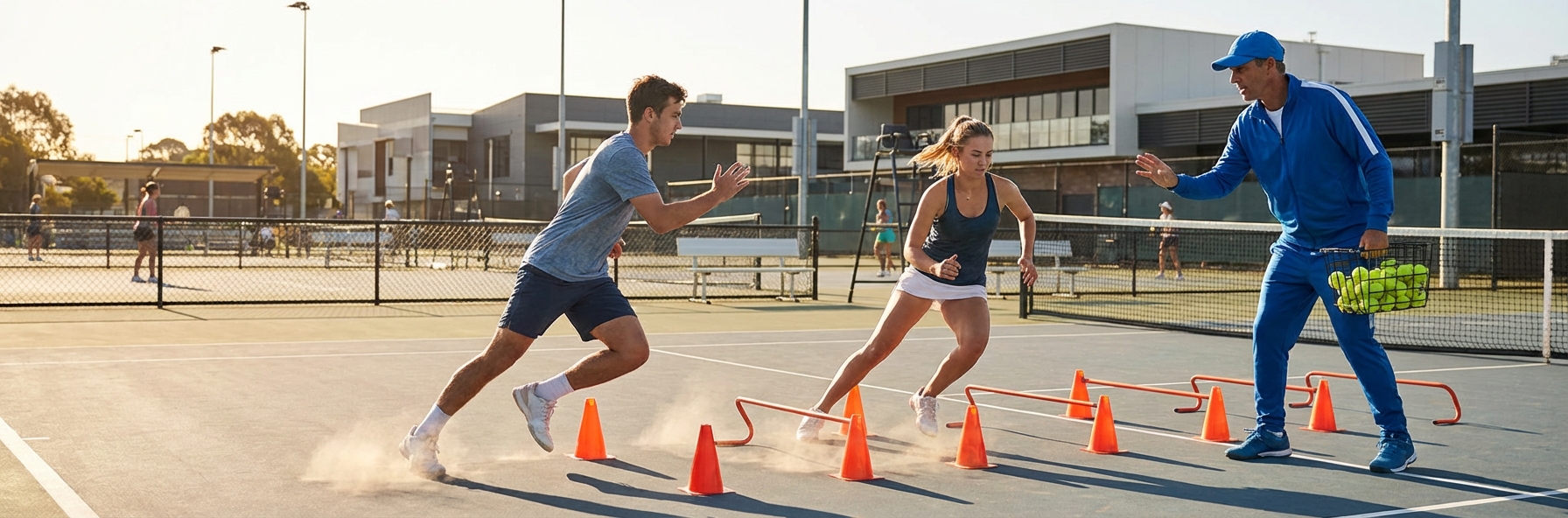
Cone drills: Set up specific patterns and time your execution. Ladder drills, T-drills, and spider drills all develop different aspects.
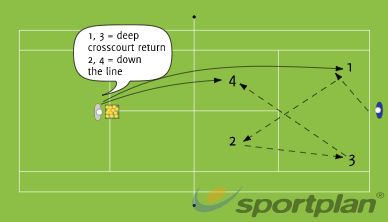
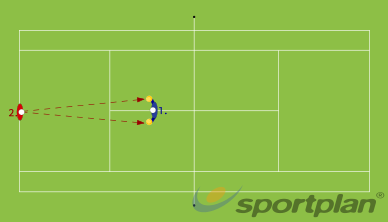
Ball-fed movement: Coach feeds balls to specific locations, requiring correct movement patterns to reach them.
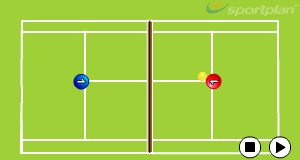
Live ball movement: Rally drills that require recovery to the center between each shot.
Physical Development
Movement capability rests on physical foundations:
Leg strength: Squats, lunges, and leg presses build the foundation for explosive movement.
Plyometrics: Jump training develops the power for quick direction changes. Box jumps, bounds, and depth jumps.
Core stability: A strong core maintains balance during rapid direction changes. Plank variations and rotational exercises.
Ankle stability: Much of tennis movement depends on stable ankles. Balance training and ankle strengthening exercises prevent injury and improve agility.
Key Coaching Points
- The split step is fundamental - it should be automatic before every opponent shot
- Arrive early enough to set up properly, not just to reach the ball
- Recovery is part of the shot - train it deliberately
- Physical conditioning underpins movement capability
- Movement training should occupy significant practice time at all levels