The serve is the only shot in tennis where you have complete control. No opponent influence, no time pressure from incoming pace - just you, the ball, and your technique. Yet many players struggle to maximise this advantage.
Modern serving has evolved significantly. Today's top players generate more power while maintaining accuracy through optimised biomechanics and deliberate practice structures.
The Kinetic Chain
Power in the serve comes from the ground up through a coordinated sequence:
Leg drive: The serve begins with the legs. A proper knee bend and explosive push creates the initial energy. Elite servers bend their knees 15-20 degrees before driving upward.
Hip rotation: As the legs drive, the hips rotate toward the target. This rotation transfers energy from the lower body to the trunk.
Trunk rotation: The torso coils and uncoils, adding rotational force. The separation between hip and shoulder rotation creates stored energy.
Shoulder rotation: The hitting arm lags behind as the body rotates, creating a whip effect at contact.
Pronation: The final acceleration comes from forearm pronation - the palm rotating from facing the ear to facing the target through contact.
The Trophy Position
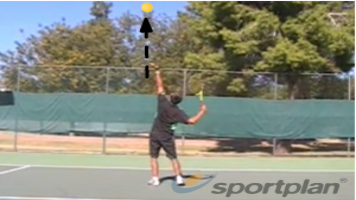
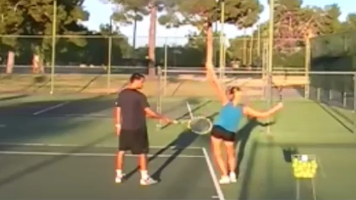
The trophy position - where the toss reaches its peak and the racket is behind the back - is crucial for consistent power:
Racket drop: The racket head should drop down the back, creating a longer swing path. Deeper drop means more acceleration distance.
Elbow position: The elbow should be at or slightly above shoulder height. Too low limits the upward swing path.
Toss placement: For a flat serve, the toss should be slightly in front and to the hitting side. Consistency here determines serve consistency.
First Serve vs Second Serve
The technical differences between first and second serves are significant:
First serve: Maximum power, flatter trajectory, toss slightly further into the court. The priority is pace and placement.
Second serve: More spin (typically kick or slice), higher net clearance, toss adjusted for spin type. The priority is reliable depth with enough spin to prevent attack.
A common coaching error is teaching the second serve as simply a slower first serve. The spin and trajectory differences require distinct techniques.
Placement Strategy
Power without placement is ineffective. Modern serving emphasises hitting specific targets:
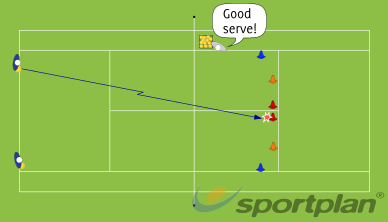
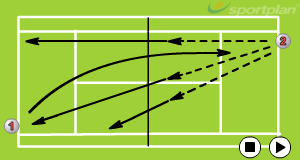
Wide serve: Opens the court for the next shot. Most effective on the deuce side for right-handers (or ad side for left-handers).
Body serve: Jams the receiver, limiting their swing. Underused by many players but highly effective.
T serve: Down the middle, reducing the receiver's angles. The go-to serve under pressure for many pros.
Common Technical Errors
Issues that limit serve power and consistency:
Insufficient leg drive: Serving from a static base eliminates the largest power source. Encourage explosive leg action.
Arm-only serving: When the body stops rotating and the arm takes over, power drops significantly. The arm should be the final link in the chain, not the primary generator.
Poor toss consistency: An inconsistent toss forces constant adjustment. Spend significant practice time on toss mechanics alone.
Rushing the motion: The serve should accelerate through contact, not start fast. A rushed take-back disrupts timing.
Practice Structures
Toss practice: Without a racket, practice tossing to a specific height and location. Catch the ball without moving your feet. 50 tosses daily builds consistency.
Target serving: Place targets in the service box corners and T. Track percentage success over time.
Serve and recover: Practice the serve plus the first groundstroke. The serve shouldn't leave you off-balance.
Pressure serving: Create consequences for misses. Two serves to stay in, then move to pressure drills.
Key Coaching Points
- Power comes from the kinetic chain, starting with leg drive
- The trophy position sets up everything that follows
- First and second serves require different techniques, not just different speeds
- Placement matters as much as power at every level
- Toss consistency is fundamental - practice it separately