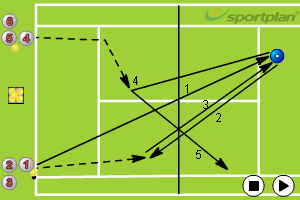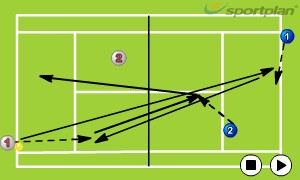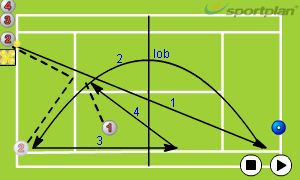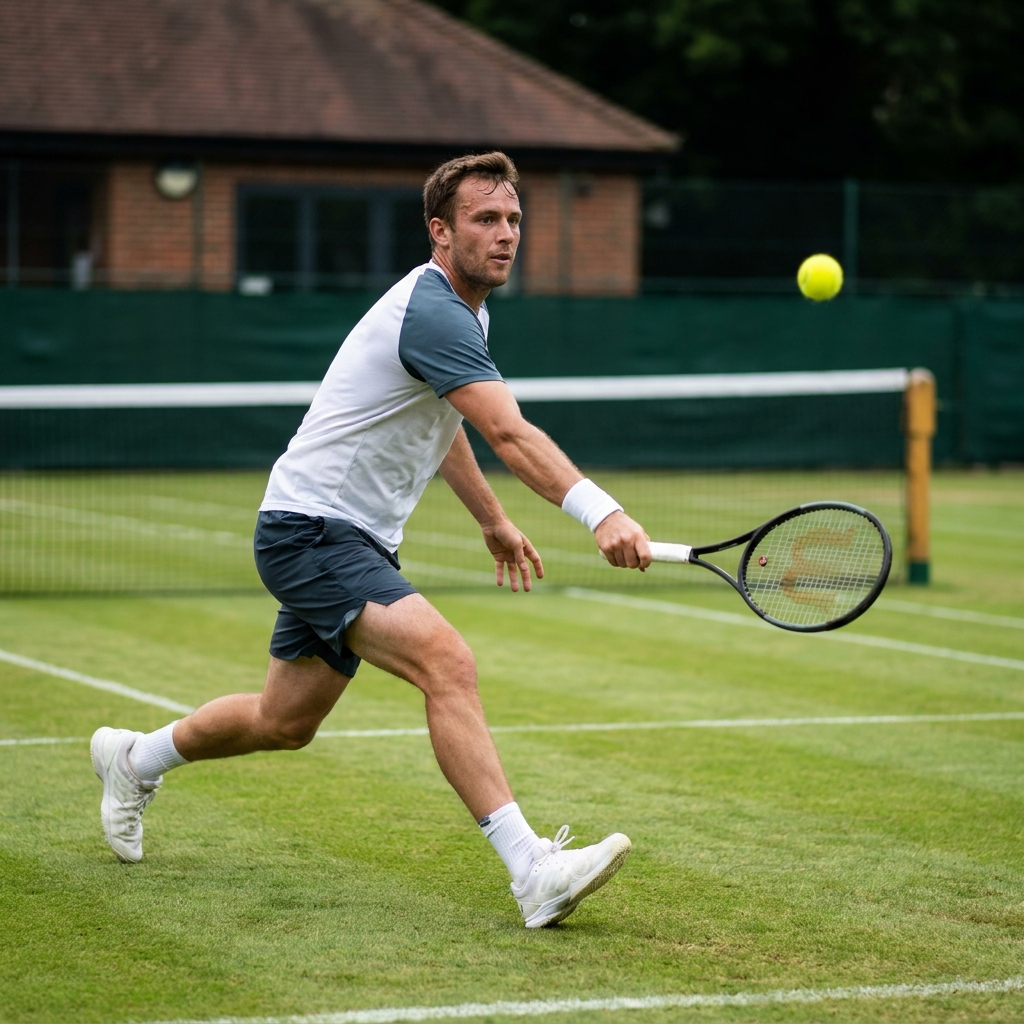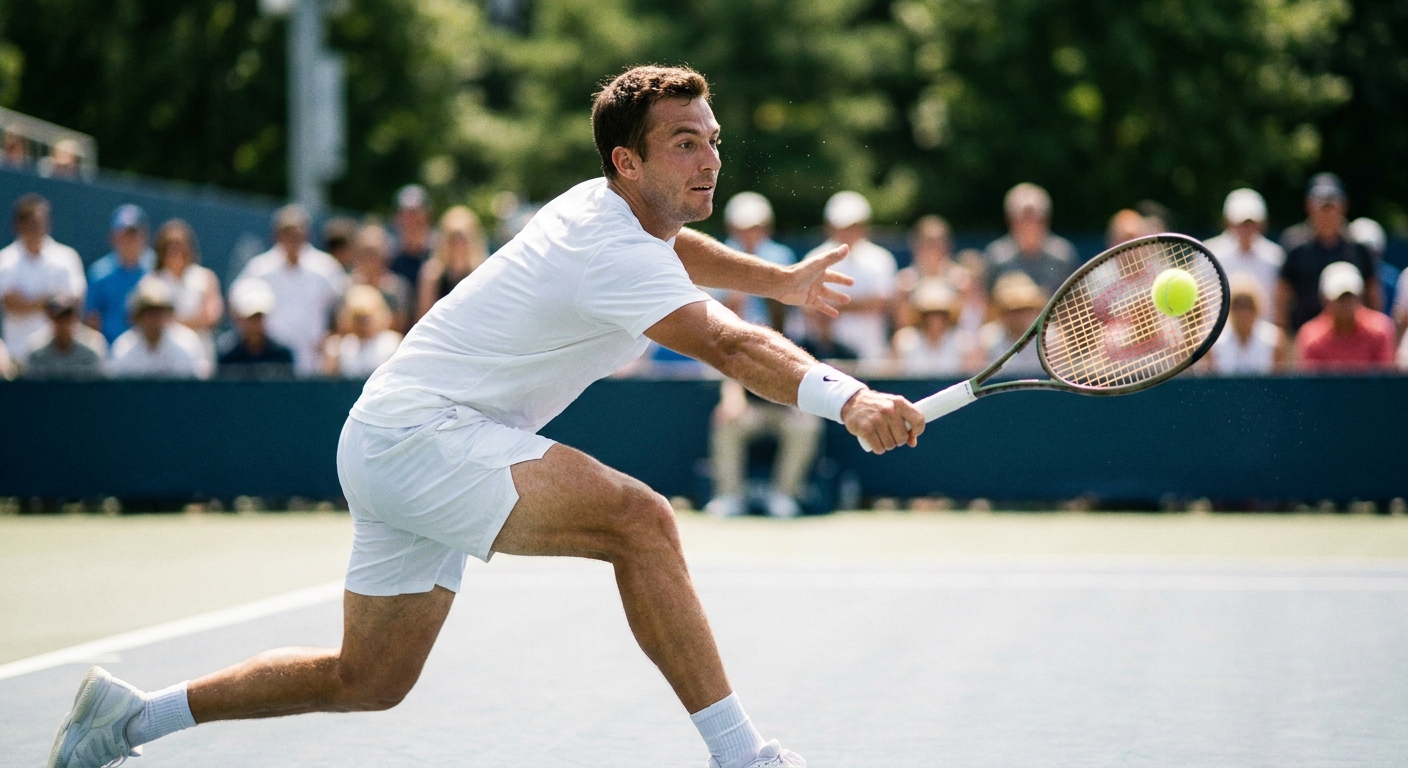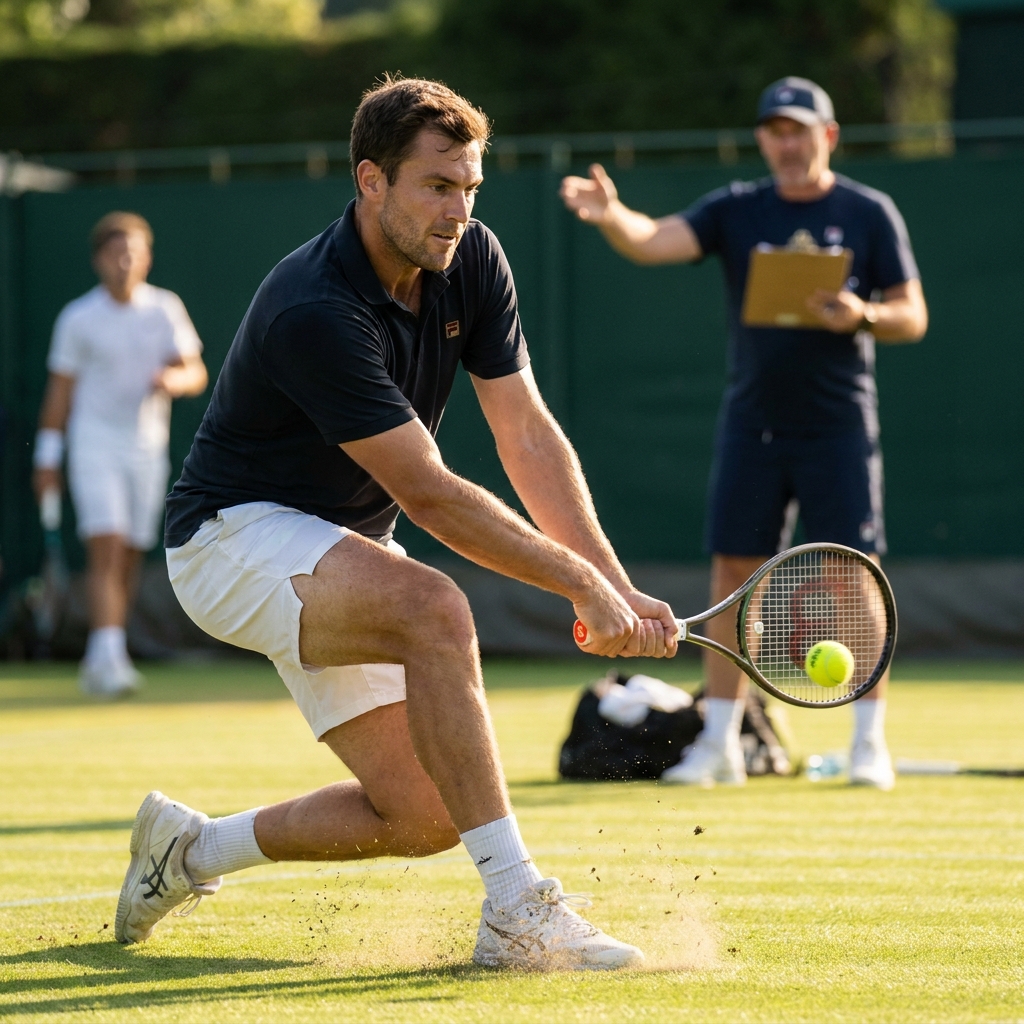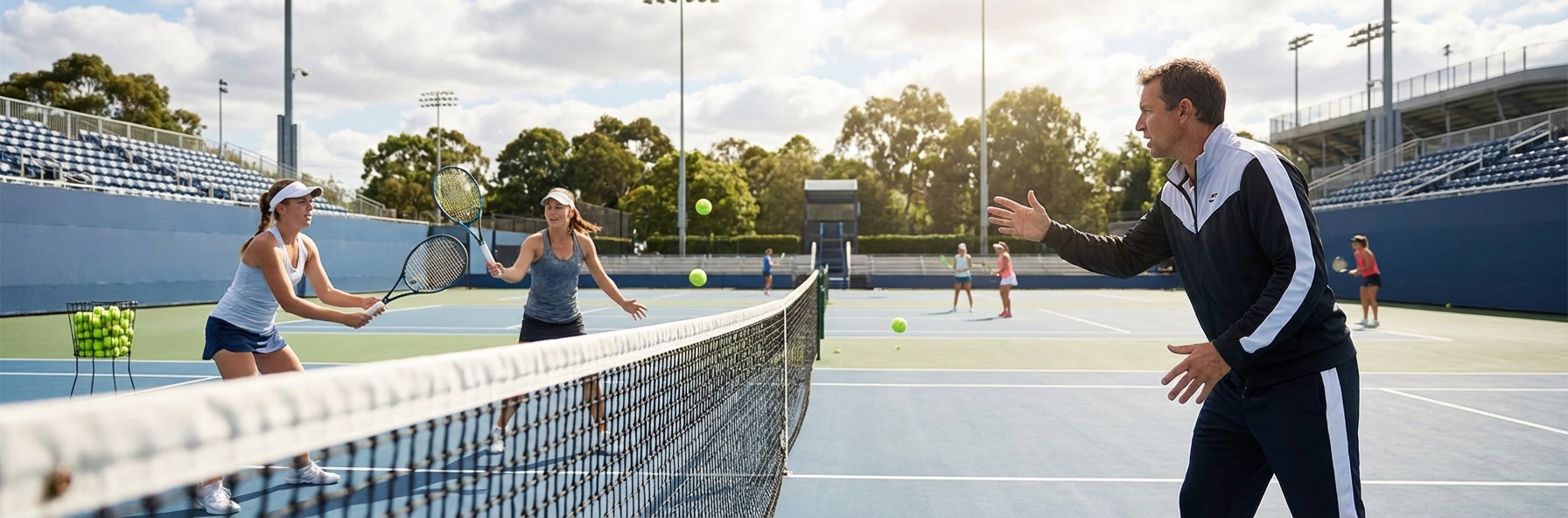
Doubles is often called "a different sport" from singles, and there's truth in that. The court is wider but covered by four players. Points are shorter. Net play dominates. And success depends as much on partnership as individual ability.
Many strong singles players struggle in doubles because they haven't developed doubles-specific skills and understanding.
Court Positioning
Effective doubles starts with position:
One up, one back: The traditional formation - server at the baseline, partner at net. Simple but effective at club level.
Both at net: The dominant position in doubles. When both players are at net, they control the angles and can volley winners.
Both at baseline: Defensive formation when pushed back. Goal is to work back to net.
I-formation: Server's partner crouches at the center of the service box, disguising their move. Creates uncertainty for the returner.
Moving as a Team
Partners should move together, like connected by an invisible string:
Lateral movement: When one partner moves left, the other covers by moving right. Maintain court coverage.
Forward and back: Both partners should advance to net together when opportunity arises. One at net, one at baseline is vulnerable.
The switch: When the net player crosses to volley, their partner must switch sides. Call it loudly.
Recovery: After defensive shots, work back to optimal positions as quickly as possible.
Communication
Constant communication is essential:
Before points: Discuss serve placement and poaching intentions. Hand signals behind the back are traditional.
During points: "Mine," "yours," "switch," "stay." Clear, loud calls prevent confusion.
Between points: Brief tactical discussions. What's working? What needs to change?
After lost points: Positive reinforcement. Never blame your partner visibly - opponents see it and take confidence.
Serving Tactics
The serve sets up the point differently in doubles:
Location priority: Placement matters more than power. The T serve down the middle reduces the returner's angles.
First serve percentage: Getting the first serve in is crucial. Weak second serves get attacked.
Partner involvement: Coordinate with your partner. When you serve wide, they should look to poach the crosscourt return.
Vary patterns: Don't become predictable. Mix locations and involve your partner differently.
Return Tactics
Returning in doubles presents challenges:
Target selection: Crosscourt is safest, but the net player is looking to poach. Down the line keeps them honest. At their feet if they're closing.
Lob return: Against aggressive net players, the lob over the net player creates chaos.
Chip return: A low slice return stays below the net player's interception zone.
Partner positioning: Returner's partner can start at net or stay back. Back is safer against big servers.
Net Play
Doubles rewards net play:
Poaching: The net player intercepts balls going crosscourt. Requires anticipation and commitment.
Fake poaching: Move as if poaching, then recover. Creates doubt in the opponent's mind.
Volley targets: Hit at the feet of the baseline player or through the middle. The alley is for winners only.
High volleys: Put them away. High balls at net should be finished aggressively.
Partnership Dynamics
The best doubles teams are more than two individuals:
Complementary skills: Ideally, partners' strengths cover each other's weaknesses.
Consistent energy: Pick each other up. Stay positive through difficult patches.
Shared strategy: Both partners must be committed to the same game plan.
Trust: Trust your partner to cover their responsibilities. Second-guessing destroys teams.
Key Coaching Points
- Doubles positioning is fundamentally different from singles
- Partners should move together as a unit
- Communication before, during, and after points is essential
- Serve placement matters more than power in doubles
- Net dominance wins doubles points - work to get both players forward