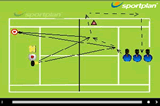
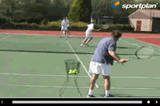
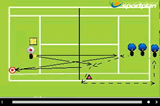
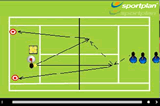
The player stands at the service line. The coach feeds balls to the backhand side. The coach alternates feeds hitting 1 ball into the legs of the player and 1 regular ball. The player alternates hitting 1 backhand half-volley and 1 regular backhand volley in a down the line direction.
As with any skill, the higher the level the more difficult it becomes. At the beginner or intermediate level if we come to the net, we will get only 2 responses from the opponent: passing shot or lob. When we compete against advanced opponent we have to be ready for 4 possibilities: passing shot, hard shot into the body, lob and ball into the legs. Knowing how to response to these shots and practising these skills is the only way to not be surprised during the match and win more points at the net.
In this drill, the player works on variety of backhand volleys including half-volleys. The half-volley is a demanding skill because it requires good perception, strong footwork and touch skills with the racquet. If only one piece is missing then there is no chance to execute this stroke effectively. By performing this drill, the player learns how to adapt to changing conditions and see the difference between the shot in the air and the one right after the bounce. The coach should remind players to keep low position and work more with control than the power.
Indoor courts give players less time and less room. Help them sharpen their split step, shorten their swing and stay calm, and winter becomes a season of real progress.
A tiebreak is a short sprint where every point is worth the same as a break of serve. The players who win them are rarely the ones who hit hardest. Here is how to coach the patterns, habits and scoreboard thinking that win the big points.
Most club players practise the serve on its own and then have no idea what to do with the ball that comes back. Serve plus one is the pattern that turns a good serve into a won point.


Register for FREE and get coaching tips, top drills, session and more every week!