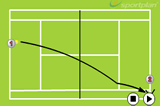
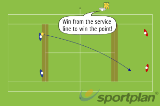
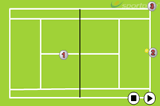
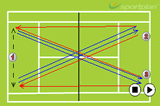
Player 1 is working in a full court and player 2 is 'feeding' from the centre of the court along the baseline. The players rally co-operatively for 3 minutes but with player 2 working the ball around the full-court making player 1 move a reasonable amount without a pattern.
Player 1 is aiming for the rectangle at the back of the court marked by targets and player 2 should count how many balls player 1 makes into the rectangle within the 3 minutes. When the time is up the players switch roles.
This drill can be repeated 3 times for each player and then the totals added up to see who was the most accurate!
The quality of the feeding is important here from player 2. Just because they are not the 'working player' they must still maintain the same level of intensity as player 1, and take care to be as consistent as possible.
Notes:
The target size can be adjusted according to the standard of the players and the accuracy possible.
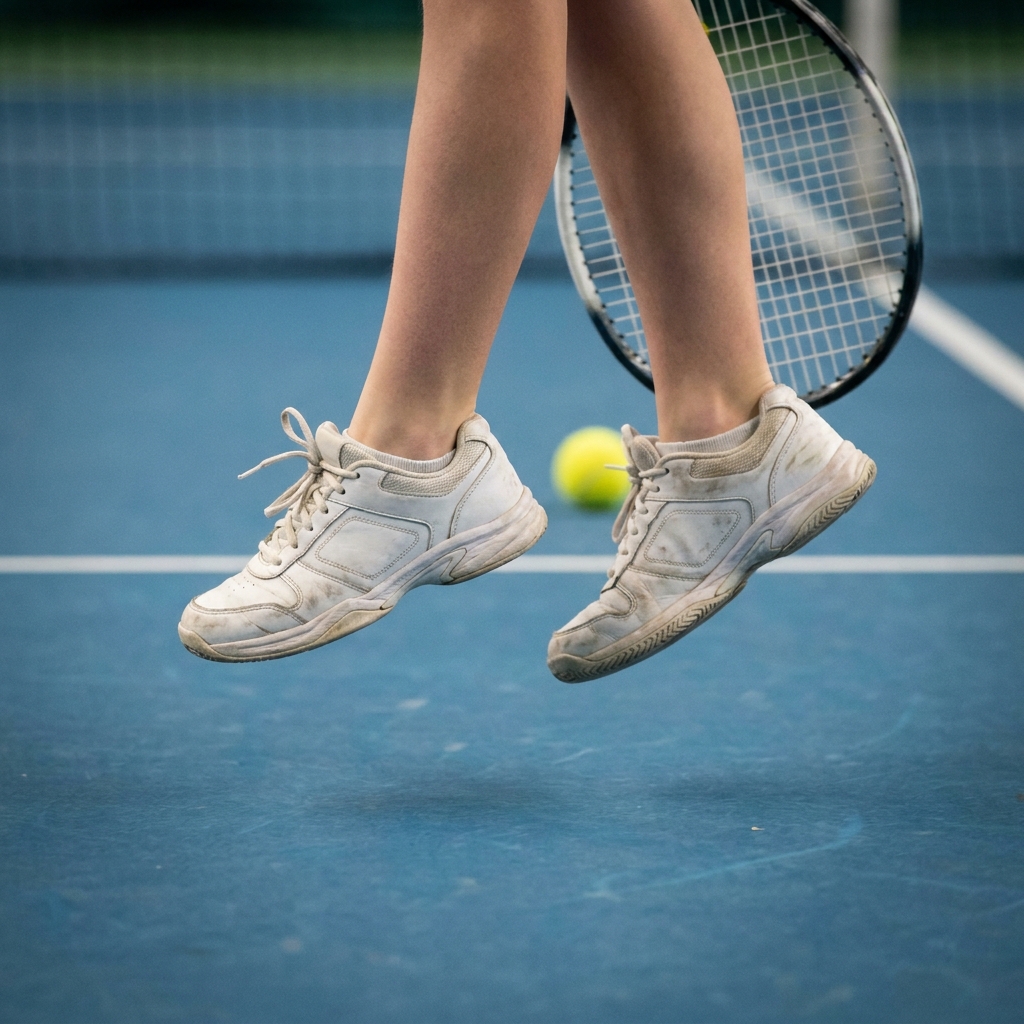
Indoor courts give players less time and less room. Help them sharpen their split step, shorten their swing and stay calm, and winter becomes a season of real progress.

A tiebreak is a short sprint where every point is worth the same as a break of serve. The players who win them are rarely the ones who hit hardest. Here is how to coach the patterns, habits and scoreboard thinking that win the big points.

Most club players practise the serve on its own and then have no idea what to do with the ball that comes back. Serve plus one is the pattern that turns a good serve into a won point.


Register for FREE and get coaching tips, top drills, session and more every week!