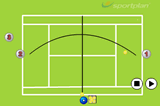
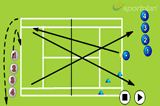
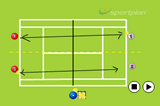
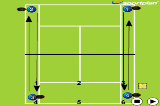
The court is marked out with cones into areas (e.g. red, amber and green). Players try to anticipate which area the ball is going to land in so that they can respond with the most appropriate tactical return.
A buddie coach stands behind the player and tells them which shot they should play (ie. approach the net, lob etc.) depending on the area that they are hitting from i.e. where they are standing/ running on court as they hit the ball.
Players will need to watch the body shape of the coach and the ball contact carefully to anticipate what type of shot is being hit and therefore where it is likely to land.
This drill develops players tactical awareness of the court.
The players work together with each other (as buddy coaches) to develop understanding of appropriate shot selection depending on which area (red, amber, green) they are hitting from.
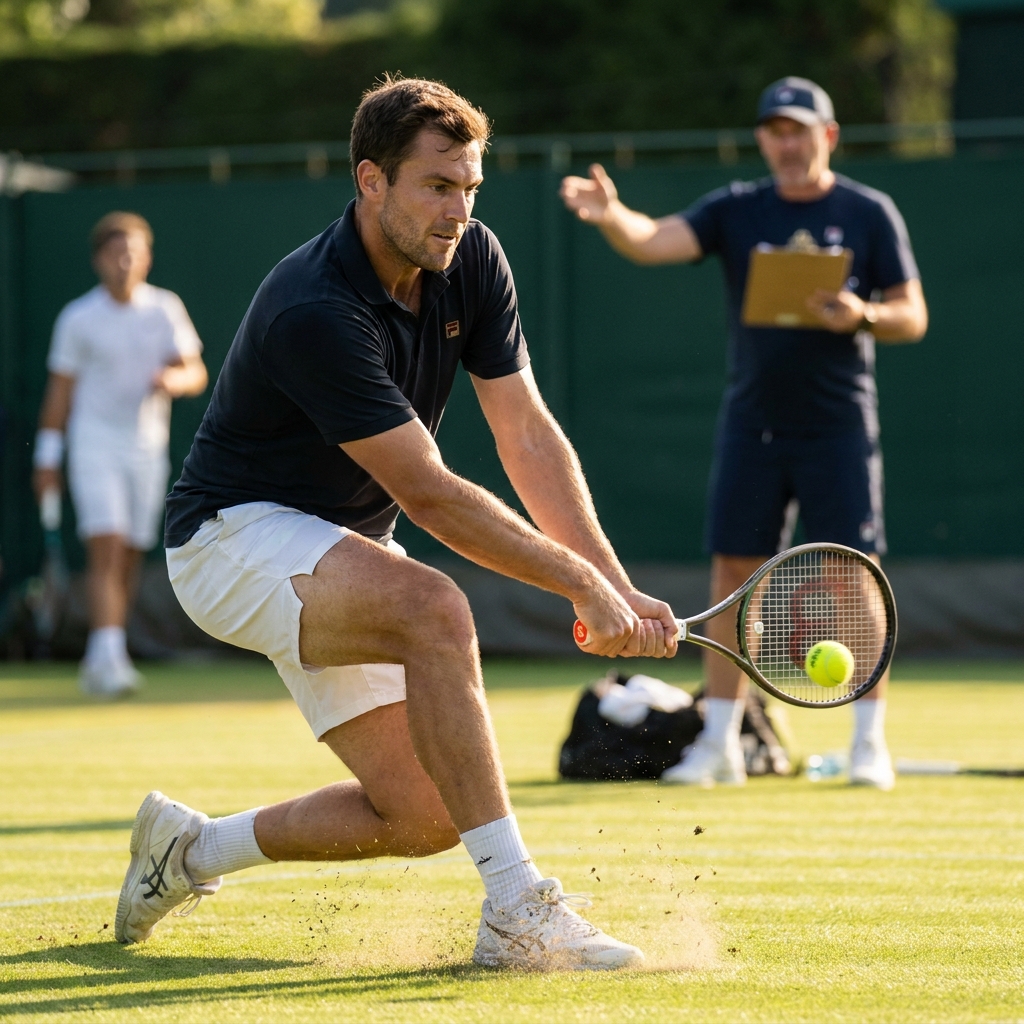
Wimbledon arrives at the end of June and the grass court swing transforms how the game is played. Low bounces, slippery footing, and rewards for forward play demand a different tactical mindset. Here is how to coach it.
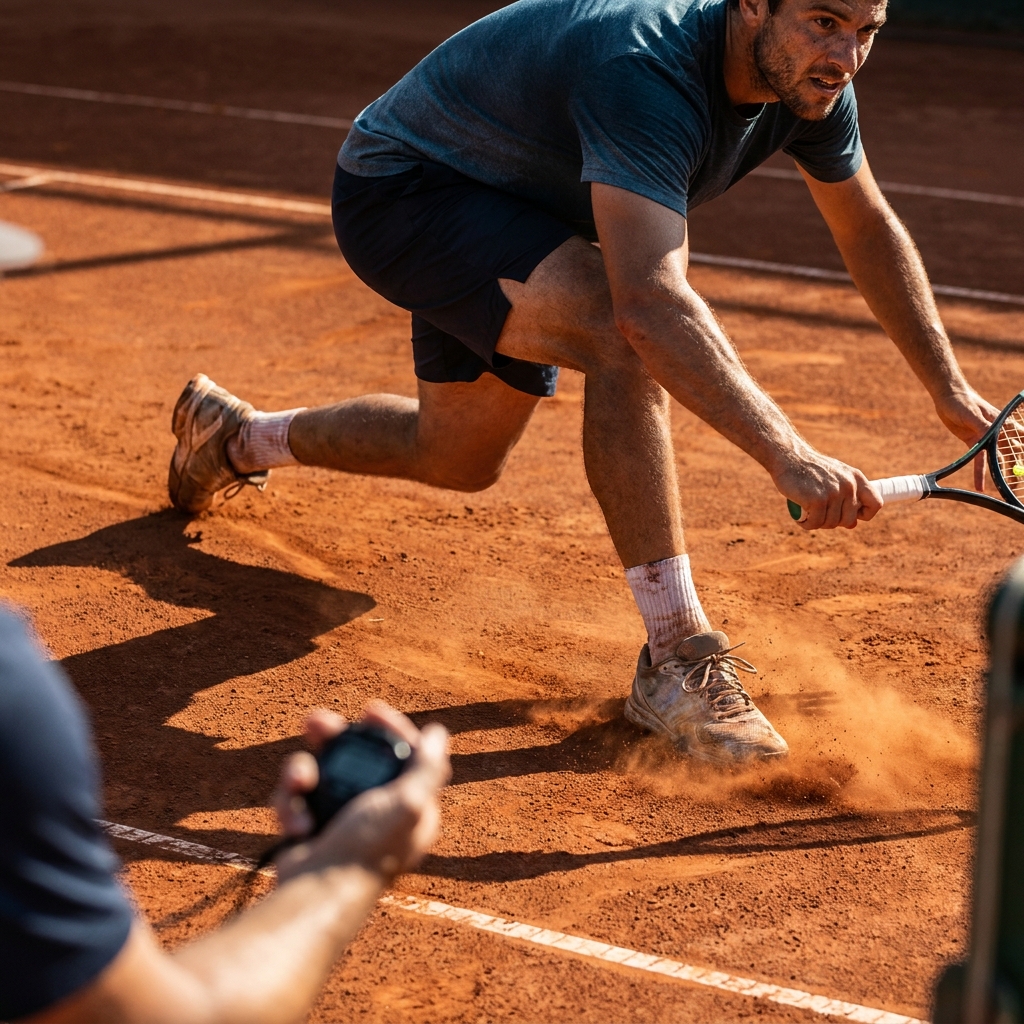
With Roland Garros centre stage in May, clay court tennis demands a different toolkit: controlled sliding, longer rallies, and patient point construction. Here is how to coach the surface that humbles power players and rewards craft.
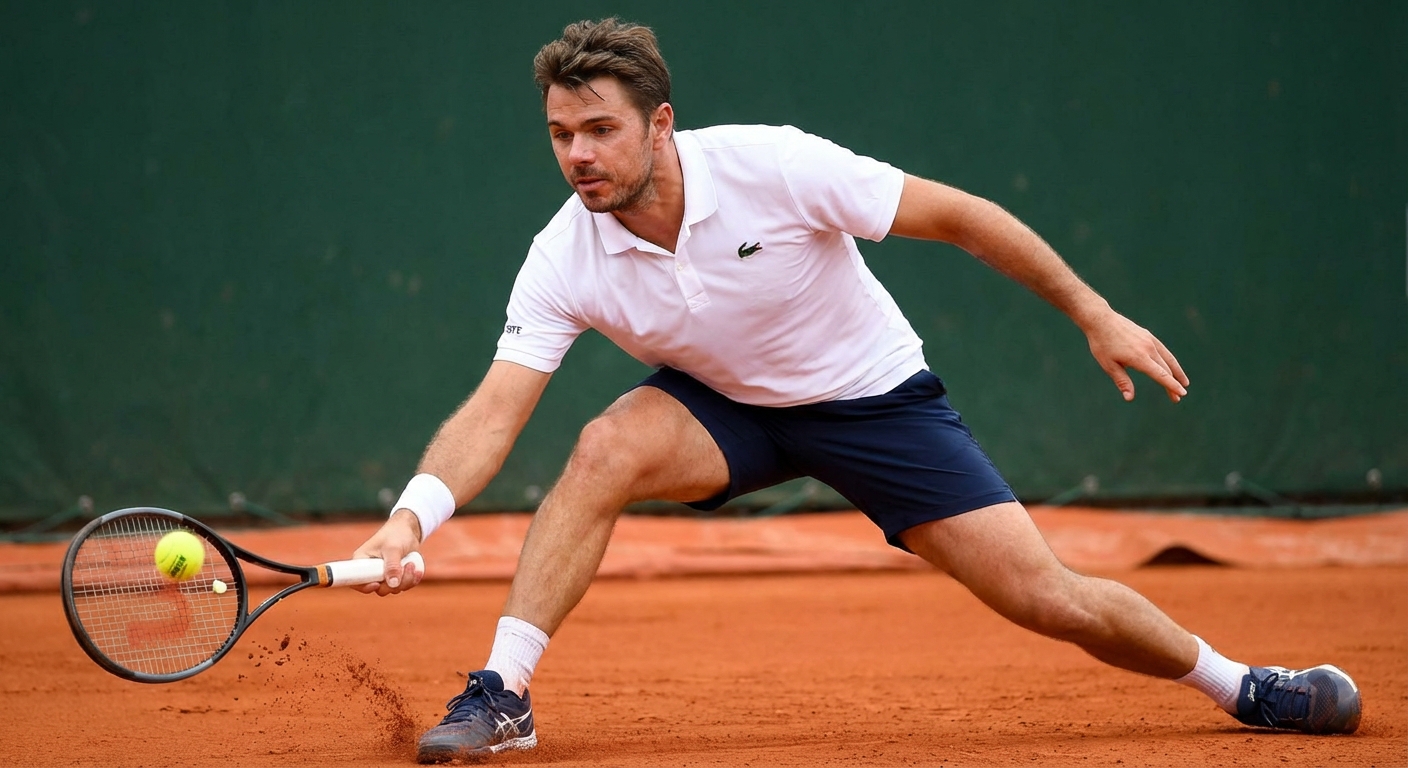
The slice backhand is experiencing a renaissance in modern tennis, valued for its ability to change pace, create approach opportunities, and neutralise powerful opponents. This guide breaks down the technique, tactical applications, and training progressions coaches need to develop this essential shot at every level.


Register for FREE and get coaching tips, top drills, session and more every week!