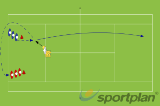
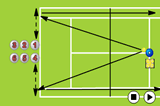
Player stands on the baseline. Coach faces the player. Coach throws random balls to keep player in neutral/defensive position. Coach adds easier balls from time to time that player should attack.
Drill specifications:
1 set and switch
1 player is working with the coach so other players have to perform other activities to keep improving while not hitting. Because ball perception is strongly connected with a reaction players should work on these skills while waiting for own turn. Simple cooperation where player A stands few meters away from player B and drops the ball that has to be caught after the one bounce is beneficial and can improve players effectiveness on the court.
Recognizing opportunities to move forward and play more aggressively is the skill that we see especially while watching Rafael Nadal in action. His superb perception and footwork abilities help him to quickly move from the area few meters behind the baseline to the more offensive spot way inside the court. Good transition from the defense to offense can transform the limited player into a complete successful athlete so coaches should point out how important the ball perception is. Connecting what we see with what we do in a really short period of time is the demand of tennis at the top level.
In this drill players work on ball perception and quick transition to offense. By standing close to the player and throwing the balls coach can easily control his feeding and adapt to the current player’s position on the court. Many players make a mistake by moving behind the baseline and staying in defense to the end of the point even when they have a lot of opportunities to get out of this zone and put more pressure on the opponent. Coach should tell players that they always work hard in defense to get this one easier ball to change the momentum in the point so they have to be really focused to not miss this opportunity.
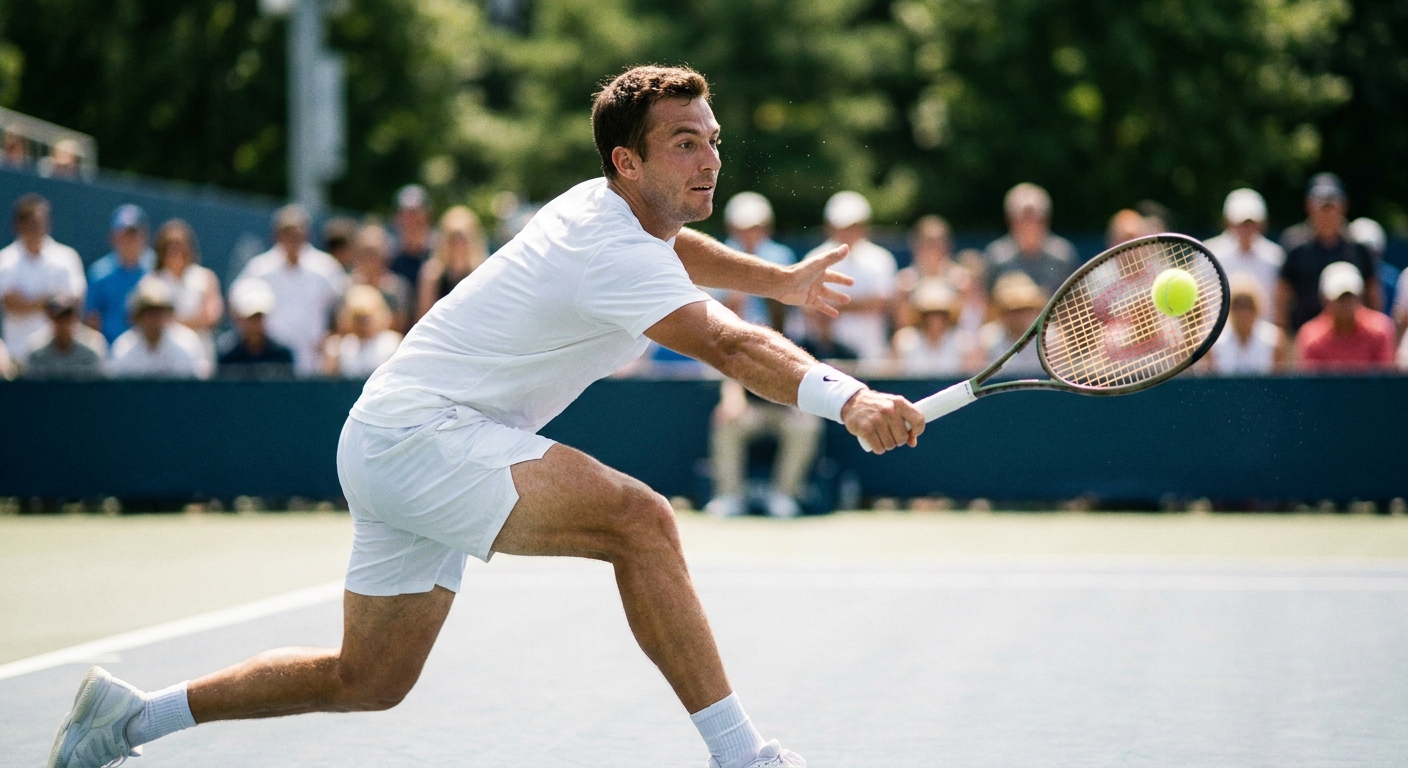
Wimbledon has just crowned another champion, and if you watched closely you saw the same thing every year: the best returners quietly won the tournament. Here is how to coach a return that pressures the server rather than just surviving it.
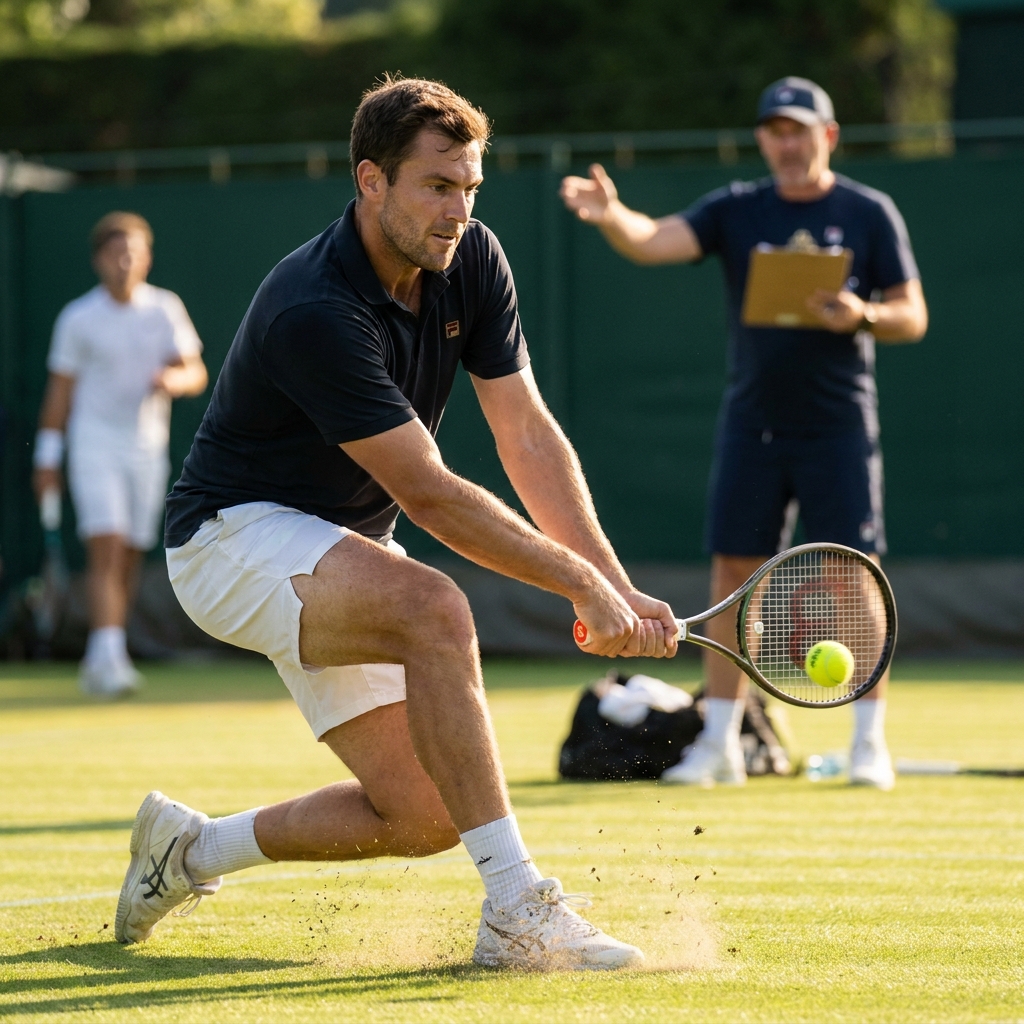
Wimbledon arrives at the end of June and the grass court swing transforms how the game is played. Low bounces, slippery footing, and rewards for forward play demand a different tactical mindset. Here is how to coach it.
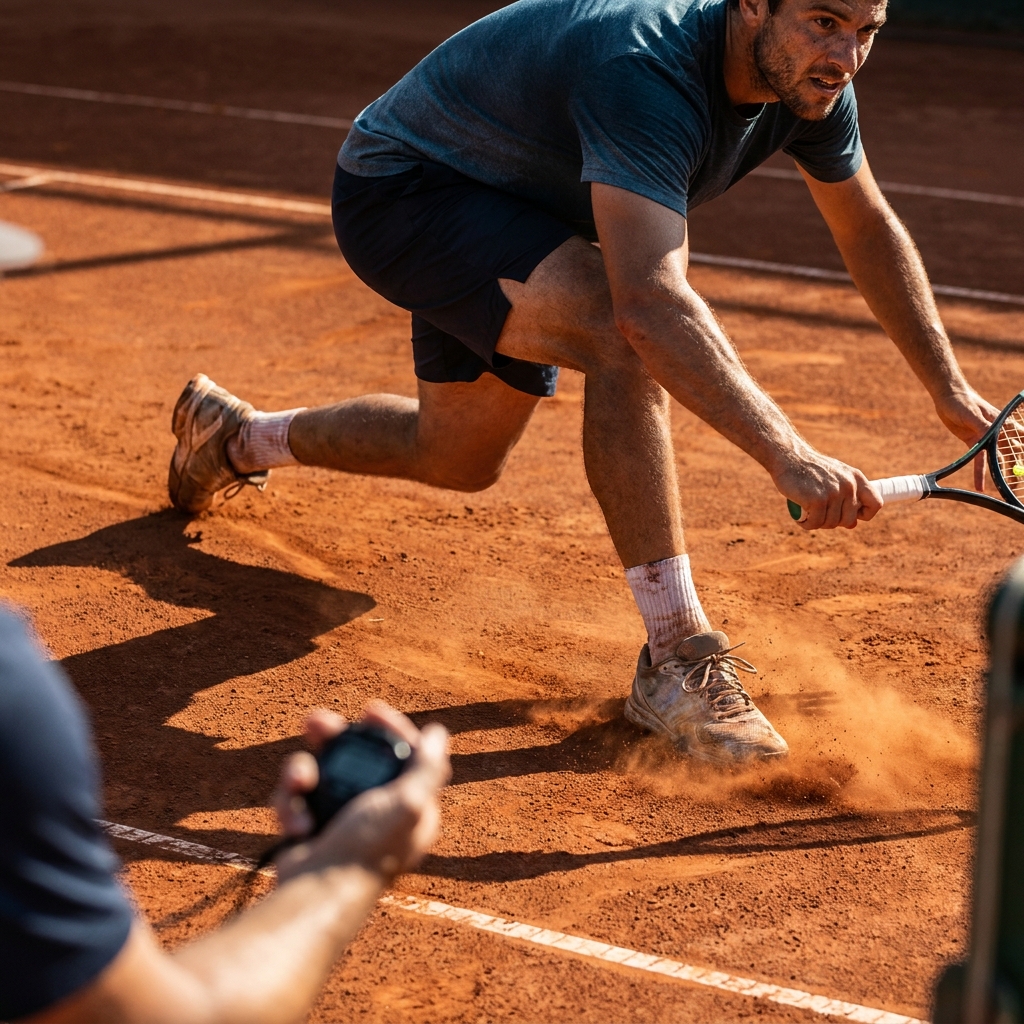
With Roland Garros centre stage in May, clay court tennis demands a different toolkit: controlled sliding, longer rallies, and patient point construction. Here is how to coach the surface that humbles power players and rewards craft.


Register for FREE and get coaching tips, top drills, session and more every week!