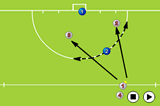
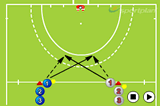
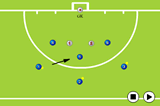
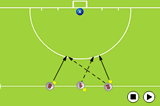
Player 1 passes the ball into the circle to player 2 or 3, avoiding the defending player, on the edge of the circle, who can only try and intercept the pass. The receiving players in the circle try and score a goal past the keeper. once the ball has gone in the circle the defender is allowed to try to stop the players from scoring.
* The player from the 23 metre line follows the pass and takes the position of the player that has had the final shot and takes his/her place.

in more ways than one
 sportplan_netball



in more ways than one
sportplan_hockey

A few weeks into the league season, poor first touches are costing teams the ball. Coach body shape, scanning and receiving on the move to keep possession.

Pre-season fitness fades fast once the league starts. Build conditioning into ball work and use rolling subs well to keep your squad sharp all season.

The first weeks of the season decide whether a junior or new player sticks with adult hockey. Here is how to keep them safe, give them a clear job and build their confidence from the very first bully.