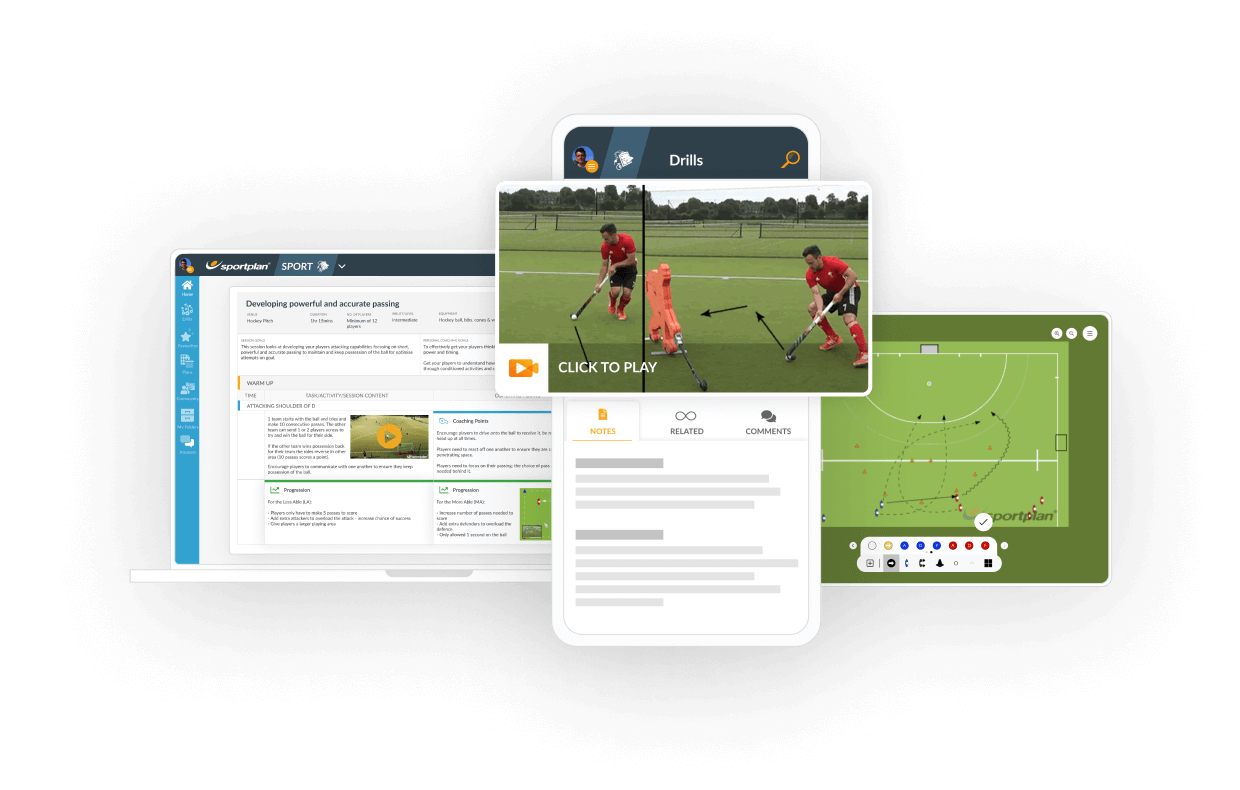
- Line of players one end
- One passive defender in the middle
- One forward team mate a few yards offset from the defender
- Forward should drive into the area, and utilise a V-drag elimination or a wall pass to move around the defender
- Ball should be under control after receiving wall pass
- Body position of the ball carrier is important in the disguise of the movement
- Head should be lifted whilst dribbling
- The wall pass can be one or two touch depending on the ball position
- Allow the defender to tackle
- Introduce a second area with defender, as well a fellow team mate performing wall passes (could swap sides)
- Have the forward shoot at a goalkeeper after the elimination of the defender. This second phase will improve a players ability to think whilst playing
in more ways than one
The best hockey players in the world do not just react faster; they scan more frequently and process information before the ball arrives. This article explores the science behind scanning, how to coach spatial awareness as a habit, and practical drills that force players to lift their heads and read the game.
In hockey, you can only score from inside the circle. Getting the ball into the D with purpose and creating genuine shooting chances is the hardest part of attack. This article examines the different types of circle entry, why entry angle determines shot quality, and how to train your team to penetrate the most congested area on the pitch.
The best teams don't just press - they press at the right moment. Here's how to train your players to read the cues.