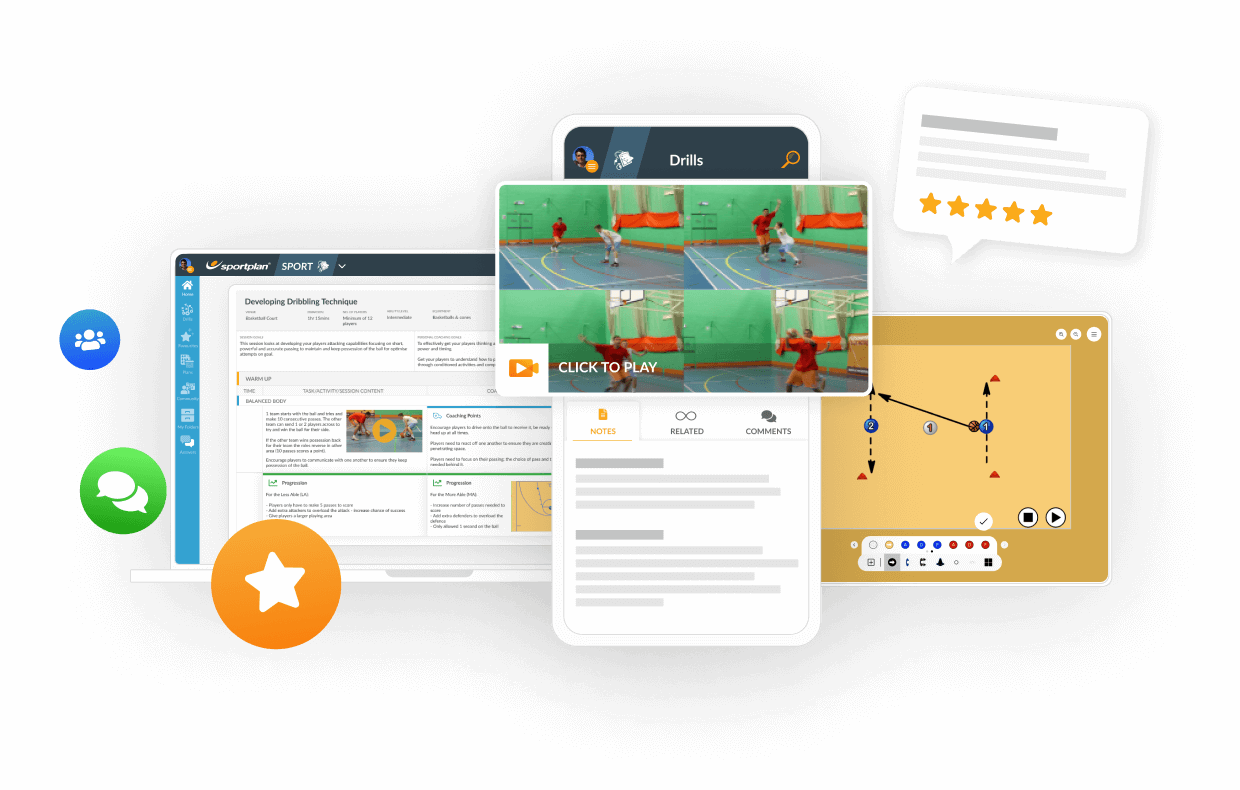
Pass B2-B1 who comes off from W1.
Series of 6 shots.
defender(s):
- passive
- half active (attacker is just successful))
- fully active
dive shot
1. Out of step- or turning movement you make a movement forward with your trunk bent forward.
Take off with one or two feet.
Bend forward with ankle, knee and hip,
trunk bent forward, eyes to the goal.
2. After the shot both arms touch the floor because directly after the shot the landing takes place.
3. There must be a fast bending of the arm, the trunk is brought forward and the head is in the neck.
4. Both legs are bent almost 90 degrees, feet upward.Slide forward on the floor when the chest touches the floor. Head in the neck.
5. Chest, belly and upper leg slide on the floor, while the arms push the body along the floor.
6. The body slides forward, while elbows and wrists are completely bent.
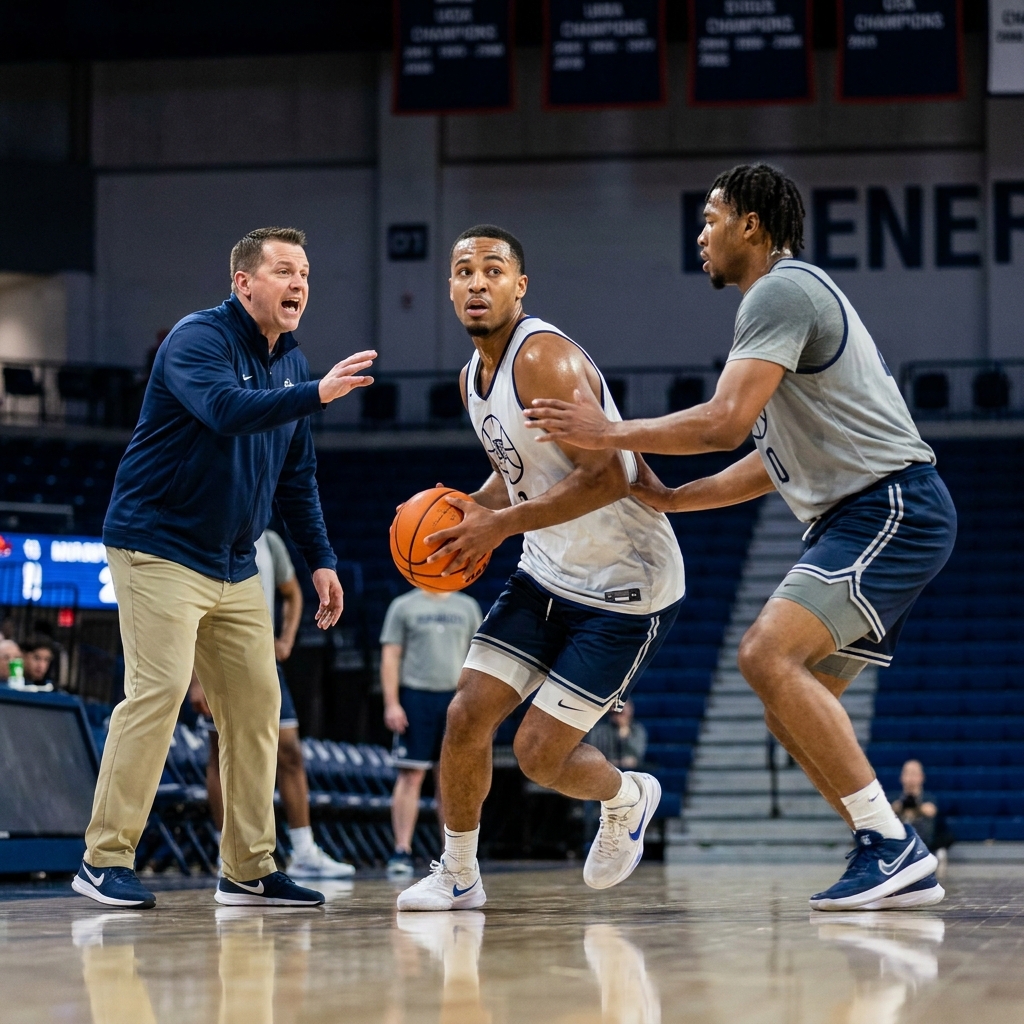
The ball screen produces almost half of all professional offensive possessions, yet most teams still teach it as a memorised play. The modern approach trains the read - giving players a framework to decide based on what the defence does, not what the coach called.
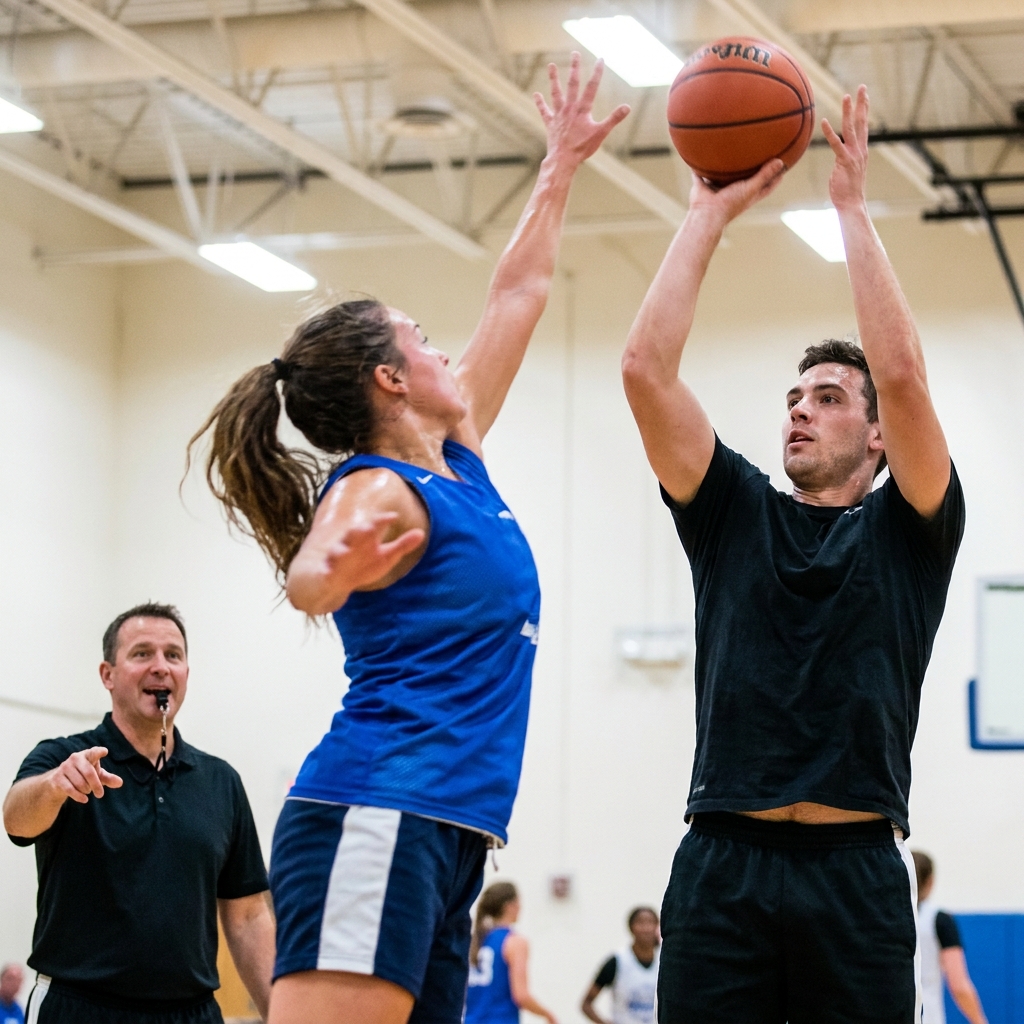
The closeout is the most repeated defensive action in modern basketball. With fouls per game climbing in the 2025-26 season, coaches must teach defenders to contest the three without surrendering the drive or putting shooters on the line.
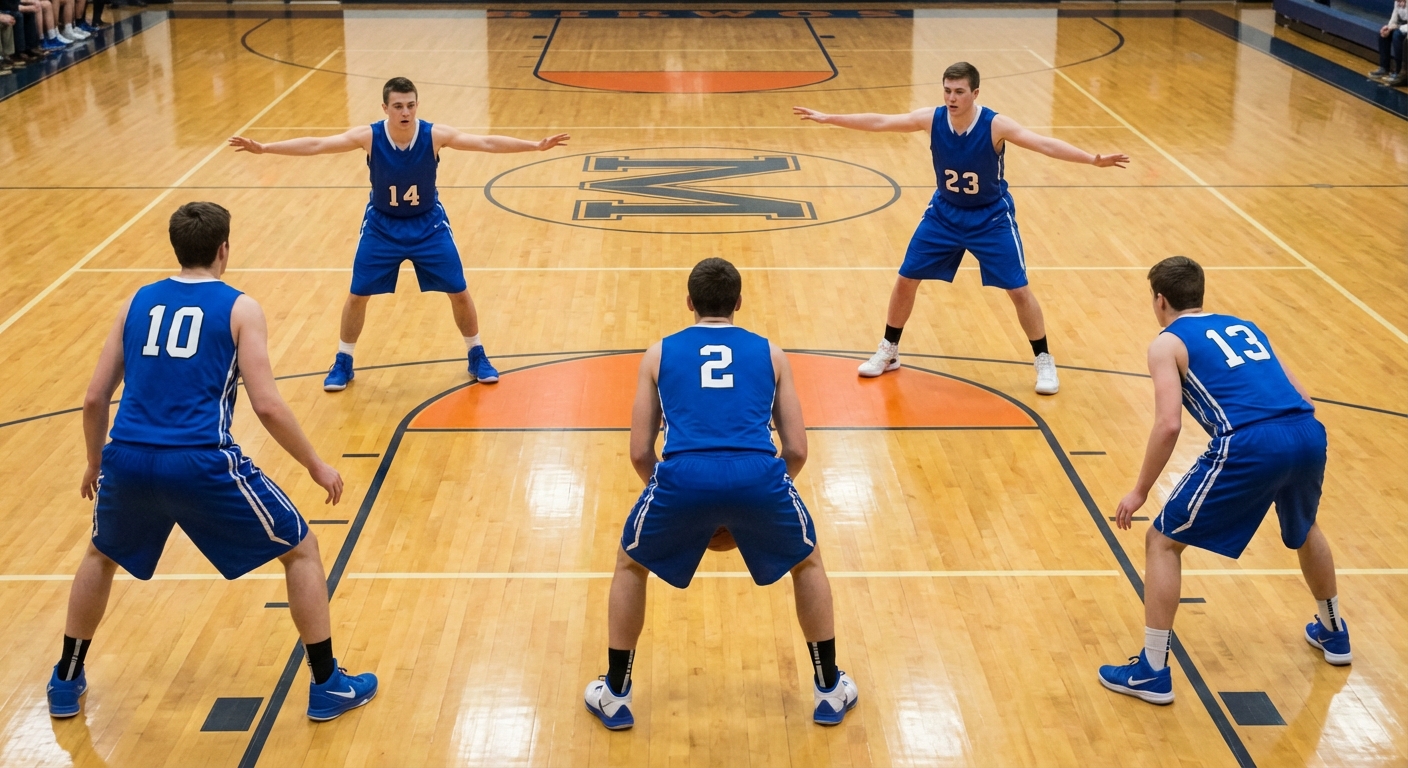
The 2-3 zone defence remains one of the most effective defensive systems in basketball when coached and executed properly. This guide covers the fundamentals of running a 2-3 zone, including player roles, rotations, and when to deploy it for maximum impact.


Register for FREE and get coaching tips, top drills, session and more every week!