

Why High-Energy, Max-Involvement Coaching Matters for Colts
Ask any junior cricketer what made them fall in love with the game and almost none of them will say "the technical session on a back-foot trigger movement". They will say it was fun - they hit a ball miles, took a screamer of a catch, ran someone out and laughed the whole way home. That is the brief for every colts session: keep it busy, keep it safe, and keep it fun. Get those three right and the technique looks after itself.
The single biggest mistake in junior cricket is the queue. One net, one feeder, sixteen children - which means fifteen of them are standing still while one bats. Within ten minutes the bored ones are picking daisies at fine leg and the session has lost them. Every drill in this guide is chosen because it keeps a whole group moving at once: small stations working in parallel, short rotations, and small-sided games where everyone bats, bowls and fields. If a child is active and involved, they are happy - and a happy colt comes back next week.
A few junior-specific notes before you start. Safety first: the moment children use a hard ball they must wear properly fitted protective kit - a helmet with a grille, pads, batting gloves and an abdominal protector (a box) for boys. For beginners, don't rush to the hard ball at all: a soft ball, tennis ball or incrediball lets children learn to catch and play shots without fear of being hurt, and a fearless child improves far faster than a flinching one. Keep it fun: short instructions, plenty of games, praise for effort over outcome. This is exactly the spirit of the ECB's All Stars (ages 5 to 8) and Dynamos (ages 8 to 11) programmes, which build everything around games and enjoyment rather than drills and discipline. Borrow that approach whatever the age group in front of you.
The 15 drills below are grouped by theme so you can build a balanced session - a warm-up game, a batting block, some bowling, lots of catching and fielding, running between the wickets, and a small-sided game to finish. Pick two or three from each area, run them as parallel stations, and you have a full, high-energy night of cricket.
Warm-Up & Fun Games
Start with a game, not a lap of the field. A good warm-up gets little hands and eyes switched on, raises the heart rate and - most importantly - makes children smile before the serious skills begin. These two need almost no kit and work brilliantly with a soft ball.

Batting Drills
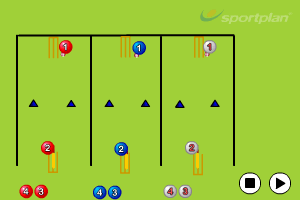
Junior batting is about one thing above all: hitting the ball and enjoying it. Start with a controlled feed so every child gets dozens of swings, then build the two foundation shots - the front-foot drive and the back-foot defence. Keep feeds gentle and underarm for beginners and let them feel the satisfaction of a clean strike.

Bowling Drills
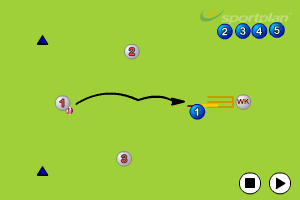
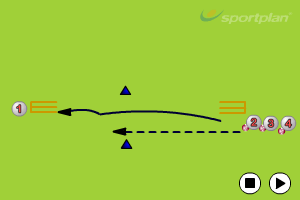
For colts, bowling is about rhythm and accuracy long before pace. A relay turns repetition into a race, so children bowl ball after ball at a target without ever realising they are practising. Encourage a smooth run-up and a high arm rather than slinging it as fast as they can.
Catching Drills
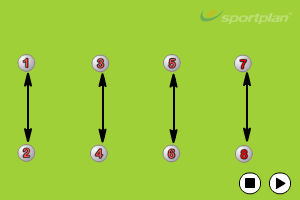
Catches win matches, and nothing thrills a colt like plucking one out of the air. Catching is also the easiest skill to keep everyone busy with - pair them up, give each pair a soft ball, and every child is involved every second. Start close with safe hands and work outwards to high catches and diving.
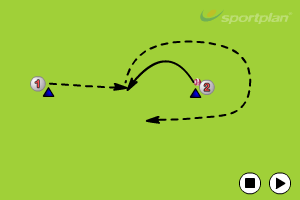


Ground Fielding & Throwing
Sharp ground fielding saves runs and creates run-outs, and it is the skill that turns a scrappy junior side into a tidy one. These drills keep children chasing, gathering low and throwing at a target, with enough variety and competition to hold their attention.

Running Between the Wickets
Running between the wickets is the most underrated skill in junior cricket and the easiest to make fun. Quick singles win games, and a relay or a competitive run-out station gets colts sprinting, turning and backing up while having a brilliant time.
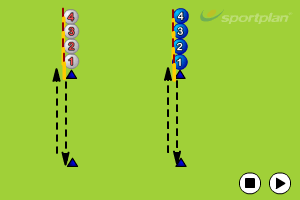
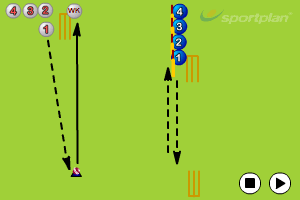
Small-Sided Games (Kwik Cricket & Cricket Rounders)
Finish every session with a game. Small-sided formats are where everything comes together: every child bats, bowls and fields, the scoring is constant, and the fun is non-stop. Kwik Cricket - with its plastic bats and soft ball - is the ECB's flagship junior game for exactly this reason. Cricket Rounders is a brilliant alternative for the very youngest. Either way, send them home on a high.
Running a High-Energy Colts Session
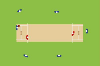
The drills are only half the job - how you structure the night is what keeps sixteen children busy and smiling. The principle is simple: small groups, parallel stations, short rotations and a game to finish. Here is a template that works for almost any age group.
A 75-Minute Colts Session
- Warm-up game (10 min): Start with Divots or Catch Volleyball - heart rates up, smiles on, no standing around.
- Skill stations in parallel (30 min): Split into three or four groups and rotate every 7 to 8 minutes through batting (Bobble Feed, drives), bowling (Bowling Relay) and catching (Catching Relay). Every child is active the whole time.
- Fielding & running block (15 min): Run the 5-Stump Pentagon and a Running Between Wickets Relay as two busy, competitive stations.
- Small-sided game (15 min): Finish with Kwik Cricket so everyone bats, bowls and ends the night having fun.
- Wind-down (5 min): A quick gather-round, praise for effort, and one thing to work on next week.
Keep groups small enough that no child waits more than a few seconds for their turn, rotate roles so the same player is not always fielding at fine leg, and always - always - finish with a game. For a ready-made framework you can drop these drills straight into, use our free cricket session plan template.
Building a Full Junior Programme
These 15 drills give you the building blocks; the next step is understanding where each child fits on the field and how to develop a squad across a season. Our guide to cricket fielding positions helps you place colts in roles that suit them and rotate them fairly, while the how to run a junior cricket team guide walks through the whole season off the pitch. When you want more practices, browse the full Cricket drills library for hundreds more, sorted by skill and theme.
Frequently Asked Questions
How long should a junior cricket session be?
For colts, keep it to 60 to 90 minutes including a warm-up. Younger groups at ECB All Stars age (5 to 8) do best in 45 to 60 minutes, while older Dynamos and youth-team players (8 to 14) cope happily with 90. The golden rule is keeping every child active - break a squad of sixteen into small groups working in parallel rather than one queue at the net, so nobody stands around. A tired, fully involved child goes home happy; a bored one waiting their turn does not.
What age can children start cricket?
Children can start as young as 5 through the ECB's All Stars Cricket programme, which is built around fun games rather than formal matches. From about 8 they can move into Dynamos Cricket and softball or Kwik Cricket, and most clubs run junior teams from Under-9 upwards. At the youngest ages it is all about catching, throwing, hitting a ball off a tee and simply enjoying themselves with a soft ball - the technical coaching comes later.
What kit do junior cricketers need?
For beginners using a soft or incrediball, very little is needed beyond trainers, comfortable clothing and a water bottle. As children progress to a harder ball they must wear properly fitted protective kit: a helmet with a grille, pads, batting gloves and an abdominal protector (a box) for boys. A junior bat sized to the child's height matters too - an oversized bat ruins technique. Many clubs keep a shared kit bag so families can try the sport before buying their own.
How do I keep beginners engaged in cricket?
Maximise involvement and minimise waiting. Use small-sided games such as Kwik Cricket and Cricket Rounders where everyone bats, bowls and fields rather than one long innings. Run skills in small groups working at the same time, use softer balls so nobody is afraid of being hit, keep instructions short, and finish every session with a fun game. Praise effort, rotate roles so the same child is not always fielding at fine leg, and keep the energy high - colts come back for the fun, not the lecture.