

So You're Running the Colts This Year
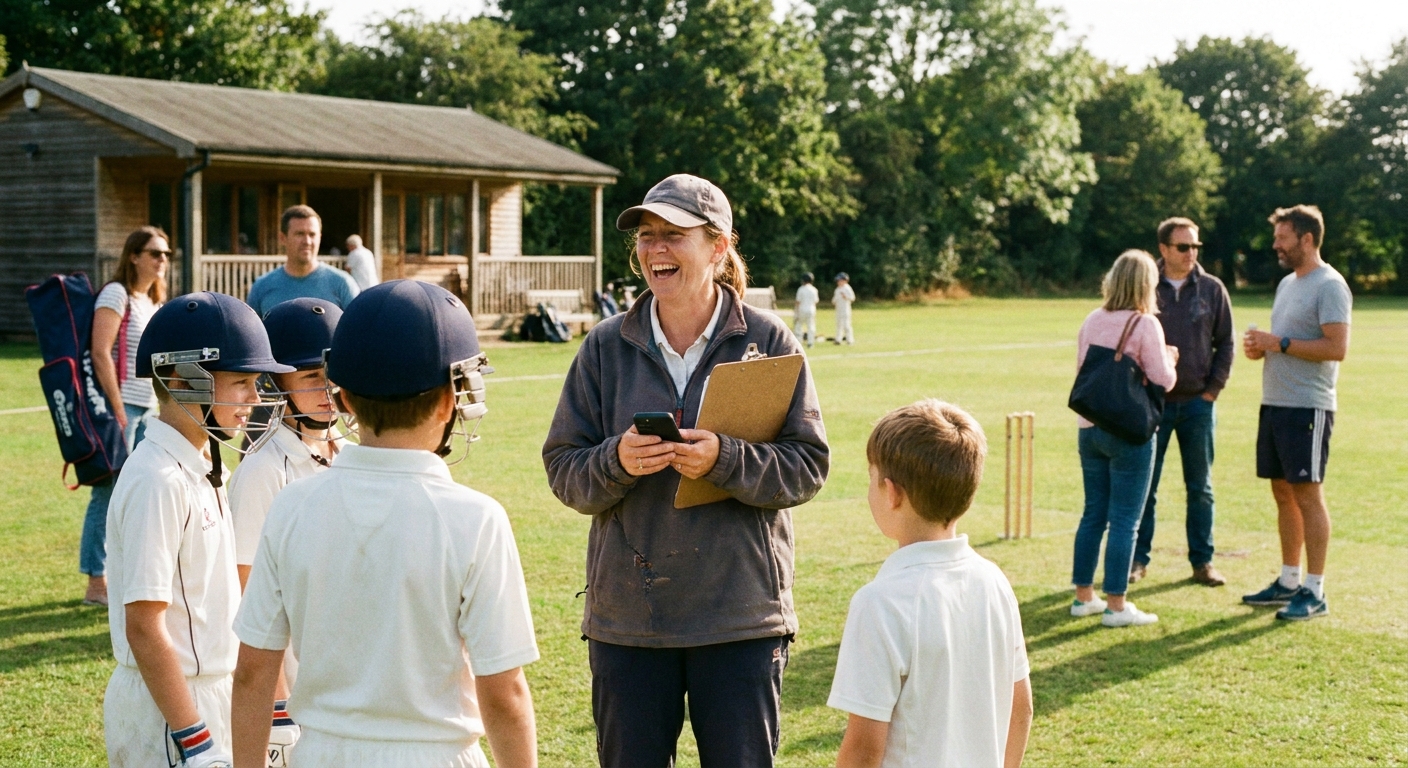
Maybe you volunteered. Maybe you were gently volunteered by someone else. Either way, you are now the person responsible for a group of junior cricketers, a kit bag and a season ahead - and if it feels a little daunting, that is completely normal. The good news is that running a colts team is one of the most rewarding things you can do in grassroots sport, and none of it is as complicated as it looks from the outside.
This guide walks you through a first season from a standing start. We will cover getting set up properly, the kit juniors actually need, planning sessions children enjoy, handling parents, sorting fixtures and ground time, and keeping on top of the money and admin without it taking over your life. Take it one step at a time - you do not need to have all of this sorted by next week.
Step One: Getting Set Up
Almost every junior team in this country runs through an established club, and that is the easiest way to begin. Your host club is affiliated to the ECB (England & Wales Cricket Board) through your county cricket board, which gives your colts section a home, insurance, a ground and the official structures you need to operate. You do not affiliate as an individual - the club does it, and you sit under that umbrella. Have a chat with the club's junior coordinator or committee early; they will know exactly what is in place and what you need to do.
If your club already runs a colts section, you are inheriting a framework. If you are genuinely starting from nothing, work through our starting a cricket club checklist alongside this guide - it covers affiliation, constitution, insurance and the foundations a brand-new section needs.
ECB All Stars and Dynamos: Your Ready-Made Starting Point
If your youngest children are new to the game, you do not have to invent a programme from scratch. The ECB runs two well-supported entry-level schemes through affiliated clubs. All Stars Cricket introduces 5 to 8 year-olds to the game through fun, soft-ball activity, and every child gets a kit pack on signing up. Dynamos Cricket is the next step for roughly 8 to 11 year-olds, bridging into junior club cricket with game-based, countdown-style cricket. Both come with session plans, equipment support and a national framework - a genuine gift for a first-time volunteer. If you have under-9s coming through, start here.
Helpers and Safeguarding
Do not try to run a session of twenty children on your own. Recruit at least one or two helpers - parents are your best source, and most are happy to assist if you ask directly and give them a clear job. More hands means smaller groups, fewer children standing in queues, and a safer session all round.
On safeguarding: anyone in a lead role with juniors needs an enhanced DBS check and should complete the ECB's safeguarding awareness training. Your club's welfare officer arranges the DBS through the county board, and it is far more straightforward than people fear. Treat it as a normal, light-touch part of getting set up - it protects the children, and it protects you. Get it underway early so it does not hold up your first sessions.
Step Two: Kit for Juniors
The cost of kit puts families off more than anything else, so the single most useful thing you can do is build a shared club bag. With a bag of communal equipment, no child is ever excluded because their family hasn't bought their own gear yet.
For the youngest age groups, keep it soft. Soft balls or Incrediballs, plastic stumps and a few junior bats mean children can play safely with nothing of their own - perfect for All Stars, Dynamos and early colts sessions. As children move onto a harder ball, each one needs their own protective kit, but they can build it up gradually.
Junior Cricket Kit: What's Actually Needed
- A correctly sized bat: size to the child's height, not their age or their hero's brand. A bat that is too big ruins technique and confidence - this matters more than anything else on the list.
- Pads (batting): junior sizes, comfortable enough to run in. The club bag should hold a few spare pairs.
- Batting gloves: protect the fingers; needed as soon as a harder ball appears.
- A box (abdominal protector): non-negotiable for any child batting or keeping against a hard ball.
- A helmet with a grille: essential against the hard ball - it must have a proper face grille that fits the child.
- Whites: usually only for match days, and many clubs are relaxed about these at colts level - a club polo and plain trousers often do early on.
- The club kit bag: shared soft balls, stumps, bats, pads and a couple of helmets so every child can take part from day one.
Reassure parents that they do not need to spend a fortune up front. Many clubs run a second-hand kit swap at the start of the season - juniors grow out of bats and pads quickly, so there is always good gear looking for a new home.
Step Three: Planning Your First Sessions
Junior sessions live or die on one thing: are the children active and enjoying themselves? Keep queues short, keep everyone moving, and finish on a game. A nervous first-time coach often over-plans the technical detail and under-plans the fun - aim for the opposite. Short, sharp skill work bookended by games will always win.
You do not need to design every session yourself. Our free cricket session plan template gives you a ready-made structure - warm-up, skill focus, game - to drop activities into, and the junior cricket drills guide is full of age-appropriate practices that work straight out of the box. Browse the full Cricket drills library for hundreds more, sorted by skill.
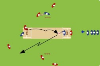
For the youngest groups, lean on conditioned games that teach the basics by stealth. Two that work brilliantly with colts:
Step Four: Managing Parents
Parents are your greatest asset and, occasionally, your biggest headache - and the difference between the two is almost always communication. Set expectations early and clearly: what to bring, drop-off and pick-up times, what happens if it rains, and how you will let them know about fixtures. A parent who knows what is going on is a happy, helpful parent.
Be honest, too, about what you can offer. You are a volunteer giving up your evenings, and the vast majority of families understand and appreciate that. Recruit the willing ones into helping roles - scoring, ferrying kit, running the tea, managing the group chat - and you spread the load while building a proper little community around the team.
Step Five: Fixtures and Ground Time
In your first season, friendlies before leagues. A handful of relaxed games against similar local age groups will tell you far more about your squad than a competitive league will, and there is no points table to worry about. Your club's junior coordinator and the local colts network are the place to start - most counties have an active group of junior managers and a fixtures contact.
Agree the details in advance for every game: format, ball type, ground, start time, and how many you each expect to bring. Ground time is the other piece to nail down early - colts usually share a club's facilities with the senior sides, so get your training slots and home-match dates into the club diary before they fill up. And always have a clear weather and contact plan so nobody drives across the county to a match that was called off at lunchtime. Our guide to cricket fixtures and weather covers that side in detail.
Step Six: The Money and Admin (Without Drowning)
This is the part that quietly sinks new volunteers. Subs, match fees, who has paid, who is available this Saturday, kit money, the endless WhatsApp group - it adds up fast, and chasing it by hand eats the evenings you would rather spend coaching. Setting your charges fairly is the first job; our guide to cricket subs and match fees walks through what to charge and how to keep it simple.
Collecting and tracking it is the second job, and this is where a single mobile-first tool earns its keep. Rather than juggling a spreadsheet for the money and a WhatsApp group for everything else, an app like Teamo brings availability, match fees, registration and parent comms into one place on the phone where most parents already live. You ask "who's in on Saturday?" once, payment status sits alongside it, and the chasing largely runs itself. It is free for up to 25 members - and a brief honest aside, it is built by the Sportplan team behind this site, so do weigh that and try it alongside whatever else you are considering. Whatever you choose, getting the admin off paper is one of the kindest things you can do for your future self.
One thing no app replaces: Play-Cricket, the ECB's official system, remains your record for results, leagues and registration. A club app handles your day-to-day comms, money and availability and complements Play-Cricket - it does not replace it. Keep both running and you have the full picture.
Your First Season, Month by Month
It all sounds like a lot at once, so here is the season laid out as a rough timeline. Nothing here is set in stone - shift it to suit your club - but it shows that everything has its moment, and you do not need it all sorted at the start.
A First-Season Timeline for the Colts
- Pre-season (winter): Confirm your role with the club, get your DBS and safeguarding training underway, recruit a helper or two, and book indoor sessions or hall time. Set subs and match fees and decide how you'll collect them.
- Early spring: Open registration and gather availability, check and top up the club kit bag, plan your first few sessions, and put feelers out for friendly fixtures. Run an All Stars or Dynamos sign-up if you have young ones.
- Start of season: First sessions outdoors - keep them fun and active, settle the group, and confirm your friendly fixtures and ground slots in the club diary.
- Mid-season: Sessions and friendlies in full swing. Keep parents informed, keep the admin ticking over, and start spotting where each child is thriving.
- End of season: A fun finale - a parents-vs-children game or a small presentation goes a long way. Reflect on what worked, thank your helpers, and start thinking about whether you fancy a junior league next year.
That is a whole first season, and you will get through it. Lean on your club, lean on your helpers, keep the children moving and smiling, and get the admin off paper early. Do those things and you will end the summer with a happy squad, a few grateful parents, and - more often than not - the quiet realisation that you want to do it all again next year.
Frequently Asked Questions
What do I need to start a junior cricket team?
You need a host club that is affiliated to the ECB through your county board, a safe place to play (most colts teams run alongside an existing club's ground or use a sports hall in early season), at least one helper alongside you, and a small bag of shared kit - soft balls, stumps, a few bats and pads in junior sizes. You do not need everything on day one. Get affiliated through the club, recruit a couple of parent helpers, sort your safeguarding basics, and book your first few sessions. Everything else can grow as the squad does.
Do cricket coaches need a DBS check?
If you are in regulated contact with children - coaching, managing or regularly supervising a colts team - then yes, you will need an enhanced DBS check, and your club's welfare officer arranges this through the ECB and your county board. It is straightforward and the club handles the paperwork. Anyone in a lead role with juniors should also complete the ECB's safeguarding awareness training. Treat it as a normal part of getting set up, not a hurdle - it is there to keep the children and you protected.
What kit do junior cricketers need?
For the youngest age groups, very little - a club bag of soft or Incrediballs, plastic stumps and a few bats means children can start with nothing of their own. As they move onto a harder ball, each child needs a correctly sized bat, pads, batting gloves, a box (abdominal protector) and a helmet with a grille; whites are usually only needed for match days and many clubs are relaxed about them at colts level. Buy a shared club kit bag for the shared items and let families add personal kit gradually. Getting the bat size right for the child's height matters more than the brand.
What are ECB All Stars and Dynamos Cricket?
They are the ECB's two entry-level programmes for children. All Stars Cricket introduces 5 to 8 year-olds to the game through fun, soft-ball activity, and every child receives a kit pack when they sign up. Dynamos Cricket is the next step for roughly 8 to 11 year-olds, bridging into junior club cricket with countdown games and a more game-based approach. Both are run through ECB-affiliated clubs, give your colts section a ready-made starting point, and are an easy, well-supported way for a new volunteer to get children playing.
How do I sort fixtures for a new junior team?
Start with friendlies before you commit to a league. Ask your club's junior coordinator and other local colts managers - most counties have an active network and a fixtures contact - and aim for a handful of relaxed midweek or weekend games against similar age groups. Agree format, ball type, ground and start time in advance, and always have a clear weather and contact plan so nobody turns up to a cancelled match. Once your squad is settled and you know your numbers, you can look at entering a local junior league the following season.