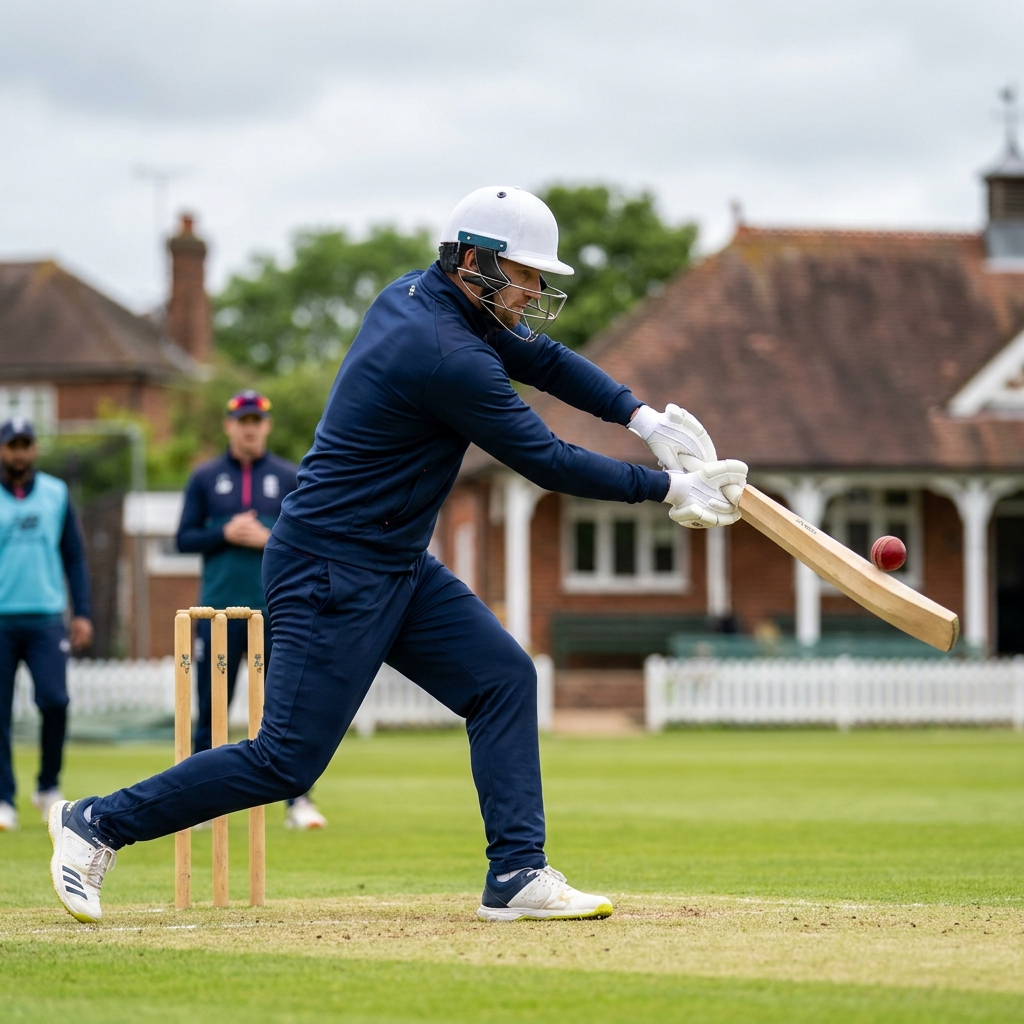


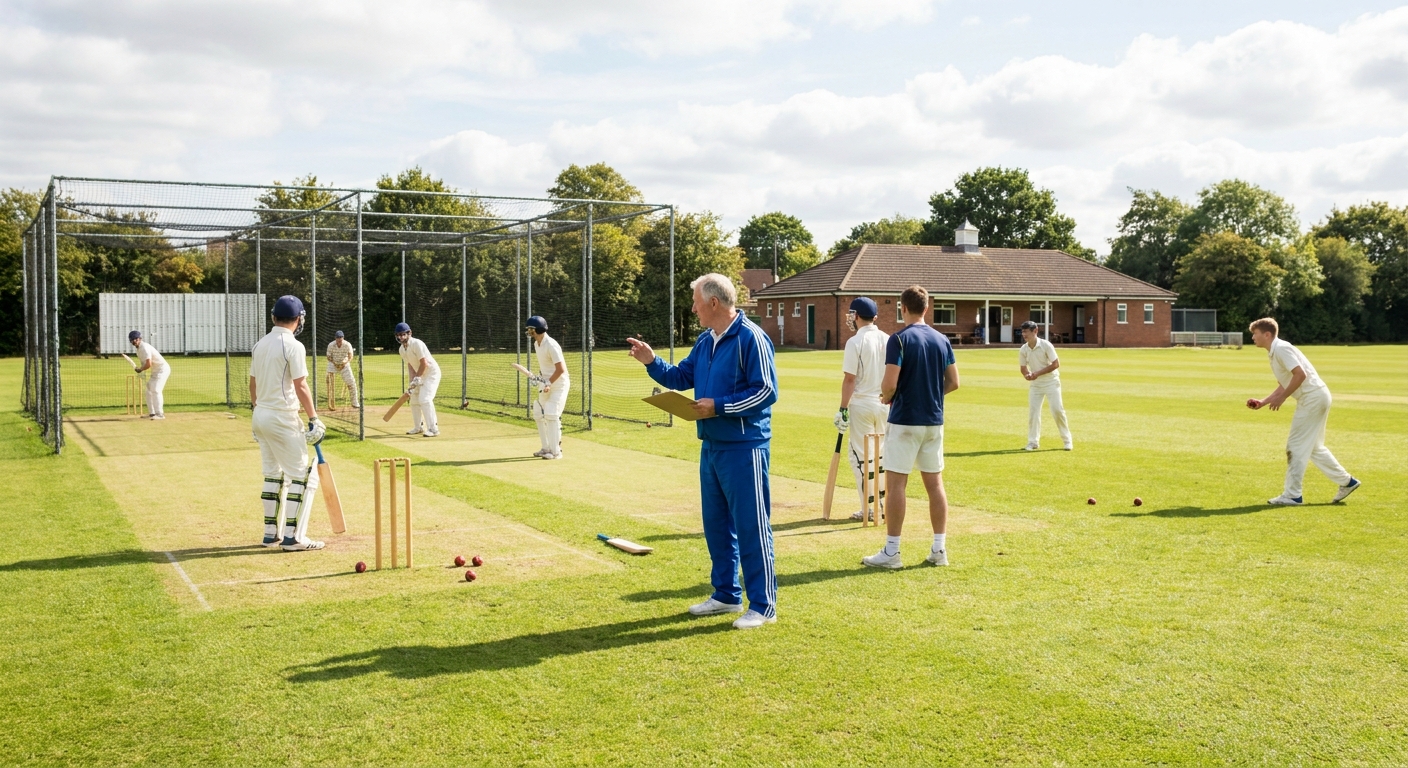
One Template, Every Club Night
The hardest part of running a club training night is not knowing drills - it is fitting them into 90 minutes with the squad you actually have, the nets you actually booked, and the one or two helpers who turned up. Most coaches end up improvising, which means the warm-up runs long, the batters in the net hog the time, and the outfield group drifts. A simple, repeatable structure fixes all of that.
This template breaks a typical midweek session into five phases with a sensible time for each. It is built around the everyday club reality: you almost always have nets running and an outfield group at the same time, and you rarely have enough coaches to staff both fully. We will set out the skeleton, explain why each phase earns its place, show how to run the two groups in parallel, and then drop a worked example into the structure so you can see it in action.
The 90-Minute Skeleton
Here is the structure. Print it, scribble your drills against each phase, and you have a plan. The times are a guide for a 90-minute senior or older-colts session - we will cover how to flex them for younger players and indoor nights further down.
Club Night Session Template (90 minutes)
- 1. Warm-up & movement (15 min): Raise the heart rate, mobilise, switch the hands and eyes on. A moving game plus dynamic stretches and easy throwing - never a cold sprint into hard-ball work.
- 2. Skill stations - batting / bowling / fielding (35 min): The engine of the session. Split into a nets group (batting and bowling) and an outfield group (fielding), run both in parallel and swap halfway. This is where the volume happens.
- 3. Skill under pressure / scenario (20 min): Take the skill just practised and add a consequence - a target, a score, a match situation - so it has to hold up when it matters.
- 4. Game-based finish (15 min): A conditioned game that pulls everything together, keeps it fun, and lets you see what stuck without you talking.
- 5. Cool-down & review (5 min): Easy movement, the longer static stretches, and three sentences on what went well and what to take into the weekend.
Why Each Phase Earns Its Place
1. Warm-up & movement - 15 minutes
Cricket asks players to throw hard, bowl at pace and sprint between wickets, often from a standing start on a cool evening. A proper warm-up cuts the injury risk and means the first ball of the session is not the first time the shoulder has moved. Make it active and fun - a catching or movement game does more to get a colts group switched on than a lap of the field ever will. Build bowlers up progressively from a few paces rather than letting them rip cold, and leave the long static stretches for the cool-down.
2. Skill stations - 35 minutes
This is the part of the night players came for, and the part most clubs run badly. With nets and an outfield available, the temptation is to put everyone in the nets and let the outfield sit empty - which leaves half the squad watching three batters take throwdowns. Instead, split the squad in two and run a nets group (batting and bowling) and an outfield fielding group at the same time, then swap at the halfway mark. Everyone bats, everyone bowls, everyone fields, and nobody queues for fifteen minutes. We cover how to staff this with one or two coaches in the next section.
3. Skill under pressure / scenario - 20 minutes
A skill grooved in an unopposed drill often falls apart the moment a match puts a consequence on it. This phase bridges the gap. Take whatever you worked in the stations and add pressure: a fielding target to hit, a number of balls a batter must survive, a run-out scenario, "ten to win off the last over". It does not need to be elaborate - a score, a target or a clock is usually enough to change a player's intent and tell you what has really been learned.
4. Game-based finish - 15 minutes
End with a game. A conditioned match or small-sided game lets players apply everything in context, keeps the night enjoyable, and gives you a quiet window to watch rather than talk. It is also the moment that sends people home wanting to come back next week - never underrate that. For colts especially, the game is where the learning lands, so protect this phase even when the session has run long.
5. Cool-down & review - 5 minutes
Five minutes of easy movement, the longer static stretches you skipped at the start, and a quick huddle. Keep the review short and specific: one thing the group did well, one thing to carry into the weekend, and a word on next week. Players remember the last two minutes far more than the middle forty - use them.
Running Nets and Outfield in Parallel
This is the question every club coach actually wrestles with: how do you staff two groups at once? The answer is to put your coaching where it is needed most and let the rest largely run itself.
The nets are the more self-managing group. Once batters and bowlers know the theme and a rough order, a net cycles itself - bowl, bat, swap - with relatively little intervention. So if you have a second helper or a sensible senior, that is where they go: keeping the order fair, feeding throwdowns and making one or two coaching points. The coach's place is usually out on the outfield, where the fielding station needs setting up, demonstrating and feeding, and where a group will drift fastest if left alone.
To make the parallel work, brief both groups on the same theme so the night feels joined up rather than two unrelated sessions. Set a clear time to rotate - splitting the 35-minute block roughly in half - and use a fixed signal, a shout or a whistle, so the swap happens cleanly with nobody left standing around. If you are entirely on your own, run a station the nets group can self-cycle (batting against a bowling machine or set throwdowns) and station yourself between the net and the outfield so you can scan both.
Adapting the Template
The five-phase shape stays the same whoever you are coaching - what changes is the dose.
Colts. Shorten the whole thing to 60-75 minutes and shorten each phase. Make the warm-up a game, lean on conditioned games rather than formal drills, keep instructions short and the doing high, and protect the game-based finish - it is where younger players learn most. Watch the nets: young bowlers tire and lose accuracy quickly, so cap their volume and rotate them often. Our cricket drills for juniors guide gives you a ready bank of age-appropriate practices to drop into each phase.
Seniors. Lengthen the skill block and the pressure phase. Let the nets group fully self-manage so you can coach individuals, and make the scenario phase mirror real match situations - chasing a target, defending a total, bowling at the death. This is also where players can specialise: a quick understanding of where everyone fields helps you set realistic scenarios, and our guide to cricket fielding positions is a useful primer for newer players.
Indoor winter sessions. Space is the constraint, not coaches. You usually have a couple of lanes and a hall, so swap the outfield fielding station for close-catching, reaction and footwork work that suits a smaller area, and lean harder on the skill-under-pressure phase, where targets and games work brilliantly indoors. Keep run-ups short, bowling progressive, and the floor in mind for diving drills. The phases hold; you simply reshape the stations to fit four walls.
A Worked Example: Building Solid Front-Foot Batting
To show the template in use, here is a full senior or older-colts session themed around front-foot batting - the drives and the solid defence that underpin a good top order. Notice how the theme runs through every phase, and how the nets group and outfield group are briefed on connected work.
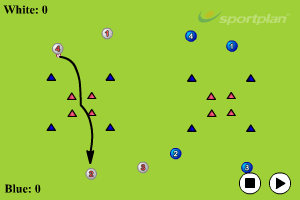
Phase 1 - Warm-up (15 min). Catch Volleyball to raise the tempo and switch the hands on, then dynamic stretches and progressive throwing. Bowlers build their run-up from half pace.
Phase 2 - Skill stations (35 min). Nets group: batters work front-foot drives and forward defence off feeds; bowlers groove a full length that invites the front foot. Outfield group: a fielding station to stay sharp. Swap at 17-18 minutes.
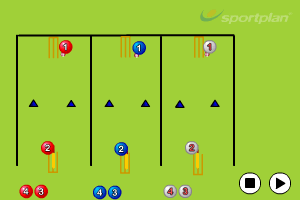

Phase 3 - Skill under pressure (20 min). Back in the nets, each batter must survive a set number of balls and is "out" on a loose drive or playing across the line - a consequence that forces a tight front-foot game. Bowlers compete to earn the wicket.
Phase 4 - Game-based finish (15 min). A conditioned game where runs only count in front of the wicket, rewarding the straight, front-foot strokes the session has built.
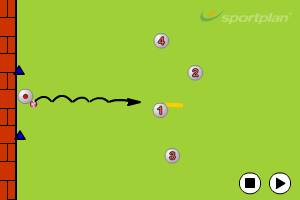
Phase 5 - Cool-down & review (5 min). Easy movement, static stretches, and a one-line takeaway: "Head still, lead with the front foot, drive only what's full." Done.
Make It Yours
The point of a template is that you stop reinventing the night every week. Keep the five phases and the parallel nets-and-outfield split fixed, and all you change session to session is the theme and the four or five drills you slot into it. Over a season that consistency is what turns a series of training nights into actual progress.
When you are ready to fill the stations, browse the full Cricket drills library for hundreds of practices sorted by skill, and pull the right ones into each phase of the structure above. Build a handful of themed sessions in advance and you will never again turn up to a club night without a plan.
Frequently Asked Questions
How long should a cricket training session be?
A typical midweek club session runs about 90 minutes, which is long enough to warm up properly, work two or three skills with real volume, and finish with a game. Colts sessions are often a little shorter at 60 to 75 minutes because concentration drops, while a pre-season or indoor block can stretch towards two hours. The key is not the total length but how much of it players spend active rather than queuing - aim to keep everyone busy and only the structure changes by age group.
How do I run nets and fielding at the same time?
Split your squad into a nets group and an outfield group and run them in parallel, then swap halfway. Put your most experienced helper or a self-managing senior group on the nets, where players largely cycle themselves through batting and bowling, and keep the coach out on the grass running the fielding station, which needs more setting up and feedback. Brief both groups on the same theme so the session feels joined up, set a clear time to rotate, and use a fixed signal - a shout or a whistle - so the swap happens cleanly without anyone standing around.
What should a cricket warm-up include?
A good cricket warm-up raises the heart rate, mobilises the joints you are about to load, and rehearses the movements of the session. Start with a few minutes of light running or a moving game to get warm, add dynamic stretches and arm circles for the shoulders, then build in some easy throwing and catching to switch the hands and eyes on before any hard ball arrives. Bowlers should bowl progressively from a few paces up to full pace rather than going flat out cold. Skip the long static stretches at the start - save those for the cool-down.
How many drills should be in one cricket session?
For a 90-minute session, three to five drills is about right. Trying to cram in more means each one gets too little time to make a difference and the session feels rushed. Pick a clear theme, choose one warm-up activity, two or three skill drills that build towards that theme, and a game to finish. Fewer drills done with more repetitions and better feedback will always beat a long list rushed through in five minutes each.
How do I adapt a session for colts versus seniors?
Keep the same five-phase shape but change the dose. For colts, shorten each phase, make the warm-up a game, use more conditioned games than formal drills, and keep instructions short with plenty of doing. For seniors, lengthen the skill block, add a scenario or pressure phase that mirrors match situations, and let the nets group largely self-manage so you can coach individuals. The structure stays constant; the volume, the language and the amount of competition are what you dial up or down.