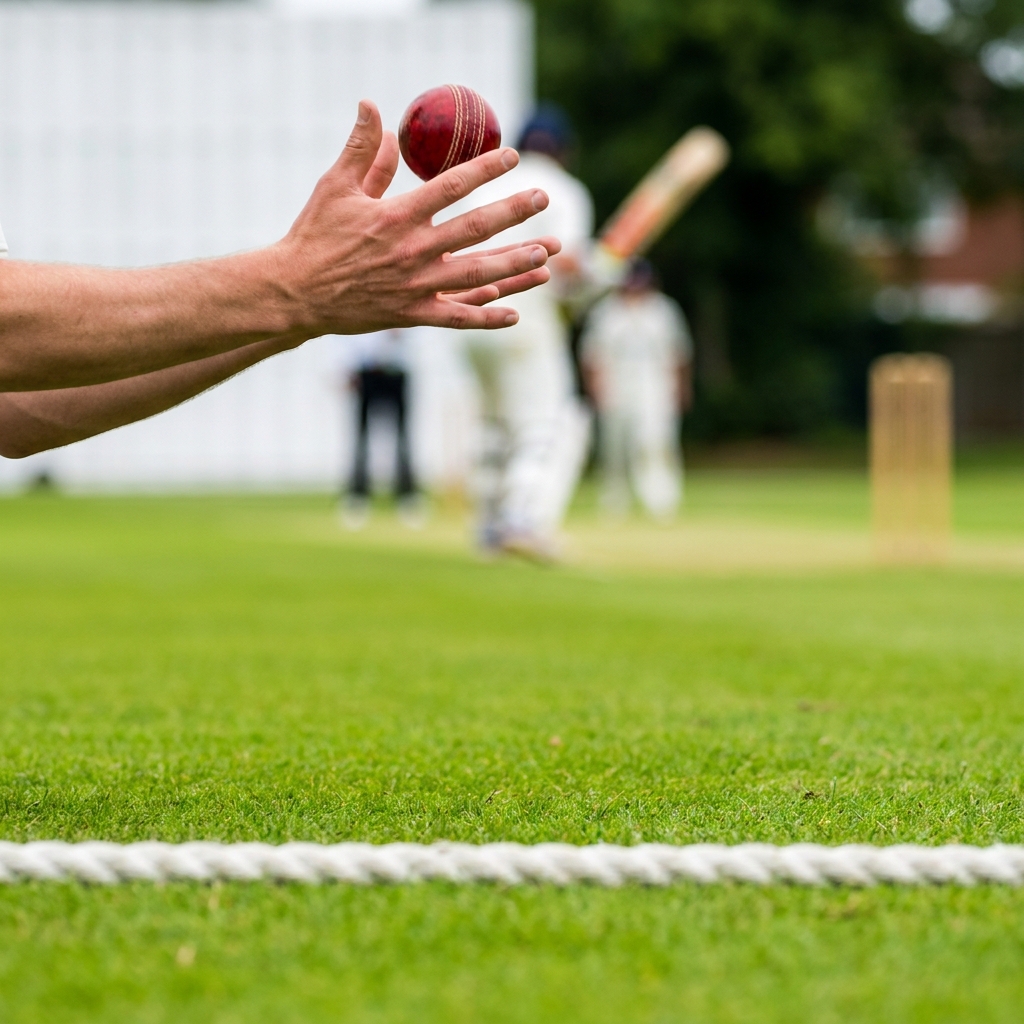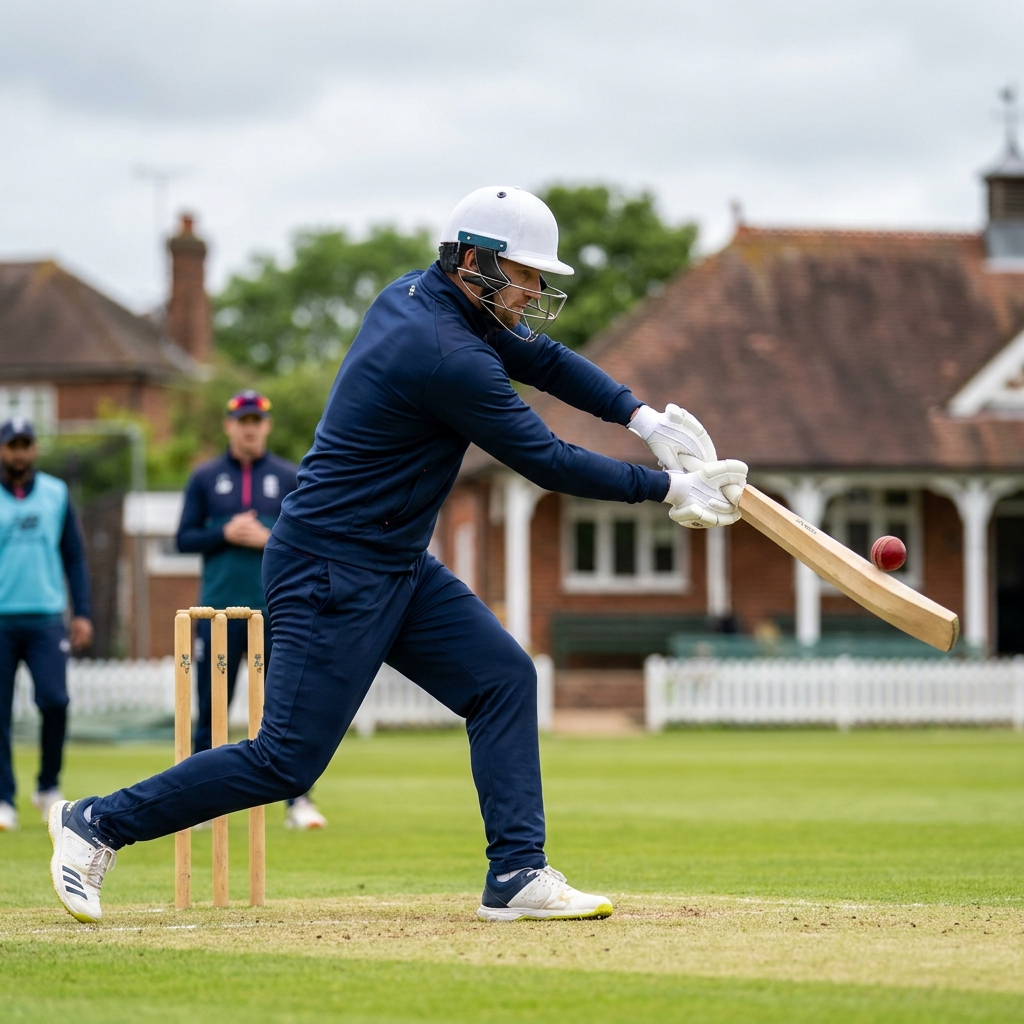


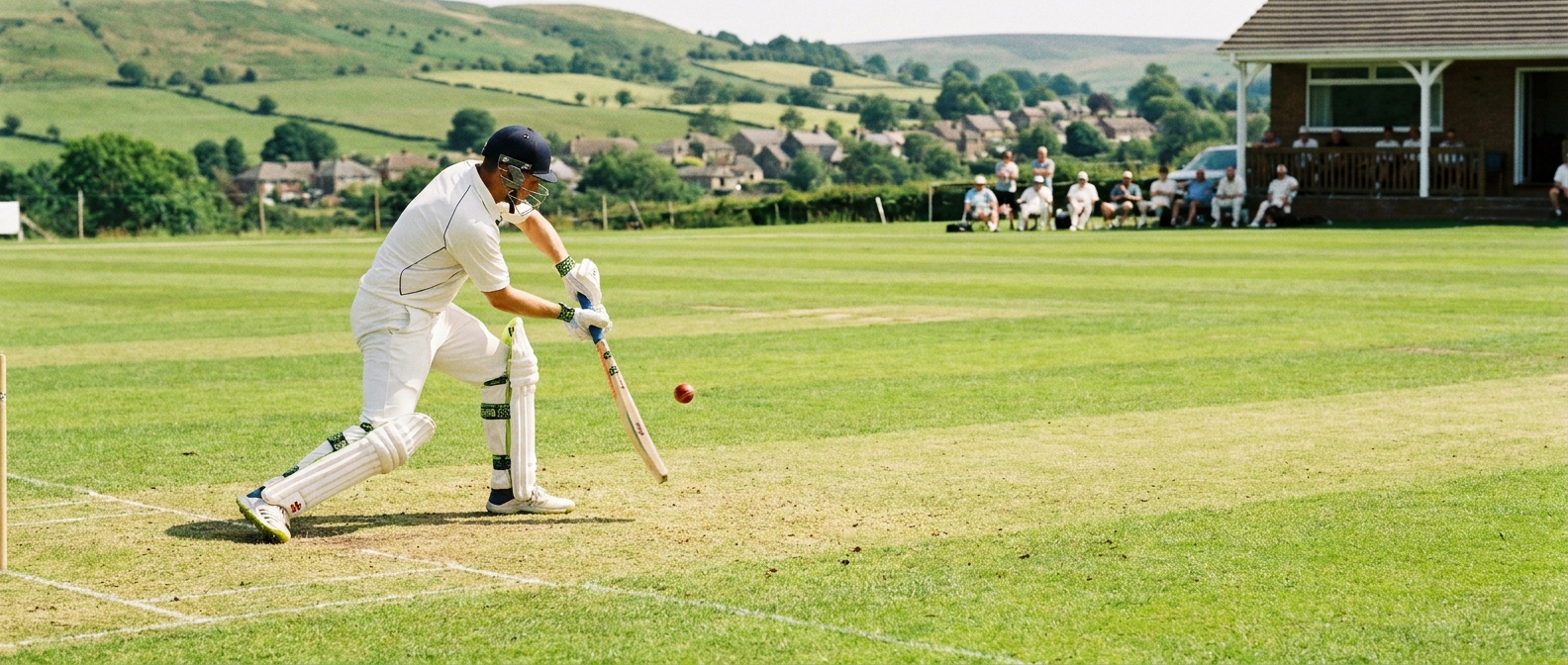
By mid-July the English club season is in full swing, and so, quite literally, is the ball. Overnight rain, uncovered outfields and a well-grassed square mean the seam is still nipping around long after pre-season has been forgotten. For a lot of batters this is the toughest cricket of the summer: the pitch looks flat, the sun is out, and yet edges keep flying to the cordon.
Playing the moving ball is a skill in its own right, and it is one that too many club batters never get taught properly. It is not about a bigger backlift or a harder push. It is about a still head, late hands and the discipline to leave what you can leave. Get those three right and the swinging Dukes stops being a threat and starts being an opportunity, because bowlers who move it also bowl plenty of half-volleys chasing the perfect delivery.
Why the Ball Moves More in an English July
Coaches can help batters enormously simply by explaining what is actually happening. Swing comes from the shine and the seam angle in the air; seam movement comes off the pitch when the ball lands on its seam and deviates. A grassy surface after a wet week gives you both at once, and the harder Dukes ball holds its seam and shine far longer than a Kookaburra, so the difficult period can last twenty overs rather than six.
The practical message for a batter is simple. Early in an innings, and early in a bowler's spell with a new ball, the ball will do most. As the shine wears and the pitch dries through the afternoon, movement drops away. Survive the hard bit and the rewards come later. That single idea reframes the whole innings: the first half hour is about occupation, not run-rate.
The Technical Fixes That Actually Work
When the ball is moving, the batter has less time to react to the deviation, so the answer is always to play later and straighter, never harder. A rushed, committed drive at a moving ball is how club batters get out. The framework below gives your players a clear order of priorities to work through in the nets.
Step One: Get the head still and leading. Ask the batter to feel their eyes and nose arriving over the ball at contact. A head that falls to the off side drags the hands across the line and turns a solid defence into a nick.
Step Two: Play the ball under the eyes and as late as possible. The longer a batter can watch the ball, the more of the movement has already happened before they commit the bat. Late equals safe.
Step Three: Soften the hands and let the ball come. A relaxed bottom-hand grip means an edge dies at the batter's feet rather than carrying to slip. Hard hands feed the cordon.
Step Four: Build a clear leaving game. Every ball the batter leaves outside off is a ball that cannot get them out, and it forces the bowler to bowl straighter, where the runs are.
Coaching the Leave and the Judgement of Line
The single biggest gain against the moving ball is a trustworthy leave. Batters who chase every ball outside off will nick one eventually; batters who leave well make the bowler come to them. In practice, set a clear off-stump line with a cone or a spare stump and reward players for leaving anything they judge to be missing it, exactly as you would reward a well-timed cover drive.
Judgement of length matters just as much. Against movement, the danger ball is the good length delivery that a batter is not sure whether to go forward or back to. Teach a decisive forward press to smother the fuller ball and a firm back-foot game to give time against anything short of a length. Indecision is what the moving ball punishes hardest.
Key Coaching Points
- Still head, leading eyes: the head should finish over or just outside the ball at contact, never falling away to the off side.
- Play late, play straight: present a full, straight face as close to the body as possible and let the movement finish before committing.
- Soft hands, relaxed bottom hand: deaden the edge so it drops short of the slips rather than carrying.
- Leave with intent: a deliberate, well-judged leave is a positive shot, not a wasted ball. Praise it like a boundary.
- Decisive footwork: commit fully forward or fully back on length; the half-cock push at a moving ball is the highest-risk option.
- Respect the phase: occupy the crease while the ball is hard and shiny, then cash in once the movement fades in the afternoon.
Recommended Drills



VIEW ALL FORWARD DEFENSIVE DRILLS
Frequently Asked Questions
Should batters look to leave more or defend more against the swinging ball?
Both, and the leave comes first. Encourage players to leave anything they judge is missing off stump, then defend late and straight at anything on the stumps. A good leaving game forces the bowler to bowl straighter, which is exactly where a batter wants the ball.
Is it worth driving at all when the ball is moving?
Yes, but only at the genuine half-volley and only with soft hands and the head over the ball. The drop-and-drive drill trains this well. Drive the over-pitched ball, leave the fuller-length ball that is still swinging, and never drive on the up early in an innings.
How do I recreate movement in practice if I have no bowling machine with a swing setting?
Sidearm throwdowns with a slightly worn ball, or feeds angled across the batter from wide of the stumps, replicate the decision-making. The aim is not to reproduce exact swing but to train a still head, late hands and clear leaving decisions under time pressure.