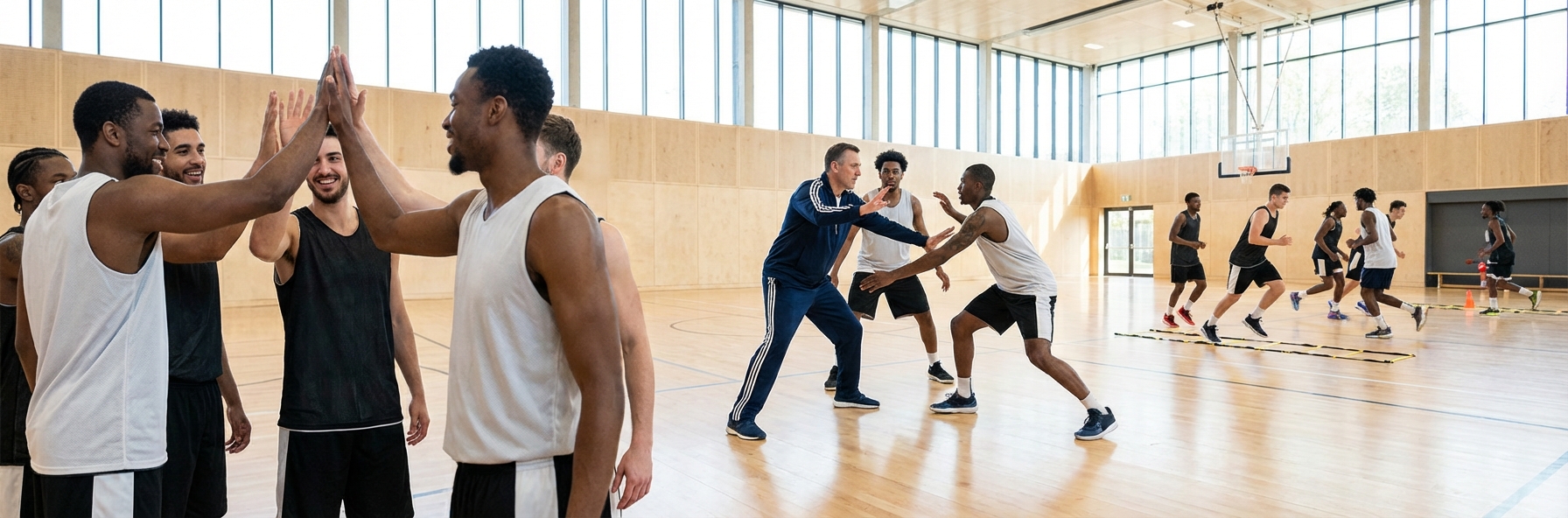
Basketball history is full of talented teams that underperformed and less talented teams that overachieved. The difference often comes down to chemistry - how well players connect, communicate, and sacrifice for each other. Building this culture is as important as building skills.
What is Team Chemistry?
Chemistry includes several elements:
Trust: Confidence in teammates' abilities and intentions.
Communication: Constant, clear, and constructive dialogue.
Sacrifice: Willingness to put team success over individual statistics.
Accountability: Holding each other to standards without resentment.
Joy: Genuine enjoyment of playing together.
Building Trust
Trust develops through:
Time together: Chemistry doesn't happen instantly. Teams need shared experiences.
Consistency: Players who show up and perform build credibility.
Vulnerability: Admitting mistakes and weaknesses creates authentic connection.
Support: Picking up teammates during struggles demonstrates loyalty.
Establishing Standards
Culture requires clear expectations:
Non-negotiables: Behaviors that are required (effort, attitude, preparation).
Player-owned: Standards players create themselves are more meaningful than coach-imposed rules.
Consistent enforcement: Standards applied equally to everyone.
Positive framing: What we do, not just what we don't do.
Role Acceptance
Every team needs role players who embrace their roles:
Define roles clearly: Players need to know what's expected.
Value all roles: Celebrate defensive stoppers and screen setters, not just scorers.
Role can change: Roles evolve based on matchups and development.
Role-specific recognition: Acknowledge players for excelling in their roles.
Managing Conflict
Healthy teams handle conflict constructively:
Address issues directly: Problems left unspoken fester and grow.
Focus on behavior: Critique actions, not character.
Move forward: Resolution means moving on, not holding grudges.
Coach involvement: Sometimes mediation is needed, sometimes teams work it out.
Team Building Activities
Shared experiences: Activities outside of basketball build connections.
Service projects: Giving back together creates meaning and perspective.
Meals together: Simple time together strengthens relationships.
Individual connection: Coaches knowing players as people, not just players.
Key Coaching Points
- Chemistry is as important as talent for team success
- Trust develops through time, consistency, and shared vulnerability
- Player-owned standards are more powerful than coach-imposed rules
- Role acceptance requires clear definition and genuine appreciation
- Healthy conflict resolution prevents team-destroying issues