Indoor season is in full swing, and this is the first winter played under FIBA's 2026 rule changes. The old catch-all "unsportsmanlike foul" has been split into disruption fouls and flagrant fouls, and referees are being asked to come down harder on reckless or grabbing contact. For coaches, that means a defender who has got away with a handsy close-out or a lazy reach-in for years might suddenly be in foul trouble this season.
The good news is that legal defence and effective defence are the same thing. Players who defend with their feet, not their hands, pressure the ball just as well and pick up far fewer whistles. This is the month to make that the habit, before bad habits cost you games in December.
Why Players Reach for Fouls
Most illegal contact is not aggression, it is a defender who has already lost the footrace. If your feet are beaten, your hands take over: a grab on the hip, a slap at the ball, a forearm across the back as the attacker drives past. Referees have always frowned on this, but the stricter disruption-foul standard this season means it gets called more often and more seriously.
The fix is almost never "tell them to stop fouling". It is to fix the footwork and positioning that put the hands to work in the first place.
Coaching Pressure That Stays Legal
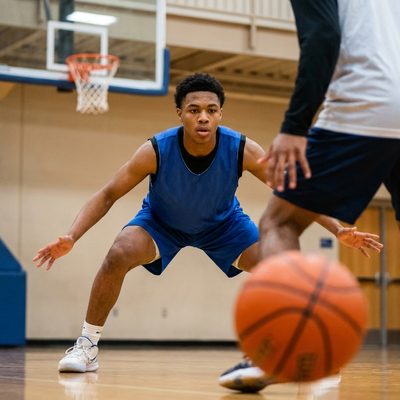
Step One: Build the stance. Low hips, feet wider than shoulder width, weight on the balls of the feet, chest up. A defender standing tall with straight legs has already lost the first step of the race.
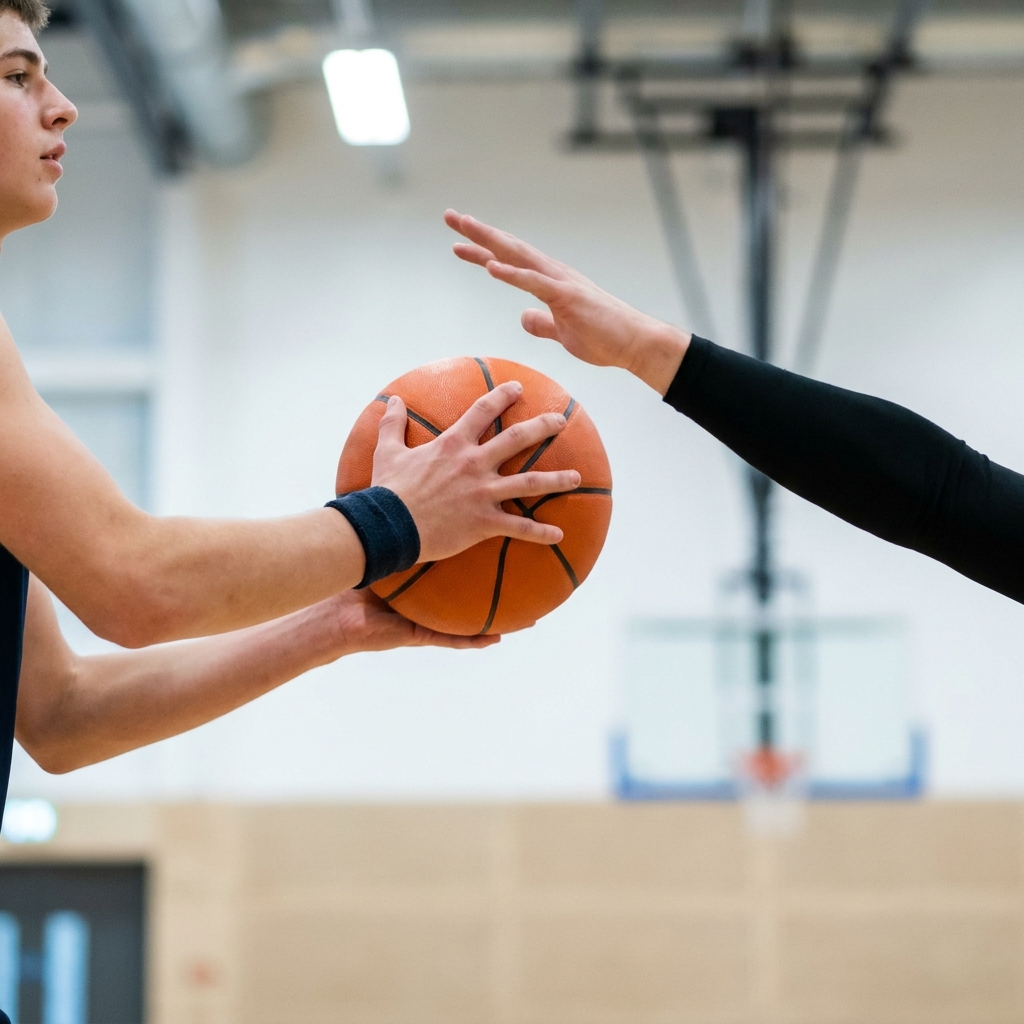
Step Two: Teach the deny position. One pass away from the ball, the defender should be in the passing lane with a hand up, not touching the opponent, forcing a harder pass rather than grabbing a jersey to stay close.
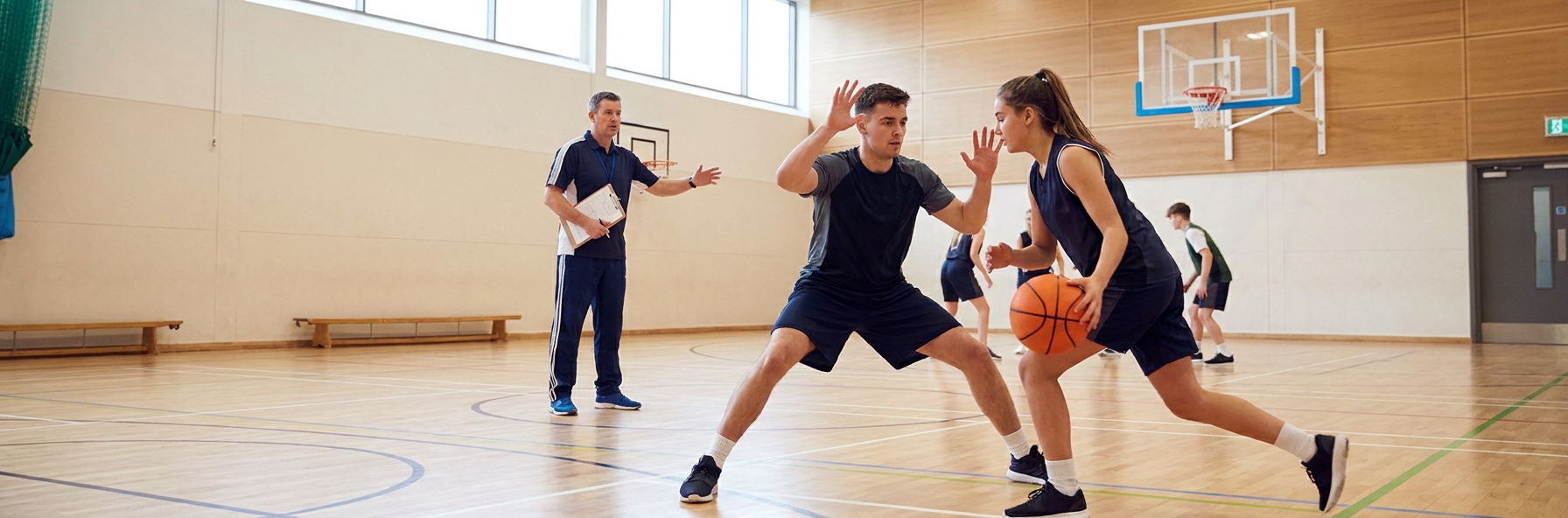
Step Three: Move the feet, not the hands. On the ball, the job is to slide and stay in front, using the chest and the gap between the defender and attacker to contain, rather than a hand on the hip to slow them down.
Step Four: Get legal position for a charge. If a driver beats the first defender, a help-side player who gets to a spot early, feet planted and body upright before contact, can still draw a charge. Arriving late and sliding under a jumper is exactly the kind of contact the new rules punish.
Step Five: Recover without grabbing. When beaten, sprint to recover ground and re-establish position rather than reaching back. A missed tackle in football is a foul risk; a missed step in basketball should never become one.
How to Train It
Warm up with stance and slide work: mirror drills across the key, hands out, no contact, just feet. Move into technical work on denial position and closing distance without touching. Add decision-making with small-sided 2v2 or 3v3 reps where defenders must contain using only feet and verticality. Finish with a competitive game where every illegal hand check costs a point, so players feel the cost of reaching in game-speed situations.
Key Coaching Points
- Low stance, feet constantly moving; hands stay active but off the body of the opponent.
- Deny the pass with position and a hand in the lane, not with contact.
- Treat any hand check or grab as a coaching moment, even when the referee misses it.
- Teach charges as early legal position, not late contact under a shooter.
- Reward recovery footwork after being beaten, rather than a trailing arm.
- Make the cost of a foul visible in practice games, so good habits carry into matches.
Recommended Drills

Frequently Asked Questions
What actually changed in basketball's rules this season?
FIBA's 2026 rule set, in force from 1 October 2026, replaced the old unsportsmanlike foul with two new categories, disruption fouls and flagrant fouls, aimed at reckless or dangerous contact. Most English leagues play under FIBA's rules as their base, with their own competition-specific additions, so coaches should expect officials to be stricter on grabbing and reckless contact this season.
How do I stop my players hand-checking without slowing them down?
Hand-checking is usually a symptom of being a half-step behind, not a lack of effort. Spend more practice time on the stance and slide than on telling players to keep their hands off. A defender whose feet are in the right place rarely needs to reach.
Is it still worth teaching players to draw a charge?
Yes, but teach it as early legal positioning rather than absorbing contact. A defender who is set, with feet planted and body upright before the attacker arrives, is still protected. One who slides in late or leans in after the attacker has left the floor is the type of contact referees are now told to punish more heavily.