By mid-season, most teams have seen it: the opposition presses full court, the inbound pass goes long and loose, and the next thirty seconds are a scramble of travels, steals and easy baskets at the other end. Indoor fixtures are coming thick and fast now, and pressure defence is the quickest way for a weaker team to disrupt a stronger one.
The good news is that breaking a press is not about finding a star ball handler. It is about spacing, simple rules and players who stay calm when a defender closes them down. Get those right and a press becomes an opportunity, not a threat.
Why Presses Cause Turnovers
Most press-break turnovers share the same root causes. Players bunch together, so one defender can cover two passing options at once. The inbound passer panics and throws a long, high pass that is easy to read and intercept. And the ball handler puts their head down and dribbles into traffic instead of looking up for an outlet.
A press wants to create chaos and rushed decisions. The team that stays spaced out, catches the ball facing the court and takes the simple pass almost always comes out ahead, even against quicker defenders.
A Simple Framework for Breaking Pressure
Step One: Spread the floor first. Before the ball is even inbounded, players should be spaced wide and at different depths, never two players level with each other in the same passing lane. Width buys time and gives the passer real options.
Step Two: Attack the pass, not the dribble. The fastest way through a press is a sharp, accurate pass, not a dribble move. Reserve the dribble for when a passing lane is closed and there is clear space to advance the ball.
Step Three: Catch on the move, facing up. Players receiving the inbound or an outlet pass should step towards the ball and catch it already facing up the court, in triple threat. A catch with your back to play wastes the half-second you need to read the next pass.
Step Four: Use the middle of the floor. Once past the first line of pressure, look to get the ball to the middle third of the court. From there a player can see both sides and has more passing options than anyone pinned on a sideline.
Step Five: Play early, not safe. As soon as a numbers advantage appears, such as a two-on-one on the wing, take it. Hesitating lets the defence recover, so the first good look should usually be the one you take.
How to Train It
Warm-up: Passing in pairs on the move, emphasising a crisp chest pass to a target who is already facing the ball.
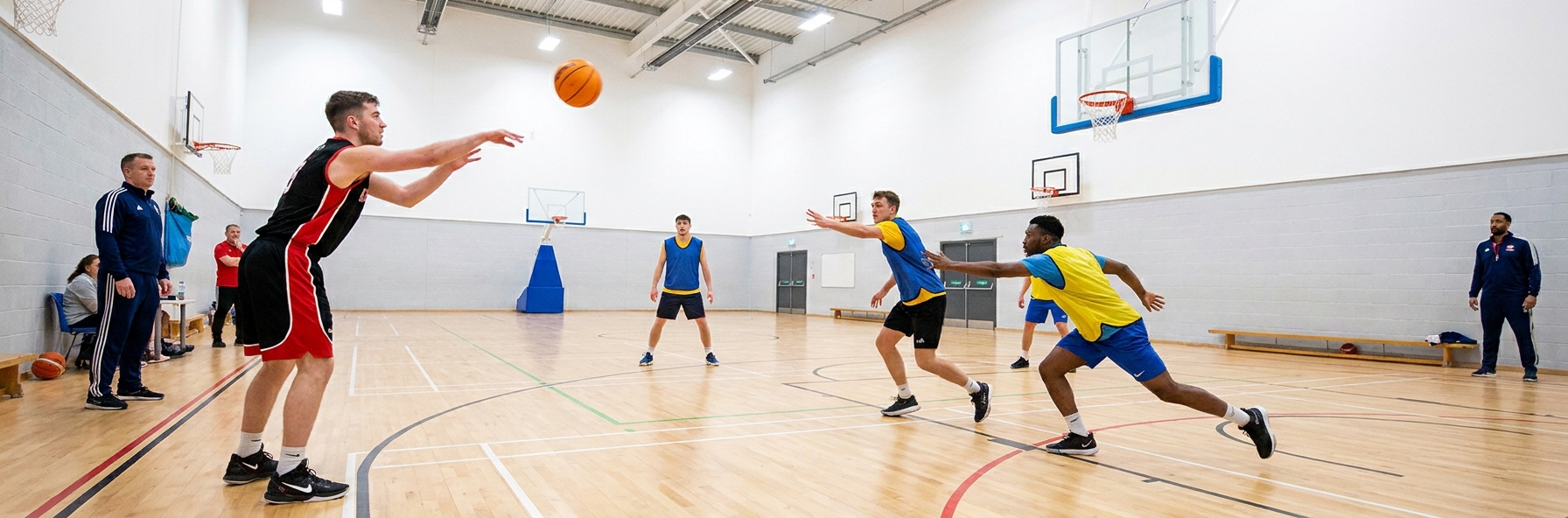
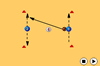
Technical: Add a single defender in the passing lane. The passer and receiver must adjust their spacing and timing to get a clean pass through, rewarding width and good footwork.
Decision-making: Run two-on-one and three-on-two drills up and down the court so players get used to reading a numbers advantage and choosing the pass that keeps it alive.
Game: Finish with five-on-five where the defence presses full court for the first ten seconds of every possession. Coach the floor spacing and the first pass out loud, then let players solve the rest.
Key Coaching Points
- Spread the floor before the ball is inbounded; no two players level in the same lane.
- Default to the pass over the dribble when breaking pressure.
- Catch facing the court, ready to see the next pass immediately.
- Work the ball towards the middle of the floor once past the first defender.
- Take a genuine numbers advantage early rather than waiting for a better one.
- Stay calm; most press turnovers come from panic, not a lack of skill.
Recommended Drills


Frequently Asked Questions
What is the best way to beat a full-court press?
Spacing and a quick, accurate pass beat almost any press. Spread players wide and at different depths before the ball is inbounded, catch facing the court, and look to pass rather than dribble through pressure. Panic and bunching cause far more turnovers than the press itself.
Should young players dribble or pass against pressure?
Pass where possible. Most young players cannot reliably beat a trap off the dribble, and a long pass over a press is risky too. Teach short, simple passes to a spaced-out teammate, and save the dribble for when a clear lane opens up.
How do I stop my team panicking when they get pressed?
Practise it on purpose. Add a token defender to passing drills, then build up to full presses in scrimmages, so players meet pressure in training before they meet it in a match. Calm comes from familiarity, not from telling players to relax.