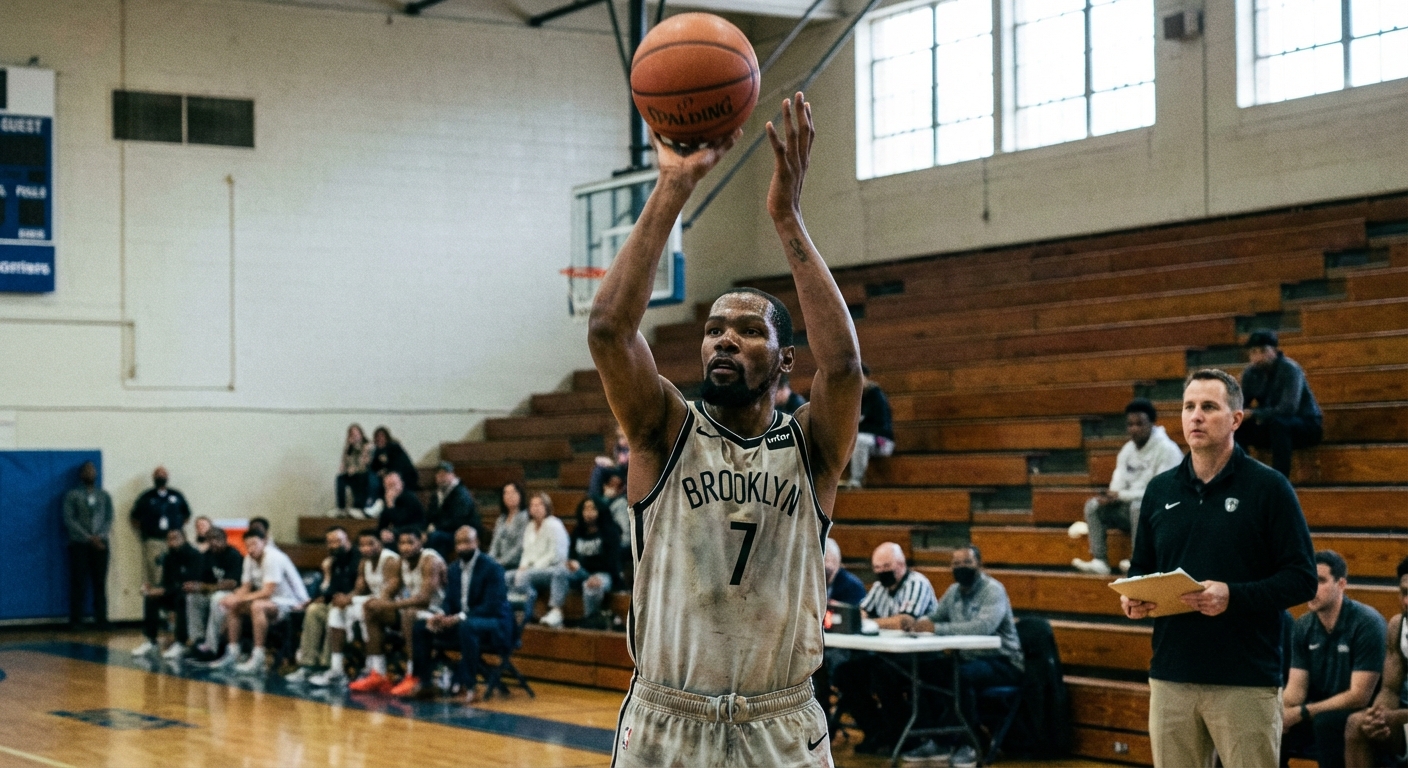
Why Free Throws Win Close Games
In the final two minutes of a close basketball game, free throws become the most important shots on the court. The team that converts at the line controls the clock, extends leads, and closes out victories. The team that misses gives the opposition hope, transition opportunities, and momentum. The numbers are stark: across all levels of competitive basketball, games decided by five points or fewer are won by the better free-throw shooting team the vast majority of the time.
Yet despite this importance, free throw shooting is one of the most neglected areas of deliberate practice. Players shoot casual free throws at the end of training without structure or purpose. There is no pressure, no fatigue, and no consequence for missing. The result is a practice habit that bears no resemblance to the game situation - and when the pressure arrives in a match, the player's mechanics and confidence crumble.
Coaching free throw consistency requires a three-pillar approach: sound mechanics, a repeatable pre-shot routine, and practice conditions that simulate game pressure. Miss any one of these pillars and the free throw percentage will not improve meaningfully.
The Pre-Shot Routine: Your Anchor Under Pressure
The pre-shot routine is arguably more important than the shooting mechanics themselves. A consistent routine serves as a mental anchor - it gives the player something familiar and controllable in a high-pressure moment. When thousands of spectators are screaming, when the score is tied with ten seconds left, the routine becomes the player's safe space. They have done this exact sequence ten thousand times in practice. The body knows what to do.
Building the Routine
A good free throw routine has three to five specific actions that the player performs identically every single time. These actions should take between five and eight seconds. Any shorter and the player has not settled. Any longer and they are overthinking. Here is a framework that coaches can adapt for each player.
Step 1 - Receive and Position: Take the ball from the official, step to the line, and place the shooting foot on the shooter's preferred spot (most players align their shooting foot with the centre of the basket). Take a breath.
Step 2 - Physical Cue: This is a specific physical action that triggers the shooting sequence. Some players bounce the ball a set number of times (two or three bounces is common). Some spin the ball in their hands. Some take a single deep breath. The specific action does not matter - what matters is that it is the same every time.
Step 3 - Focus Point: Eyes lock onto the target. Most coaches recommend focusing on the front of the rim or the back of the rim - not the entire hoop. A specific, small focal point improves accuracy. The eyes should arrive at this target before the shooting motion begins.
Step 4 - Shoot: Execute the shooting motion. The routine has done its job - the body is in position, the mind is focused, and the mechanics take over.

Mechanics: The Technical Foundation
While individual shooting forms vary, there are fundamental mechanical principles that apply to every free throw shooter.
Feet
The shooting foot (same side as the shooting hand) should be at the centre of the free throw line, pointing directly at the basket. The non-shooting foot is slightly behind and to the side, shoulder-width apart. The stance should feel balanced and natural - not too wide (which reduces leg power) and not too narrow (which reduces stability). Knees are slightly bent, ready to generate upward force.
Elbow and Shooting Hand
The shooting elbow should be directly under the ball, forming an "L" shape. This alignment ensures the ball travels in a straight line toward the basket. The most common mechanical error in free throw shooting is a splayed elbow - when the elbow drifts outward, the ball spins sideways and misses left or right. The ball rests on the fingertips and finger pads of the shooting hand, not on the palm. The non-shooting hand supports the ball from the side and releases at the point of delivery.
Follow-Through
The follow-through is the guarantee of a complete shooting motion. After releasing the ball, the shooting hand should finish with the wrist flexed forward and the fingers pointing toward the basket - the classic "gooseneck" position. Hold this follow-through until the ball reaches the basket. Cutting the follow-through short leads to inconsistent release points and flat shots that hit the front of the rim.
Arc
The ideal free throw has a high arc - approximately 45 to 50 degrees. A higher arc means the ball approaches the basket from above, giving it a larger effective target area. Flat shots approach at a shallow angle and have a much smaller window to enter the hoop. If your players are consistently hitting the front or back of the rim, adjusting arc is usually the fix.
The Mental Game: Breathing, Focus, and Confidence
Free throws are as much a mental challenge as a physical one. The player is standing alone, with everyone watching, and has time to think - which is precisely the problem. In open play, shots happen instinctively. At the free throw line, there is time for doubt, anxiety, and overthinking. The mental approach must be deliberately coached.
Breathing
One controlled breath before beginning the routine resets the nervous system. A deep inhale through the nose for three seconds, followed by a slow exhale through the mouth for four seconds. This activates the parasympathetic nervous system and lowers heart rate. It takes three seconds and makes a measurable difference to shooting performance under pressure.
Focus Cues
Give players a single word or phrase to repeat internally during the routine. This occupies the conscious mind and prevents negative thoughts from creeping in. Common cues include "smooth," "nothing but net," "follow through," or simply "swish." The cue should be personal and positive. Avoid cues that reference missing ("do not miss") because the brain processes the image of missing before processing the negation.
Confidence Building
Track free throw percentages in practice and share them with players. When a player sees that they make 75% of their free throws in training, they approach the line in games knowing the odds are in their favour. This data-driven confidence is more robust than vague encouragement. Some coaches post a "free throw leaderboard" in the gym to create positive competition and pride in the skill.
Training Free Throws Under Fatigue and Pressure
The biggest mistake in free throw training is practising in a rested, relaxed state. In games, free throws come after sprinting down the court, after physical contact from a foul, or after a timeout when the player has been sitting and then must stand up and shoot cold. Practice must replicate these conditions.
Fatigue Shooting
After every conditioning drill in practice, send players to the line for two free throws before they rest. This trains the body to execute the routine and mechanics when the heart rate is elevated and the legs are heavy. Track the percentage under fatigue separately - you will find it is significantly lower than rested shooting at first, but the gap closes as the season progresses.
Pressure Scenarios
Create consequences for missing free throws in training. The entire team runs a sprint for every missed free throw in the "clutch round" at the end of practice. Or set up one-and-one scenarios where missing the first means losing possession. These manufactured pressures will never fully replicate a real game, but they activate the same stress responses and teach players to perform their routine under duress.
End-of-Practice Protocol
Finish every training session with a structured free throw block. Each player must make a set number (for example, 7 out of 10) before leaving the gym. Those who finish early help rebound for those still shooting. This creates both a quality standard and a mild social pressure that keeps focus sharp.
Sample Session Plan: Free Throw Mastery (60 Minutes)
Session Structure
- Warm-Up (10 min): Form shooting from close range. Players stand two metres from the basket and shoot one-handed (shooting hand only) focusing purely on elbow alignment, wrist snap, and follow-through. 20 shots each. Then step back to the free throw line and take 10 normal free throws with full routine - these count as the baseline for the session.
- Technique Block (15 min): Routine building. Each player establishes or refines their three-to-five-step routine. Pair up: one shoots, one observes and checks that every rep is identical. The observer times the routine - it should be within one second of the same duration every time. 20 free throws with feedback after each pair of shots.
- Fatigue Block (15 min): Shuttle sprints (baseline to free throw line and back, baseline to half court and back) followed immediately by two free throws. Repeat five times. Track makes and misses. Then: 30 seconds of burpees followed by two free throws. Repeat three times. The goal is to maintain routine and mechanics when the body wants to rush.
- Pressure Block (15 min): "Clutch Free Throws" - the team gathers around the free throw line. Each player shoots two. If they make both, they are safe. If they miss one or both, they join the "running group." After all players have shot, the running group does a full-court sprint. Repeat three rounds. Final round: each player must make two consecutive to avoid a team consequence (everyone runs if anyone misses).
- Cool-Down (5 min): Five relaxed free throws with full routine - no pressure, no consequence. This ensures the last free throw memory of the session is a positive, controlled one. Light stretching and brief discussion on what each player will focus on in their routine.
Common Mistakes to Avoid
Changing the routine: When a player misses, the instinct is to change something - bounce the ball an extra time, adjust the foot placement, alter the release. This is the worst thing they can do. The routine must stay the same whether the last shot went in or not. Consistency is the entire point. A miss does not mean the routine is broken - it means one shot did not fall. Trust the process.
Rushing the shot: Under pressure, players tend to speed up their routine and shoot before they are ready. The breath gets skipped, the focus point is not established, and the shot is hurried. Coach players to recognise when they are rushing and deliberately slow down. The shot clock does not apply at the free throw line - take the full ten seconds if needed.
Practising without purpose: Shooting 100 free throws at the end of training while chatting with teammates and not following a routine is worse than useless - it builds bad habits. Every free throw in practice should be treated as a game free throw: full routine, full focus, full follow-through. Quality of repetitions matters far more than quantity.
Neglecting the second shot: Many players focus all their energy on the first free throw and lose concentration on the second. The second shot should receive exactly the same routine and focus. Treat each free throw as an independent event, regardless of whether the first went in or missed.
Frequently Asked Questions
How many free throws should a player shoot per day to improve?
Quality matters more than quantity. Fifty focused free throws with a full routine and genuine concentration will improve performance more than 200 mindless repetitions. For most players, 50-75 quality free throws per practice session is a good target. On shooting-focused days, this can increase to 100-150. The critical factor is that every single repetition follows the complete pre-shot routine. If a player's focus drops and they start going through the motions, it is time to stop. Bad reps build bad habits.
Should young players use the same free throw technique as adults?
The mechanics are the same but may need to be adapted for strength. Younger players who cannot reach the basket with proper form often develop compensatory habits - pushing the ball from the chest or throwing it rather than shooting it. For players who lack the strength for a standard free throw, consider using a smaller ball or moving them closer to the basket for technique practice. As they grow stronger, gradually move back to regulation distance. Never sacrifice technique for distance at the youth level - the bad habits formed by forcing the ball to the basket will be very difficult to correct later.
What should a player do when they are in a free throw slump?
First, go back to basics. Film the player's free throw and compare it to footage from when they were shooting well. Often, a small mechanical change has crept in - a wider stance, a lower release point, a shortened follow-through. Fix the mechanical issue first. If the mechanics look good but shots are still not falling, the problem is usually mental. Simplify the focus: concentrate only on the follow-through and holding it. This gives the mind a specific task and prevents overthinking. Sometimes a short break from free throw practice (two to three days) can also reset the mental approach.
Is it better to focus on the front of the rim or the back of the rim?
Both approaches work, and the best choice depends on the individual player's tendencies. Players who tend to shoot short should focus on the back of the rim, which naturally encourages a slightly longer shot. Players who tend to overshoot should focus on the front of the rim. Some coaches teach players to focus on the small hooks that hold the net to the rim as an even more specific target. The key principle is that a smaller, more specific focal point produces better accuracy than looking at the general area of the hoop. Experiment with your players and let each one choose the target that produces the best results.