1)Stretches
- Rotating Wrist and Forearm Strength: Place one arm straight out in front and parallel to the ground. Rotate your wrist down and out towards and then use your other hand to further rotate your hand upward.
- Assisted Reverse Chest and Shoulder Stretch: Stand upright with your back towards a table or bench and place your hands on the edge. Bend your arms and slowly lower your entire body.
- Kneeling Heel-Down Calf and Achilles Stretch: Kneel on one foot and place your body weight over your knee. Keep your heel on the ground and lean forward.
2)Hand and Eye Coordination Tennis Drill
- Tennis Ball Wall Bounce: Athlete will use a vertical surface to repeatedly bounce and catch a tennis ball. Right and left hands will be alternated after completing one set of 30.
- Tennis Racquet and Ball Dribble: Take a racquet and place it in your dominant hand as if gripping a pan off your stove. Use other hand to slowly drop a tennis ball at waist height. Use racquet to bounce tennis ball on the ground. This should be a slow and controlled movement. Repeat this movement until you have done 30 successful dribbles. Do 5 sets of 30 dribbles.
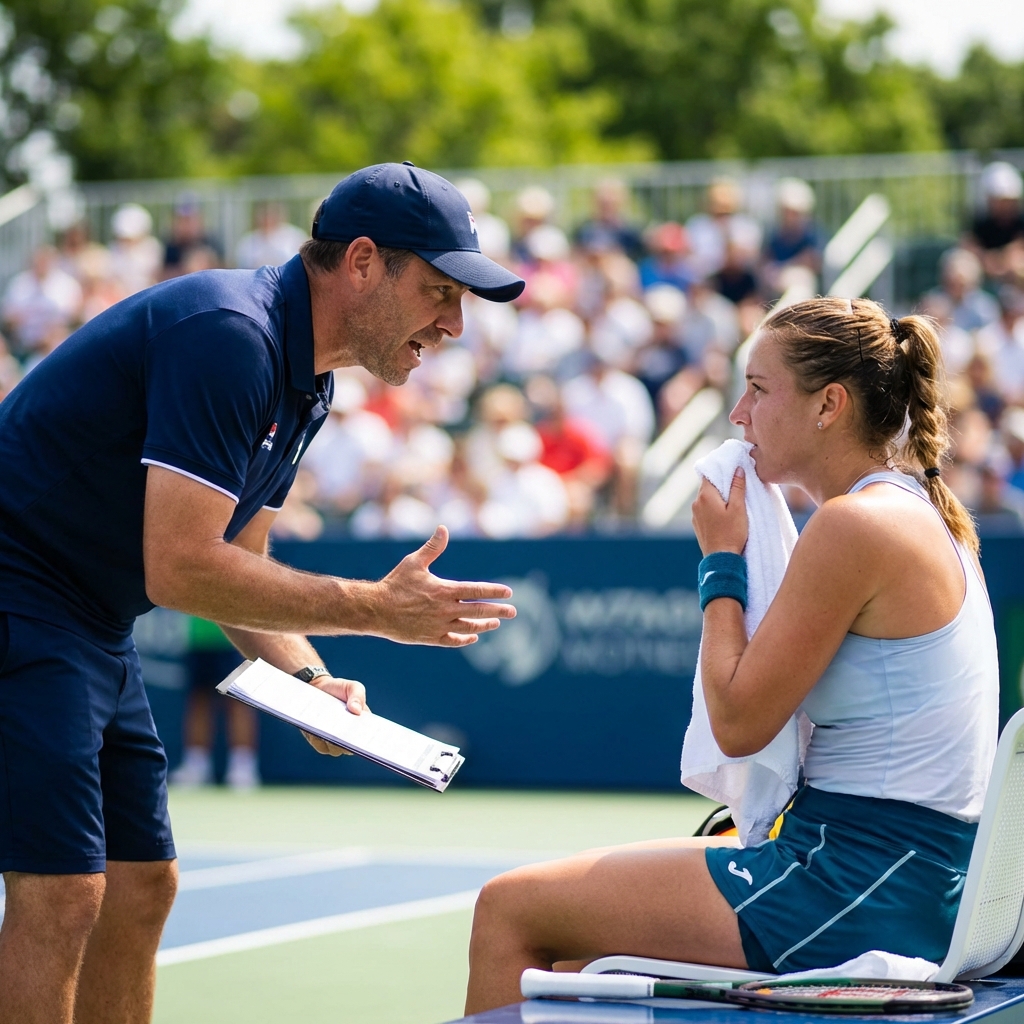
On-court coaching is now fully legal. Here's how to deliver advice that actually helps during those crucial 90-second changeovers.

On-court coaching is now fully legal, technology continues to advance, and the ATP calendar evolves. Here's what tennis coaches need to know for 2026.
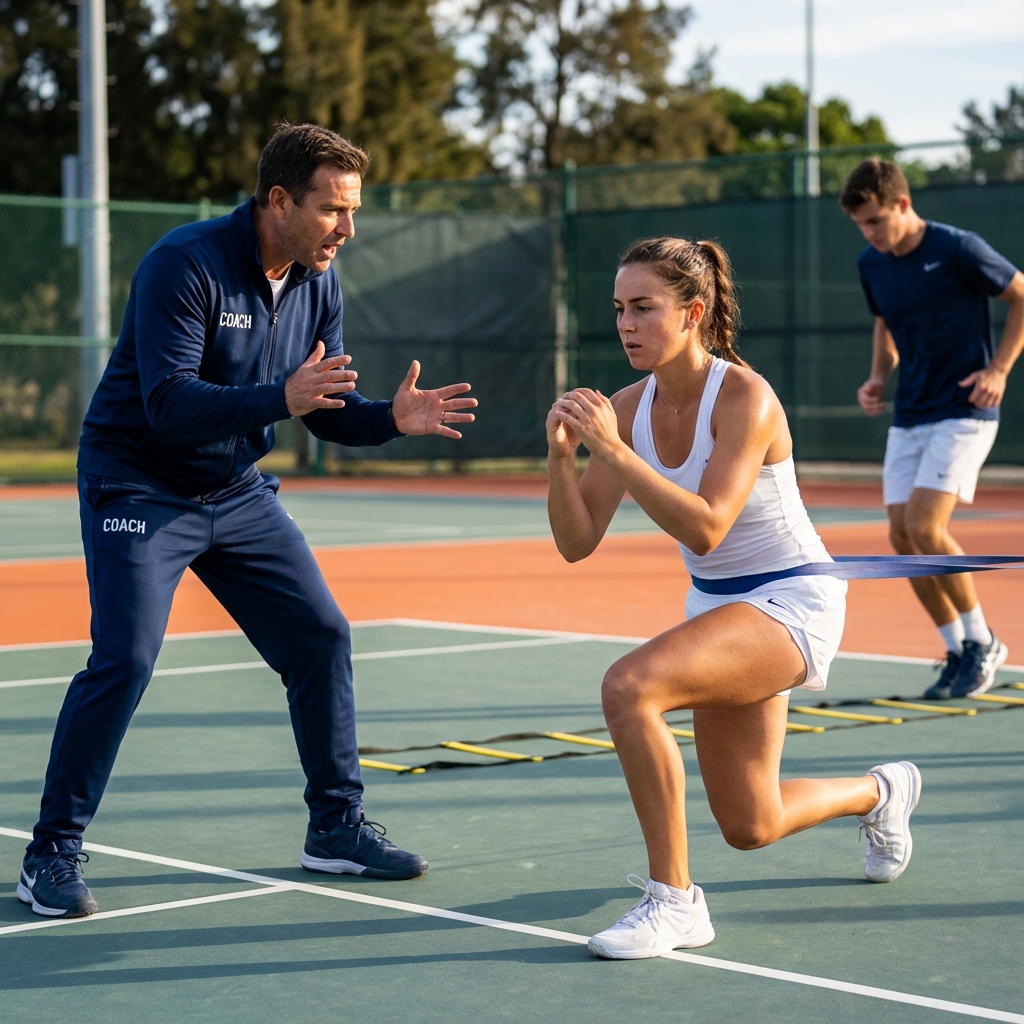
Tennis demands a unique combination of endurance, power, agility, and flexibility. Physical preparation determines how long careers last and how players perform when it matters most.


Register for FREE and get coaching tips, top drills, session and more every week!