4 players on the court. Using 1 ball, only 2 players start the dinking in the center of the net, straight across the net. After 4 successful dinks, each player moves one step to the RIGHT for 4 more dinks, then one more step to the right for four more dinks. Non-dinking players tell there partner if they do not return there paddle to the “ready position” after every dink. If a partner does not return their paddle to the ready position, the observing partner says, “PADDLE UP!” after every incident. Partners then switch, so the players become observers and vice versa. Note: After the first four straight-across dinks, players should be aiming for their opponent's outer paper targets.
The drill is repeated with each player now taking steps to the LEFT.
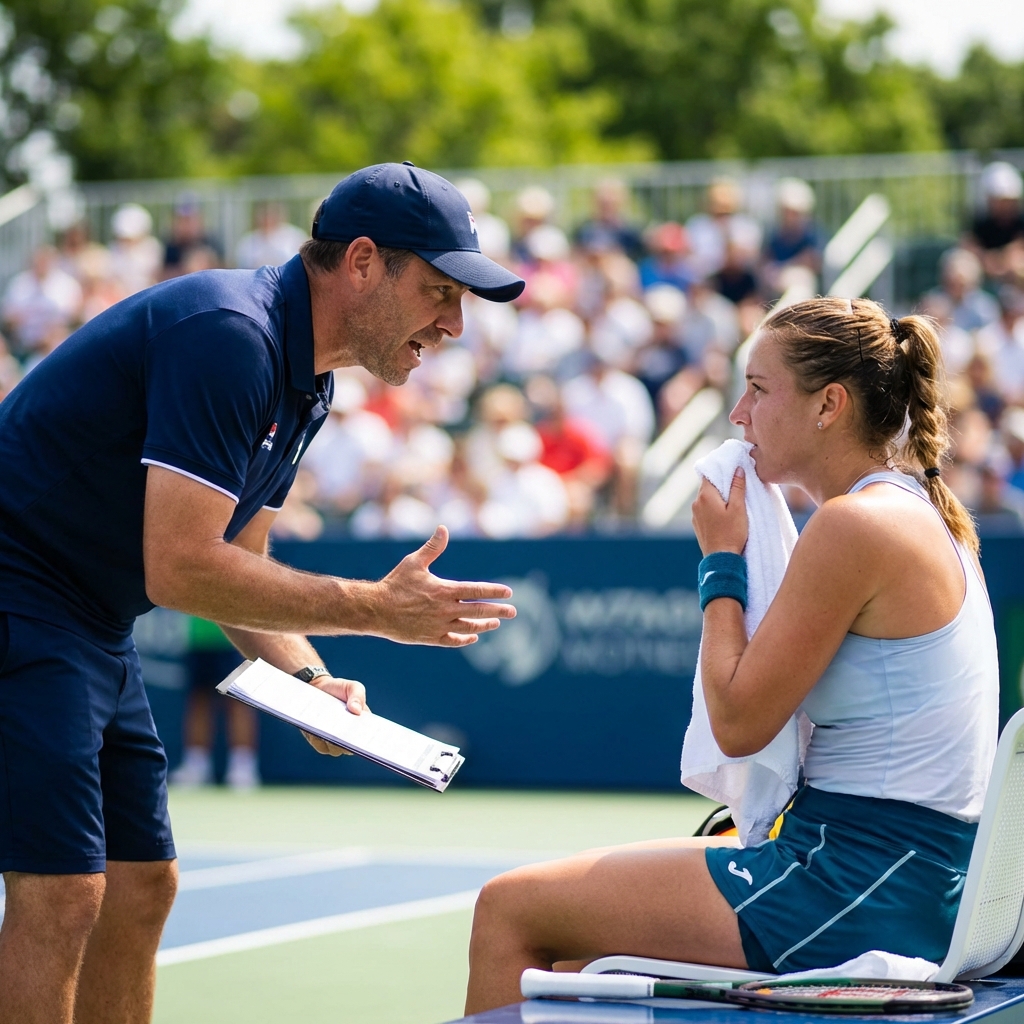
On-court coaching is now fully legal. Here's how to deliver advice that actually helps during those crucial 90-second changeovers.

On-court coaching is now fully legal, technology continues to advance, and the ATP calendar evolves. Here's what tennis coaches need to know for 2026.
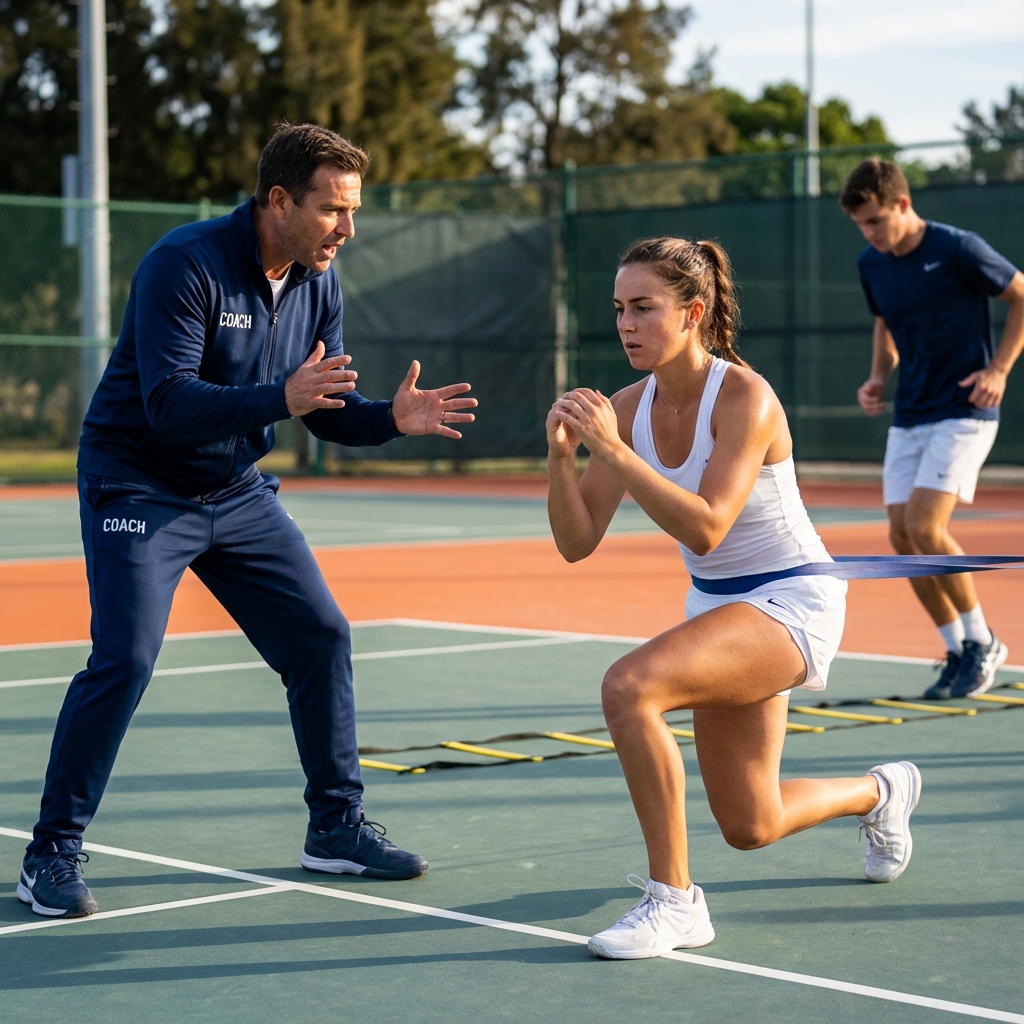
Tennis demands a unique combination of endurance, power, agility, and flexibility. Physical preparation determines how long careers last and how players perform when it matters most.


Register for FREE and get coaching tips, top drills, session and more every week!