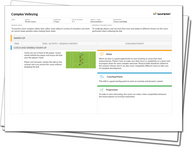
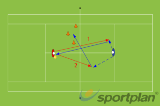
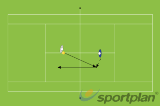
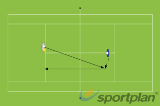
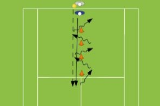
Player stands on the service line, with the coach on the opposite side of the net. The coach quickly tosses balls to the forehand side for the player to hit a forehand volley cross court. The drill should be done at a fast pace and players should hit as many balls as they can.
Using a big backswing is the most common mistake that occurs while playing at the net. Being able to control the racquet and keep the motion short are priorities when becoming a successful net player. It is not possible to consistently answer powerful passing shots with regular backswings so players have to correct this mistake. In this drill, the player has to shorten the swing because balls are coming without a break. This factor will help player to react faster and control the racquet while answering fast balls.
For more advanced players, coach can feed balls with the racquet to generate more pace.
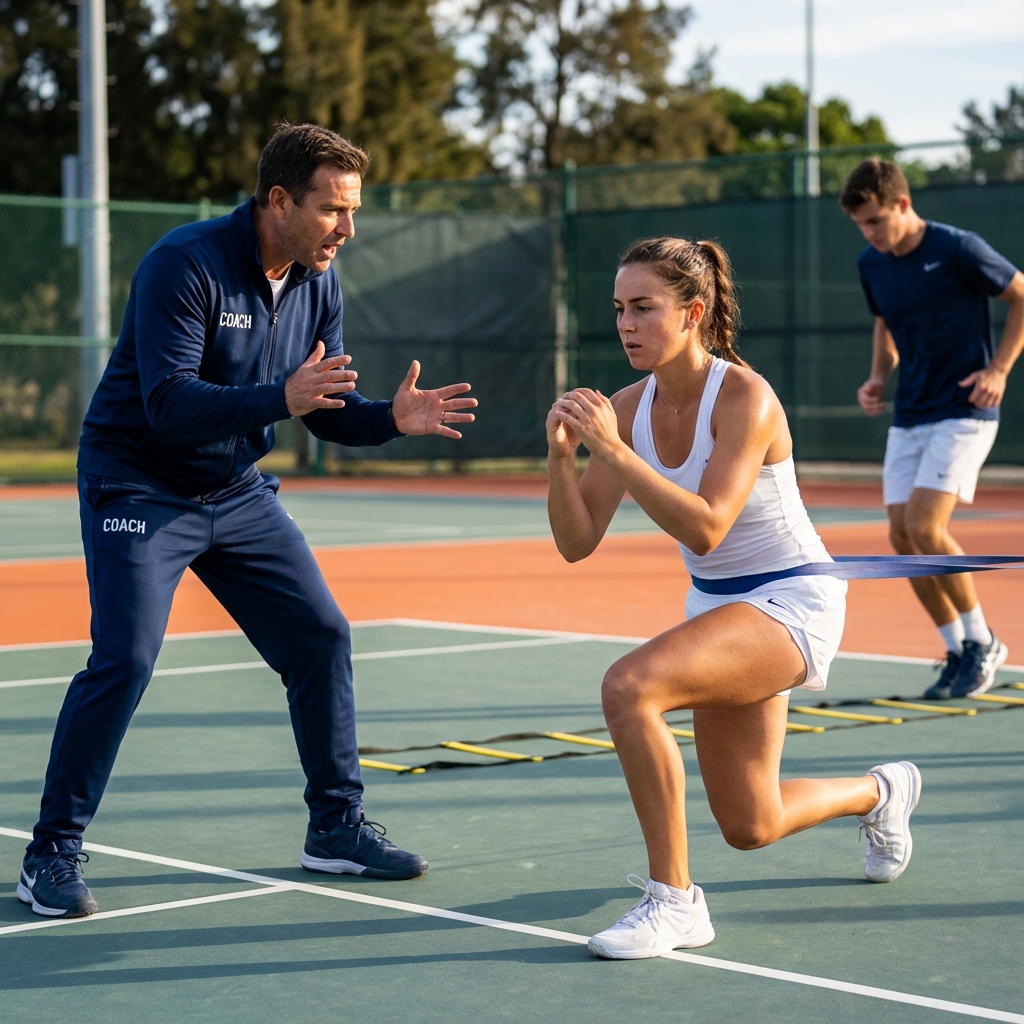
Tennis demands a unique combination of endurance, power, agility, and flexibility. Physical preparation determines how long careers last and how players perform when it matters most.
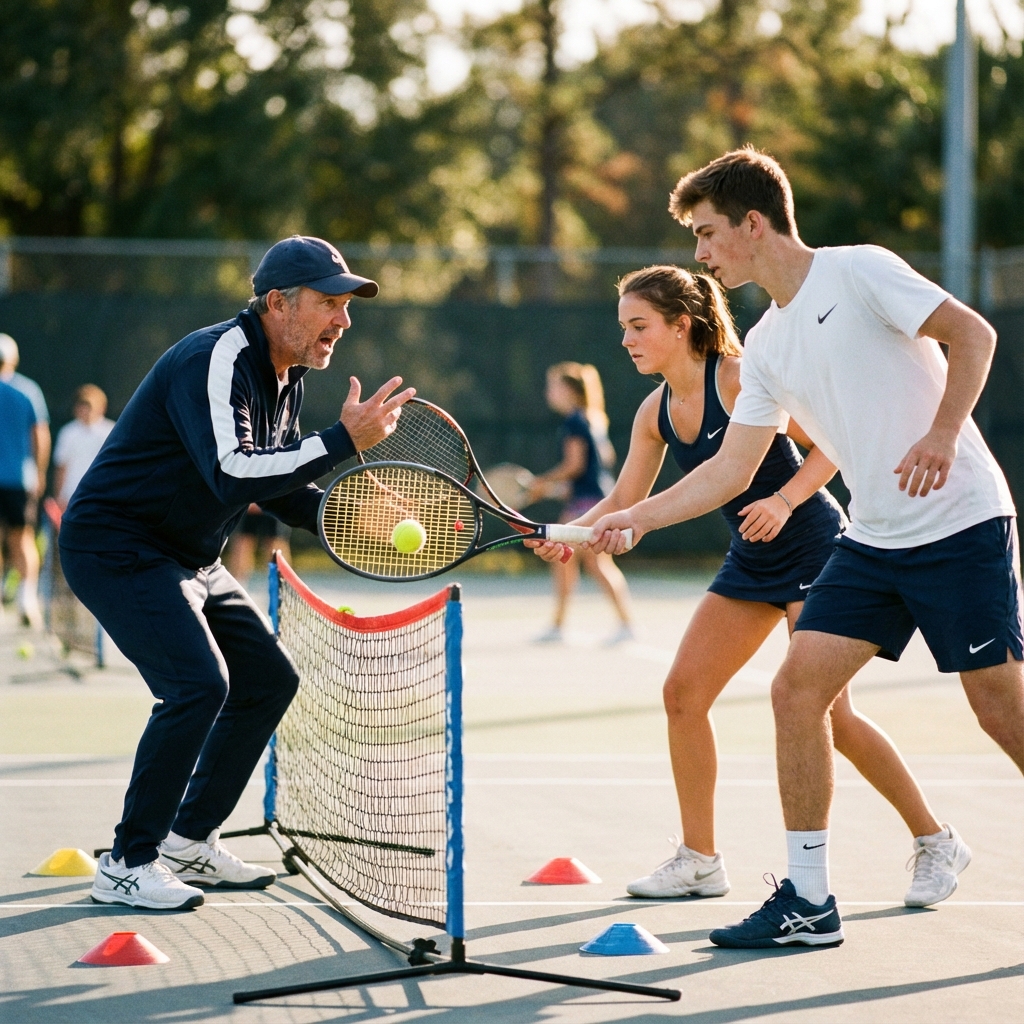
Ecological dynamics is transforming tennis coaching. This constraints-led approach develops adaptable, creative players who can solve problems in competition, not just execute drilled patterns.
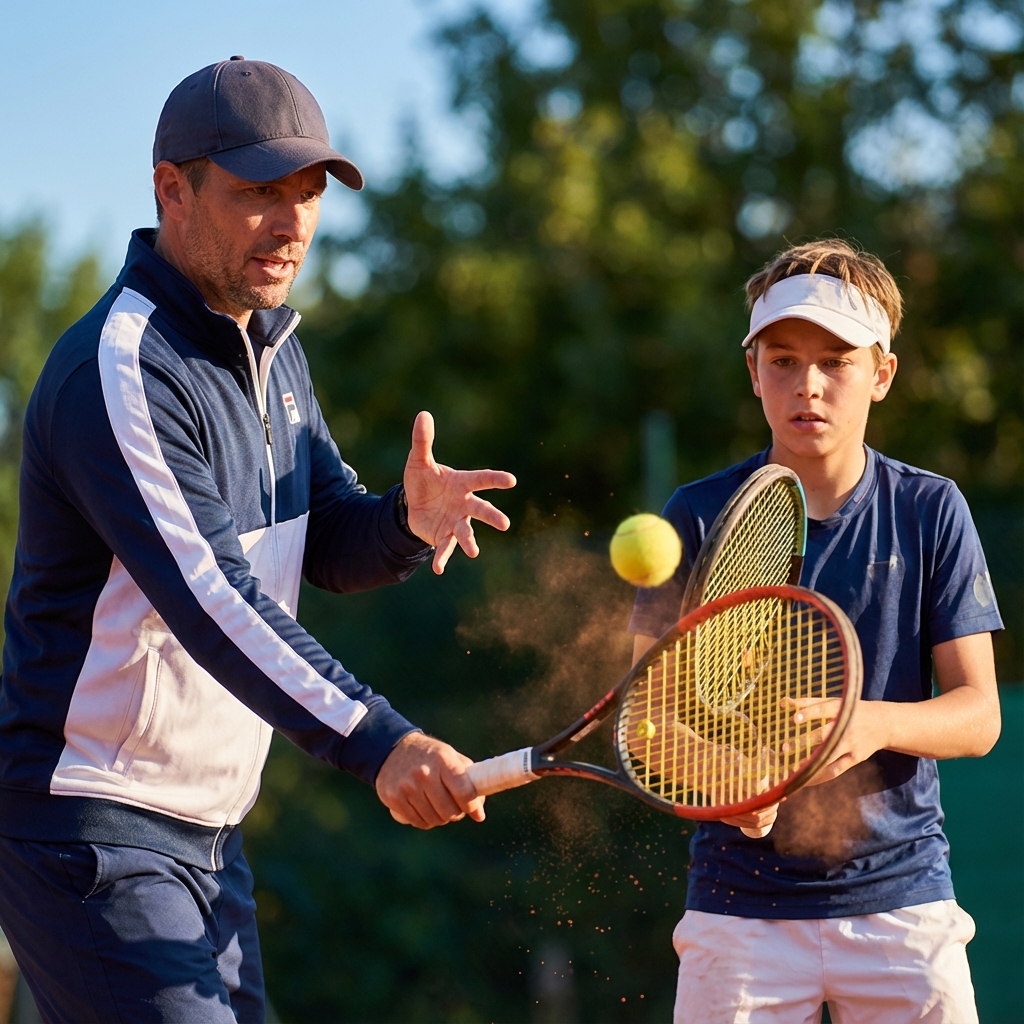
The one-handed backhand is becoming rare, but when executed well, it remains one of tennis's most elegant and effective shots. Is it a dying art or a tactical advantage?


Register for FREE and get coaching tips, top drills, session and more every week!