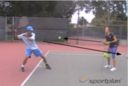
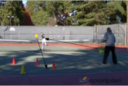
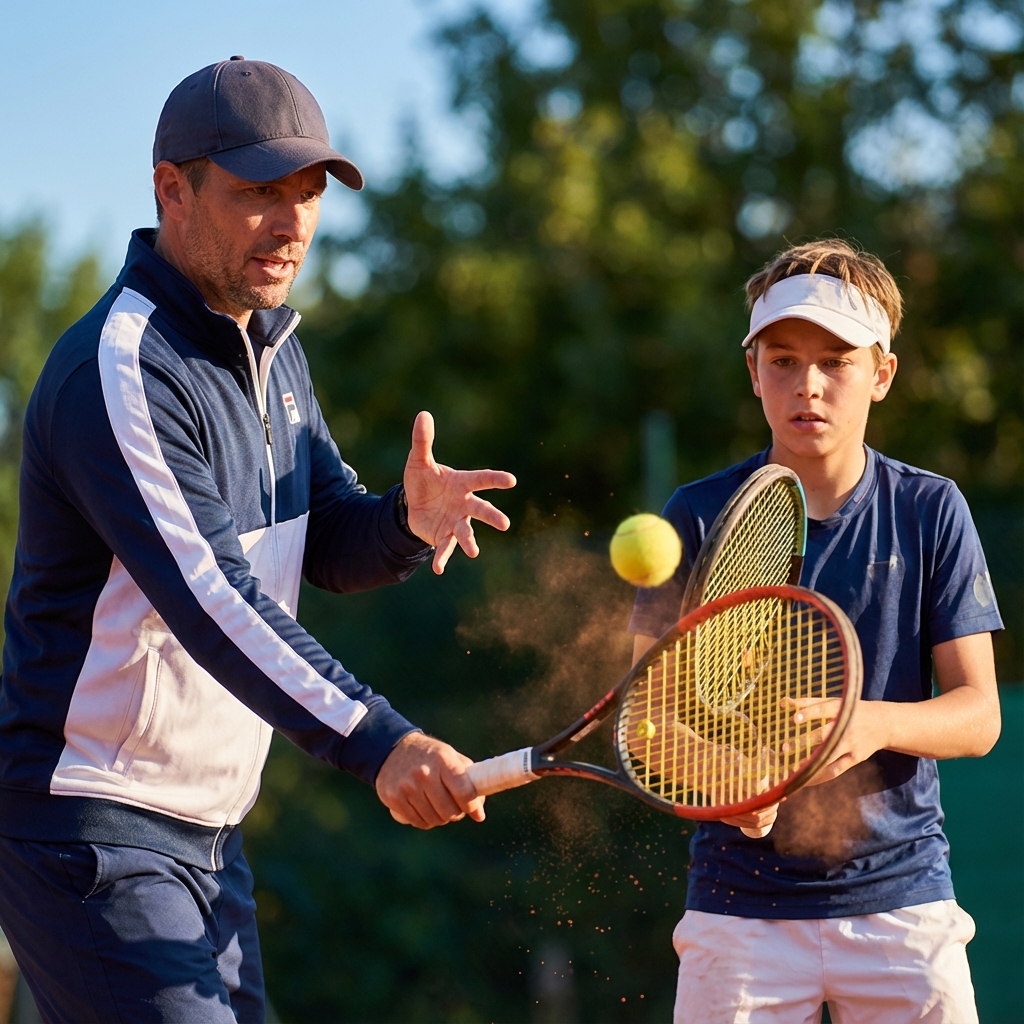
The coach stands and the net. The player and coach rally together in cross-court direction. After few good shots the coach hits the next volley short. The player has to react, move quickly forward and finish the ball offensively in down the line direction.
Many players know how to rally and are skilled enough to attack the ball but they lack of reaction skills. This connection is necessary to use own strengths to win more points. If you are not able to quickly perceive easy ball and move forward even your great technique won't help you.
In this drill the player works on reaction to short balls. The coach at the net forces the player to react faster because the distance between both players is shorter. Additionally, the player doesn't know when the coach will make the short ball, so he is working in environment that is exactly like this in a tournament match. To make it more real coach should hit easier balls only if the last few shots in a row were of good quality.
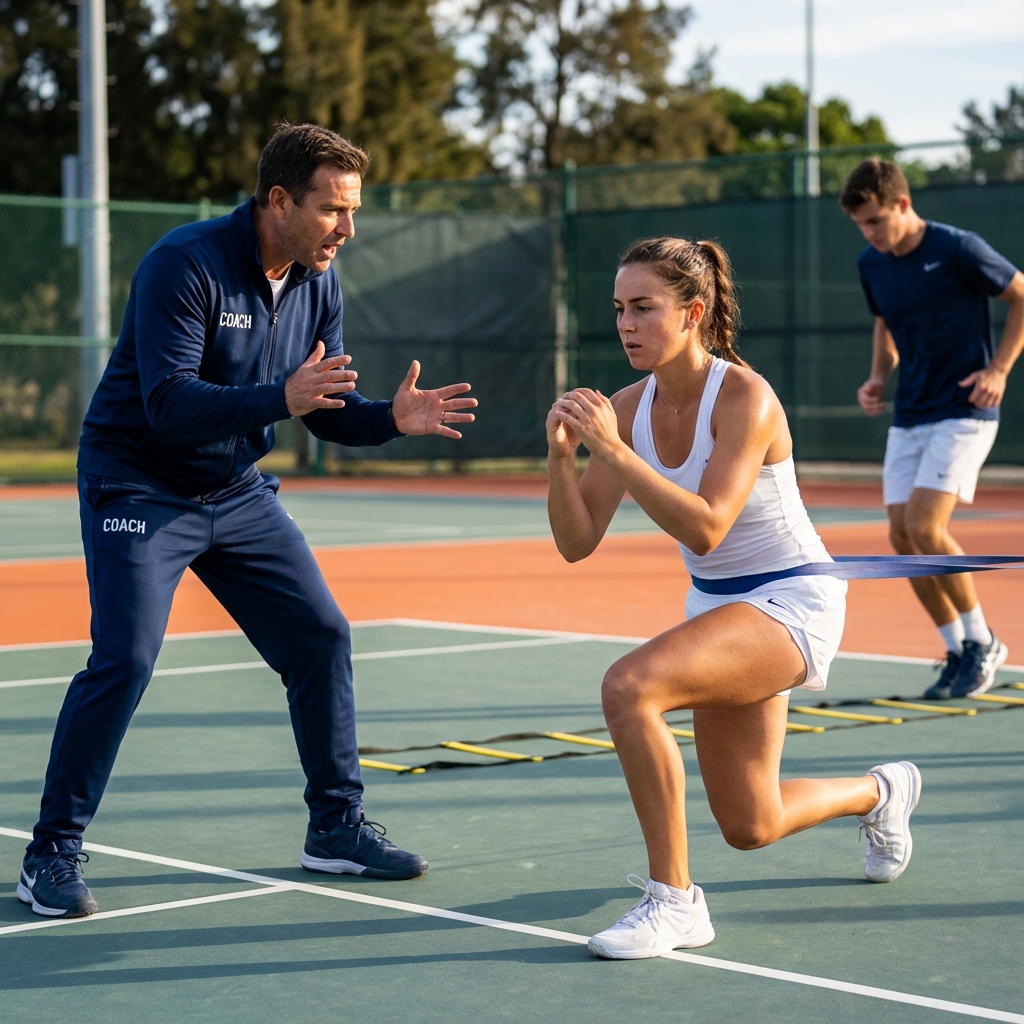
Tennis demands a unique combination of endurance, power, agility, and flexibility. Physical preparation determines how long careers last and how players perform when it matters most.
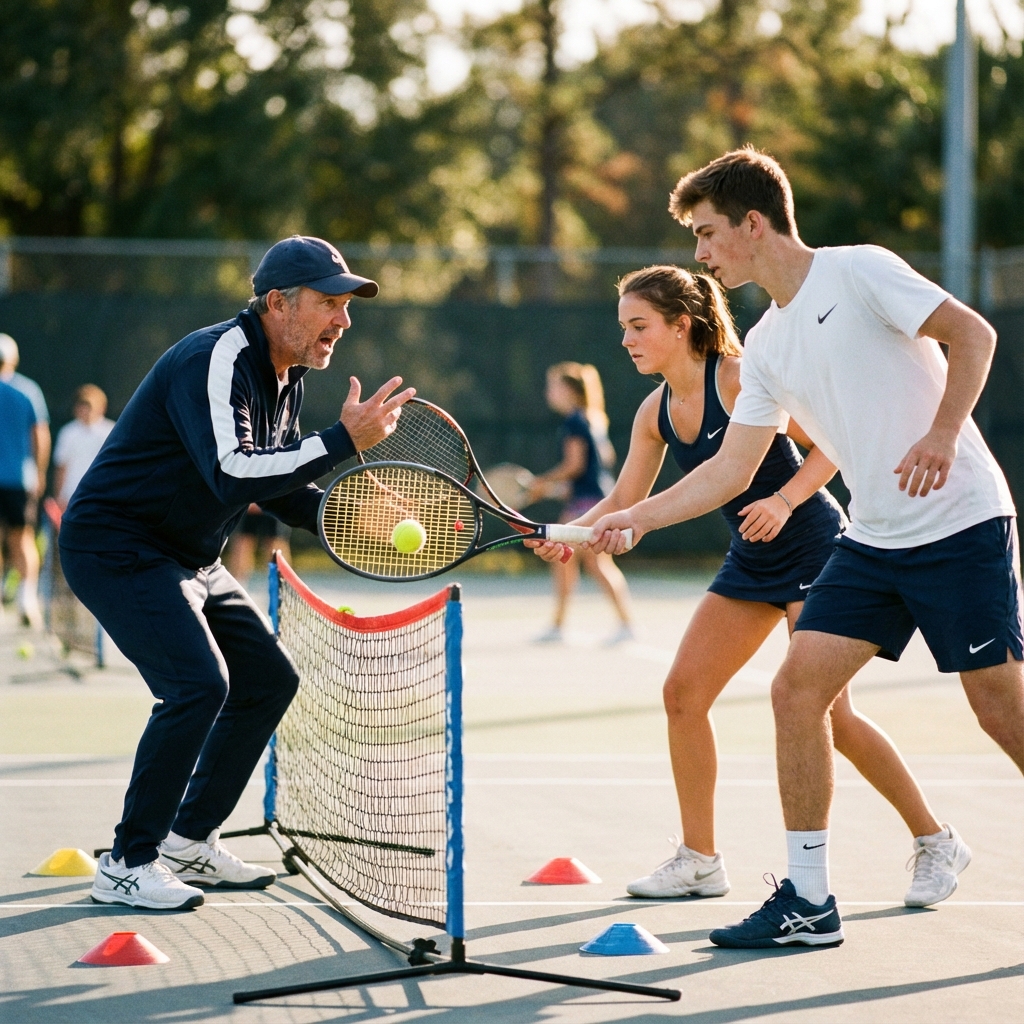
Ecological dynamics is transforming tennis coaching. This constraints-led approach develops adaptable, creative players who can solve problems in competition, not just execute drilled patterns.
The one-handed backhand is becoming rare, but when executed well, it remains one of tennis's most elegant and effective shots. Is it a dying art or a tactical advantage?


Register for FREE and get coaching tips, top drills, session and more every week!